Catalyzing Local Actions Towards Resilient Health Systems at the Philanthropy Asia Summit
During the Philanthropy Asia Summit 2026 last May 18 to 20, 2026, Zuellig Family Foundation (ZFF) President and Executive Director Austere Panadero spoke on how to catalyze local governments towards resilient health and nutrition systems.
Since 2016, ZFF has been working with local governments on health and nutrition governance through improved leadership capabilities. From our journey with local governments, we shared these lessons:
- Resources matter: Devolution gives local governments responsibility for health and nutrition service delivery, but not all local governments have the funds and capacity to deliver.
- Working together creates impact: Real progress happens when local governments, civil society, and private partners converge to support nutrition plans.
- Local leadership drives change: Through ZFF’s Pook Malusog programs like the Nutrition Leadership and Equity Acceleration Program (NutriLEAP), which builds the capacity of local leaders to govern their nutrition systems better, we’ve seen provinces strengthen systems, reduce stunting, and improve maternal and child nutrition.
At a session of Philanthropy Asia Alliance, Panadero also shared how poverty and gender inequality drive systemic inequities from one generation to the next. Fragmented delivery systems, activity‑based financing, and siloed interventions often limit impact. Change begins when governments move beyond sector-based actions using governance as an anchor for systemic reforms.
The challenge for philanthropists is ensuring that their advocacies enable changes towards more resilient systems. Sustainable interventions are those that allow local governments to balance urgent priorities and lead the changes to better outcomes.
The Summit amplified the call for collective action: resilient health and nutrition systems cannot be built by one institution alone. To truly dismantle intergenerational drivers of inequality, we need empowered local governments, gender‑responsive approaches, systemic reforms, and partnerships that endure across generations.
ZFF is committed to catalyzing local actions towards resilient health and nutrition systems to end cycles of malnutrition and advance equity for women, children, and communities across the Philippines.
Why The Challenge Initiative and Evidence-based Strategies for Family Planning Matter More Than Ever
The Challenge Initiative (TCI) is a global platform that supports cities and local governments to rapidly and sustainably scale up proven primary health care solutions, particularly family planning. Rather than introducing new or parallel interventions, TCI transfers evidence-based strategies that are already known to work and supports local governments in institutionalizing these approaches within their own systems. By strengthening leadership, management, and data use at the local level, TCI achieves strong results at scale while promoting long-term sustainability. At a time of shrinking global health funding, this direction offers exceptional value for money—protecting past gains while enabling countries to expand impact with fewer external resources.
The year 2025 marked a challenging transition for TCI with its project completion. For country teams, including ours in the Philippines, 2025 raised critical questions about continuity, expectations, and sustainability. How would momentum be sustained? What would the next phase demand in terms of focus and capacity? And how could gains in family planning and adolescent, youth, and sexual and reproductive health be protected amid tighter global financing?
These questions were very much present as I travelled to Senegal to attend the TCI Global Chief of Party Meeting. There was a strong need for clarity on strategic direction, operating models, and performance expectations. Like many colleagues from other hubs, we arrived seeking reassurance and a clearer understanding of how TCI would move forward.
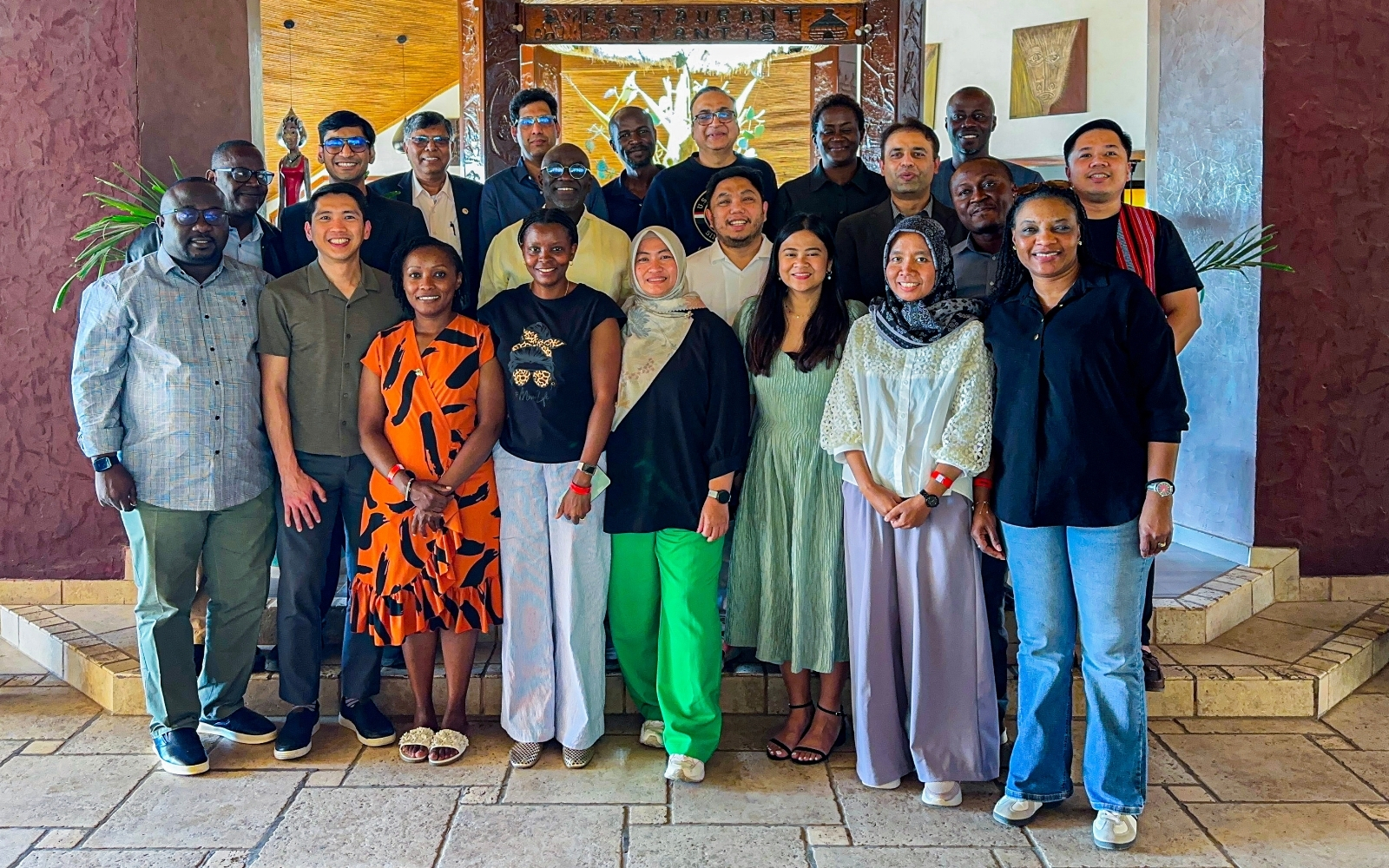
What the meeting ultimately provided was a shared perspective. Listening to the experiences of other hubs across Africa and Asia made it clear that the Philippines was not alone in navigating uncertainty. Many teams had faced similar transitions, pressures, and doubts. At the same time, they shared stories of adaptation, resilience, and continued impact. This collective reflection helped normalize the challenges of the past year and reinforced a shared sense of purpose across the global TCI community.
The discussions were grounded in realism. TCI is operating in a global environment where development assistance for health is increasingly constrained, making efficiency and focus more critical than ever. The meeting acknowledged these realities openly, including leaner global support structures and the need for greater hub-level autonomy. Importantly, this shift was framed not as a setback, but as an evolution toward a more mature and sustainable operating model.
For the Philippines, this message resonated strongly. Over the past years, TCI, in partnership with the Zuellig Family Foundation, has demonstrated its role as a powerful scale-up engine, enabling cities to rapidly expand access to modern family planning services using proven approaches. By working through local governments, TCI strengthens health systems, builds institutional capacity, and embeds data-driven decision-making where it matters most. These are not short-term wins, but foundational improvements designed to endure beyond external support.
This is precisely why TCI matters now more than ever. In a context of shrinking global health budgets, TCI’s model delivers high impact at relatively low cost. By leveraging existing systems, local leadership, and tested practices, TCI maximizes return on investment while reducing long-term dependence on donor funding. It protects what has already been achieved and enables countries to do more with less.
The global meeting reinforced this value proposition. Despite the uncertainties experienced in 2025, the collective results from the NextGen phase demonstrate TCI’s credibility and global reach. Across multiple countries, TCI-supported cities have reached millions of women with family planning services, contributing to healthier families and stronger communities. These results are measurable, well documented, and replicable across diverse contexts.
Encouragingly, the meeting also brought clarity and optimism about the future. Continued funding from Bayer, alongside ongoing discussions with other partners, signals sustained confidence in TCI’s approach. While resource mobilization remains a shared responsibility, the opportunity ahead is clear. TCI offers a compelling platform for donors seeking efficient, scalable, and sustainable investments in primary health care and family planning.
For our team in the Philippines, the meeting was both affirming and energizing. It validated the strategic direction we are taking under TCI 20.30, with an emphasis on prioritization, operational efficiency, and strong local ownership. Approaches such as clustered city support, streamlined reporting, and practical, on-demand access to knowledge at the facility level align well with the global push to simplify systems while safeguarding results.
Leaving the meeting, the uncertainty that characterized much of 2025 gave way to clarity, reassurance, and confidence. TCI is entering its next phase not as an untested initiative, but as a proven mechanism for translating global evidence into local impact. For governments, partners, and donors committed to advancing primary health care and family planning, TCI represents an opportunity to protect past investments and scale what works in a way that is efficient, locally led, and built to last.
Author: Dr. Anthony Faraon, ZFF TCI-Philippines Chief of Party
Supporting accelerated improvements in Sarangani Province: Pivotal role of nutrition governance
From 2019 to 2022, Sarangani Province made significant improvements in the nutritional status of pregnant women, infants, and children due to strong political commitment, substantial health system investments, and active convergence programs, though challenges remain in the coherence and integration of nutrition-specific and nutrition-sensitive programs, necessitating local legislation and enhanced convergence mechanisms.
A Case Study on Sarangani’s Nutrition Program Implementation
This case study analyzes the factors that contributed to the improvement of Sarangani Province’s nutritional outcomes from 2018 to 2022, describing changes in nutritional outcomes, identifying effective strategies and mechanisms, and examining the influence of leadership and governance interventions as well as lessons learned in planning, implementing, and monitoring nutrition programs.
Leadership and Governance in Nutrition for the First 1000 Days Intervention Package in Samar, Northern Samar, and Zamboanga del Norte: Baseline Assessment of Three Philippine Provinces
This baseline assessment report evaluates the existing governance measures related to the implementation of first 1,000 days (F1KD) services in Samar, Northern Samar, and Zamboanga del Norte, providing a detailed analysis of current nutrition and governance landscapes and offering strategic recommendations for improvement.