Moving Capital to Impact: What the AVPN Global Conference Means for Nutrition
Insights from the Field

At the AVPN Global Conference 2026 in Delhi, global leaders explored how capital can drive lasting systems change in nutrition. For Dr. Joyce Viar, Nutrition Director at Zuellig Family Foundation (ZFF), the answer lies in stronger local leadership, government ownership, and sustained investment. With ZFF’s Pook Malusog showcased under AVPN’s Nutrition Leaders Programme, Dr. Viar explained how catalytic financing can transition toward government adoption, positioning ZFF’s work as a model for system-level change in the Philippines and across Asia.
—
In Delhi, India, a global gathering of funders, governments, and development leaders asked a critical question: What will it take to move capital beyond projects and toward lasting systems change? For the Zuellig Family Foundation, the answer begins with a familiar proposition: stronger local leadership, government ownership, and sustained investment in nutrition.
Putting local government at the center
This question echoed throughout the AVPN Global Conference 2026 in Delhi, India, where philanthropic organizations, government leaders, development organizations, and social investors explored how capital can be better translated into meaningful and sustained social impact.
For ZFF, the conversation struck close to home. For more than a decade, ZFF has worked with local governments to strengthen leadership, governance, and systems for better health and nutrition outcomes. At the conference, this experience became part of a larger Asian conversation that is shifting from financing individual projects to investing in systems, institutions, and partnerships that can sustain results.
A defining moment for ZFF came when Pook Malusog was invited as an impact showcase under AVPN’s Nutrition Leaders Programme, an initiative focused on mobilizing capital for maternal and child nutrition across Asia and selected conflict settings.
The dedicated nutrition financing session explored how philanthropy, government financing, corporate capital, state-linked funds, and Islamic social finance could be combined to address persistent financing gaps in nutrition.
Against this backdrop, Pook Malusog offered a different way of thinking about what an investment in nutrition can look like. It is not simply a program delivering services to communities. It is an approach that seeks to strengthen the local systems through which nutrition outcomes are achieved and sustained.
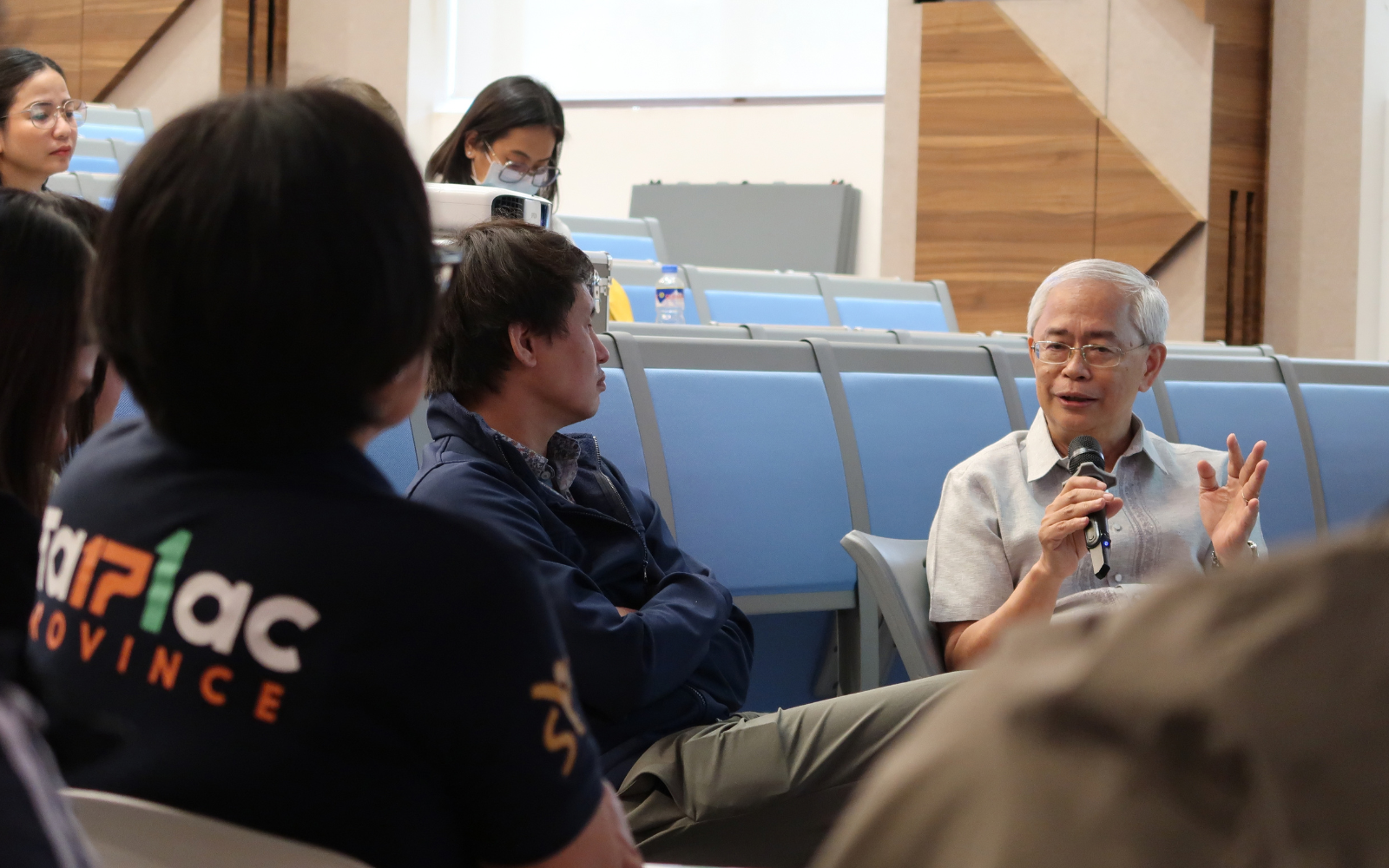 Photo above: A provincial governor and his team take part in a Nutrition Leadership and Equity Acceleration Program (NutriLEAP) executive session focused on strengthening local leadership and governance for better nutrition outcomes.
ZFF’s experience highlighted several elements: strengthening local government leadership and accountability; building the capacity of local health and nutrition actors; using evidence and data to inform decisions; working within decentralized government systems rather than creating parallel structures; and ensuring that the government itself owns the changes being introduced.
Across 11 provinces, ZFF’s experience, including sustained nutrition improvements observed over a decade and increasing government adoption, offers a practical illustration of how strengthening local systems can contribute to longer-term outcomes. It also reflects how the Foundation’s work continues to evolve, from the First 1,000 days (F1KD) toward the next 1,000 days (F2KD).
The real financing gap
One of the strongest messages from the nutrition discussions was that the world may no longer have a simple evidence problem. We know much more about what works in nutrition. The harder question is: How do we finance and deliver what works at the scale and for the length of time required to produce meaningful change?
Rather than treating nutrition primarily as a welfare expense, the discussions positioned it as an investment in human capital, productivity, and long-term economic development. But even when the case for investment is clear, financing systems can make sustained action difficult. Regulatory constraints can limit non-government contributions, public budgets may not always align with priority nutrition interventions, and grant cycles are often short while meaningful outcomes can require 10 to 15 years to achieve.
This creates a fundamental mismatch: long-term problems are being financed through short-term instruments.
The conference discussions pointed toward blended and pooled financing as part of the response, using philanthropic or catalytic capital to leverage government, corporate, and faith-based resources rather than substitute for them. For ZFF, this reinforces an important principle: external capital should not simply finance another project cycle. It should help create the conditions for the government to eventually finance and sustain the work.
In other words, catalytic investment should have an exit strategy, not from the problem, but toward government ownership and public financing.
From pilots to solutions that can scale
The same shift in thinking surfaced across other sessions at the conference. AVPN CEO Naina Subberwal Batra opened the conference by asking how we move capital to impact. The question resonated beyond nutrition. Climate, health, poverty, and other complex challenges cannot be addressed through isolated interventions; they require systems thinking, collaboration, and long-term approaches.
Collective action was described as “collaboration plus plus,” going beyond coordination toward deeper alignment and shared responsibility for outcomes. For ZFF, this has particular relevance to leadership development. Strengthening leaders is not simply about giving them new competencies. It is about enabling them to exercise leadership differently within the systems where they work, bringing people together, aligning resources, using evidence, and creating accountability for results.
The philanthropy discussions also called for greater flexibility and humility. Funders need to understand complex systems before designing solutions and be willing to learn from failure.
Perhaps most importantly, there was a clear call to move beyond a proliferation of disconnected pilots and invest in approaches that have the potential to scale.
The question therefore changes from: “Does this project work?” to: “What would it take for this approach to work through the systems that already exist, and at a scale that matters?”
Building resilience before the crisis
The conference also broadened the conversation from impact to resilience. Humanitarian financing discussions highlighted how funding systems often respond to crises rather than investing in the relationships and systems that can reduce their impact.
One message captured the idea simply: “Build relationships before crises, not during them.”
For ZFF, this has clear relevance to provinces facing disasters, conflict, displacement, and climate-related shocks. Resilience needs to be built into governance systems, relationships, planning, and community engagement before disruption occurs. The same principle applies to nutrition. A resilient nutrition system has the relationships, leadership, data, financing, and local capacity needed to absorb shocks without allowing vulnerable children and families to fall further behind.
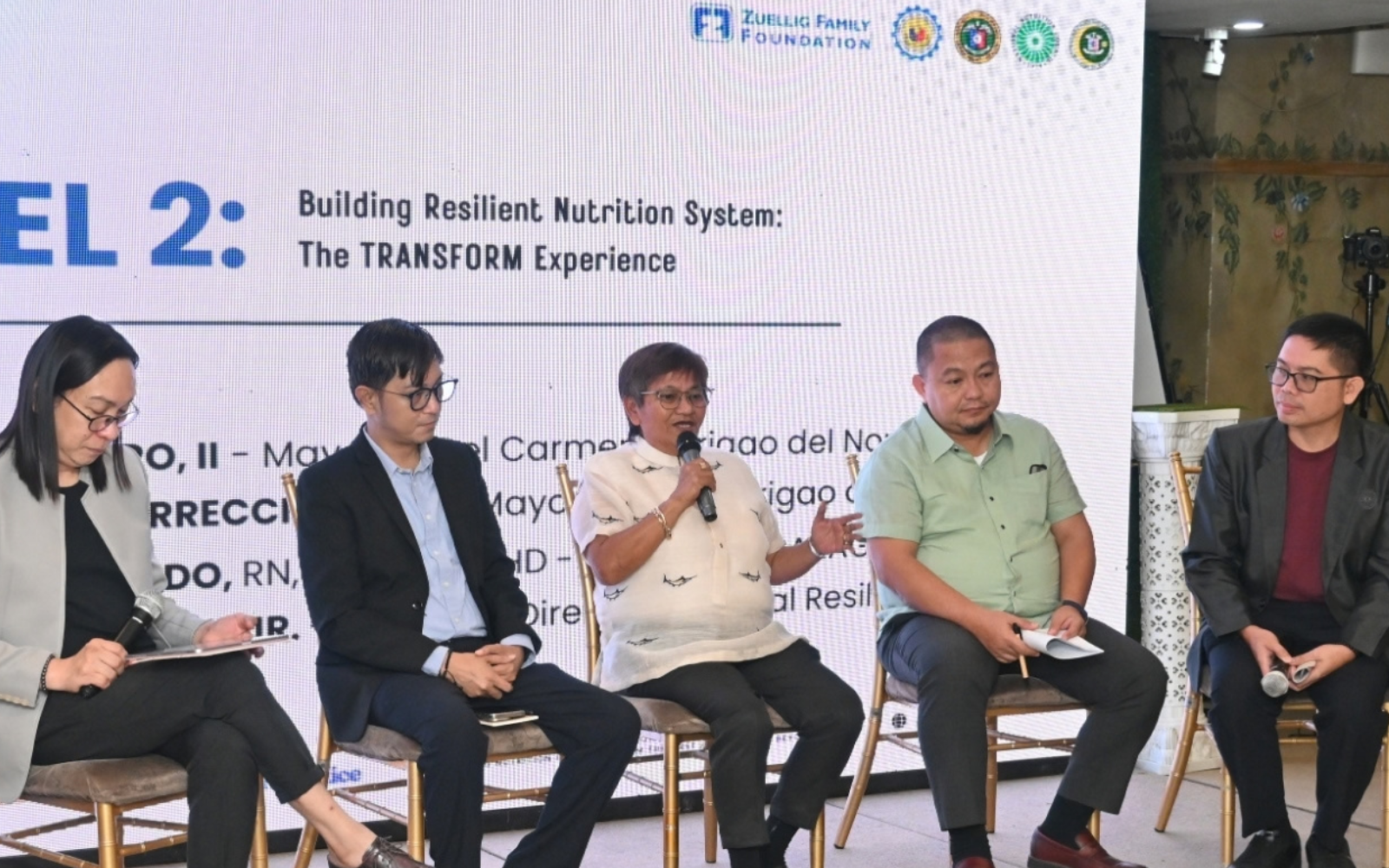 Photo above: A Pook Malusog Community of Practice panel discussion explores nutrition resilience, including lessons from Project TRANSFORM (Transdisciplinary Approach for Resilient and Sustainable Communities) in building health and nutrition systems that can withstand disruptions.
From beneficiaries to owners
Another important thread was the changing role of communities, particularly women, in development. Gender-responsive financing discussions moved beyond viewing women simply as beneficiaries. Investment should strengthen women’s agency and their ability to make decisions about education, economic participation, health, and reproductive health. Government, meanwhile, needs to be part of the equation so successful approaches can become embedded in public systems.
This perspective resonates with ZFF’s work in maternal health, nutrition, leadership, and local governance. People are not simply recipients of systems. They are part of the systems that determine whether those systems work.
A new proposition for ZFF
Taken together, the conversations in Delhi point toward an opportunity for ZFF to sharpen its own proposition.
First, make the investment case for nutrition more explicit, not only as a health intervention, but as an investment in human capital, productivity, poverty reduction, and long-term development.
Second, develop catalytic financing propositions that complement rather than replace government resources, with a deliberate pathway from external investment to government adoption and sustained public financing.
The conference also reinforces the importance of financing horizons that match the time required to achieve nutrition outcomes. As AI and data analytics become more accessible, these tools could help strengthen how organizations diagnose problems, identify patterns, estimate resource requirements, model outcomes, and support decision-making, while keeping human judgment and contextual understanding at the center.
There is also an opportunity to contribute to AVPN’s emerging conversations around an Asian funders coalition for maternal and child nutrition, bringing ZFF’s experience in local government leadership, systems strengthening, nutrition governance, and government adoption into a wider regional platform.
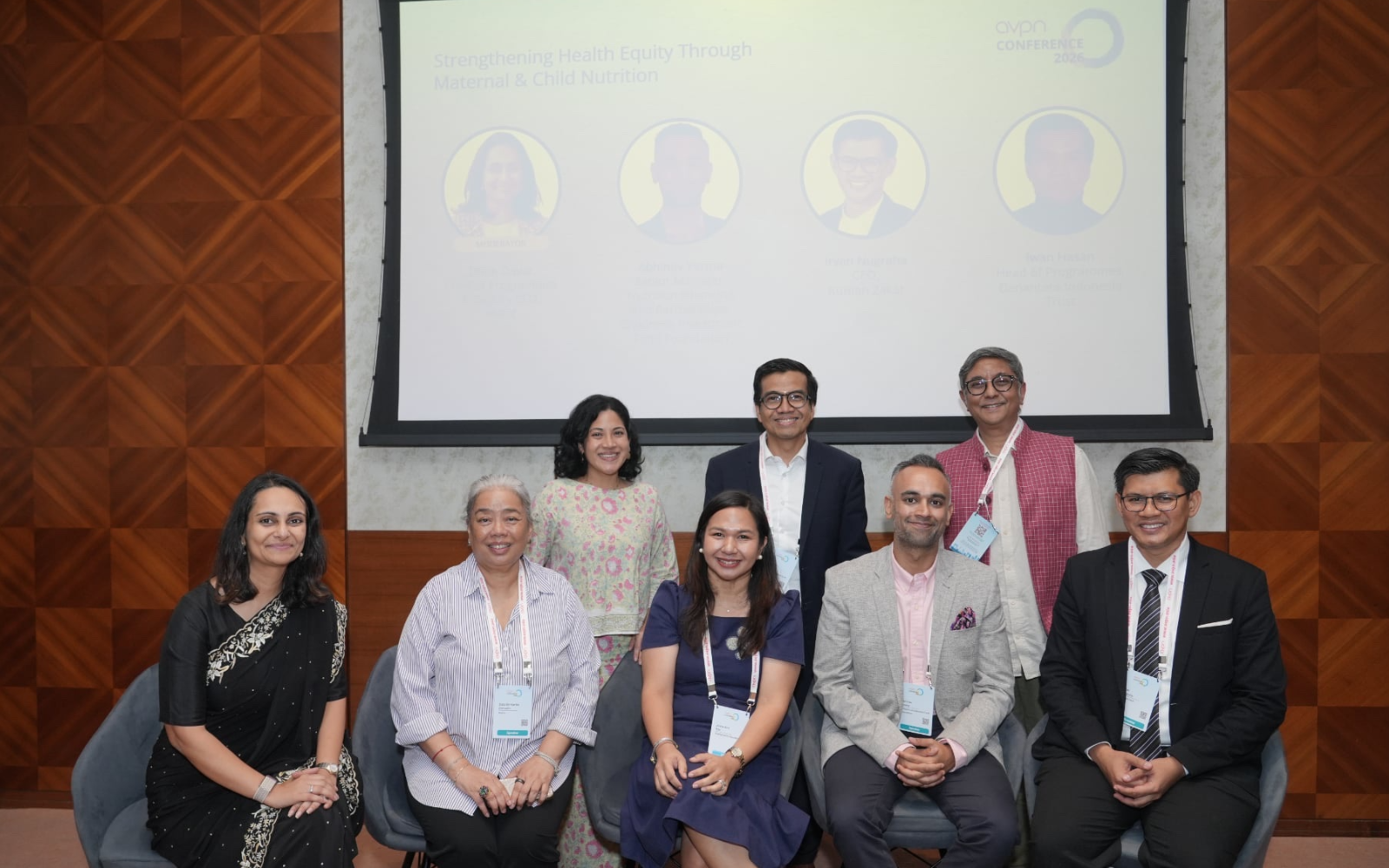 Photo above: Dr. Joyce Viar (third from bottom right) joins fellow development leaders at the AVPN Global Conference 2026 in Delhi, India.
Moving capital differently
The AVPN Global Conference 2026 offered more than new ideas about philanthropy or financing. It challenged participants to reconsider what impact means and what it takes to sustain it.
For ZFF, being invited to present Pook Malusog as an impact showcase was an opportunity to bring a Philippine experience into this broader Asian conversation. More importantly, it affirmed the relevance of an approach grounded in local leadership, government ownership, and systems strengthening to a global question: How can capital help create lasting change?
The answer may not lie in finding more projects to fund. It may lie in investing differently, as we do in ZFF: investing in the leaders, institutions, relationships, and systems that allow solutions to take root and endure.
For ZFF, this opens an opportunity to position its work not simply around implementing health and nutrition programs, but around catalyzing government-led, system-level change and helping mobilize capital for sustained nutrition impact in the Philippines and, potentially, across Asia.