Camarines Sur Completes Training to Guide Barangays Toward Inclusive, Gender-Responsive Health Systems Governance
News
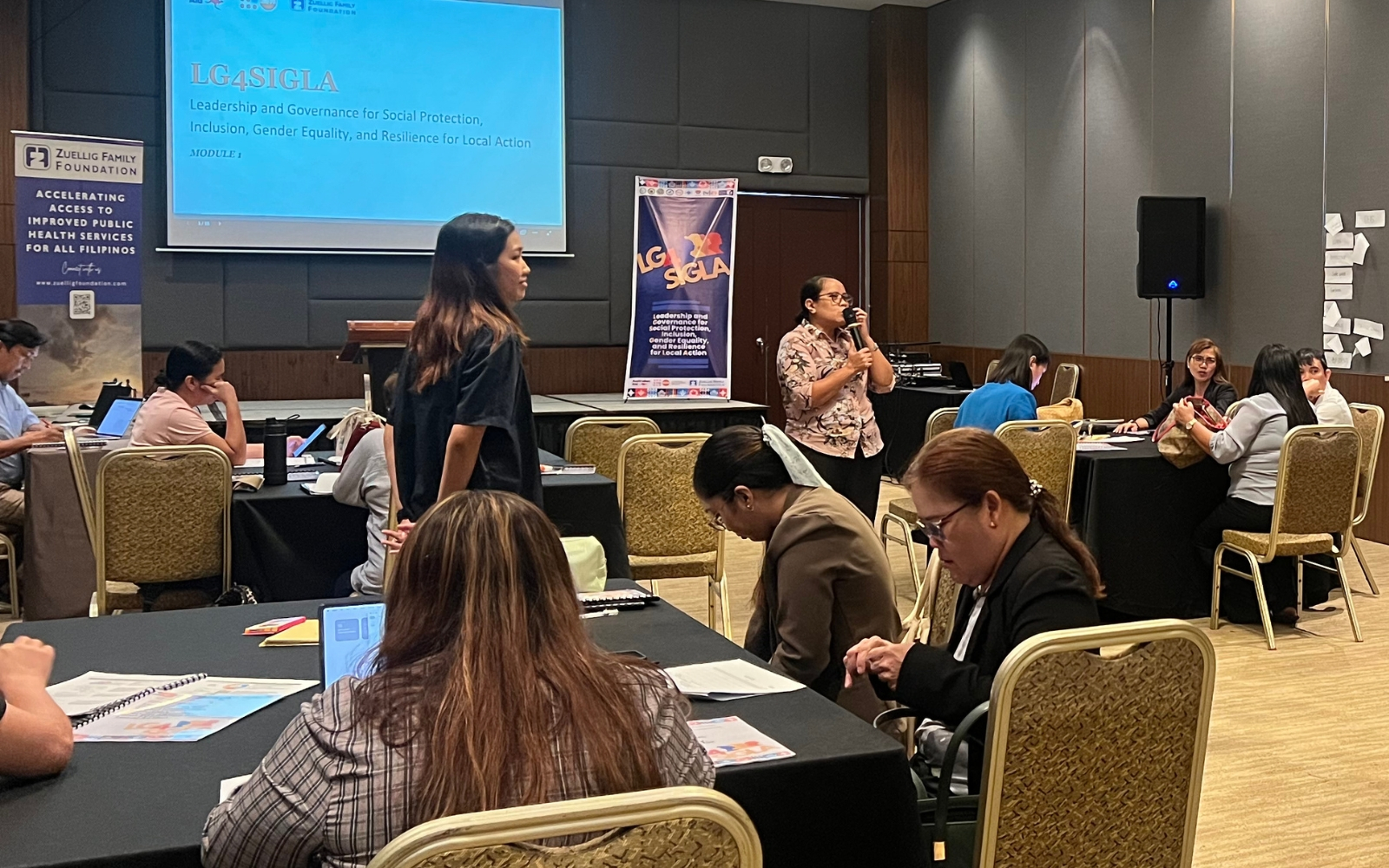
Bringing human development closer to communities begins with local leaders who understand the needs of their people and work together to address them.
With this goal, 19 Provincial and Municipal Core Team Fellows from Camarines Sur gathered for the three-day Training of Trainers (TOT) on Leadership and Governance for Social Protection, Inclusion, Gender Equality, and Local Action (LG4SIGLA) Module 1 for Barangays last October 14–16, 2026. Conducted under the 9th Country Programme of the United Nations Population Fund (UNFPA) Philippines, in partnership with the Zuellig Family Foundation (ZFF) with funding support from Australia’s Department of Foreign Affairs and Trade (DFAT), the training prepared the Provincial Core Team (PCT) of Camarines Sur and the Municipal Core Teams (MCTs) of Nabua, Minalabac, and Bula to facilitate LG4SIGLA sessions at the barangay level.
The LG4SIGLA Program is designed to equip local governments with the skills needed to advance inclusive, gender-responsive, and resilient health systems governance. At its core, the program recognizes that lasting change for women, children, and marginalized groups depends on the commitment and capability of local leaders.
Related article:
Throughout the three-day training, the Fellows revisited the objectives, key messages, and logical flow of LG4SIGLA Module 1 for Barangays. The sessions emphasized not only understanding the content but also recognizing how each discussion contributes to a shared vision of improved human development outcomes at the community level. The Fellows reviewed sessions on Current Reality: Ang Kalagayan ng Human Development sa Aming Munisipyo at mga Barangay, the LG4SIGLA Program, the LG4SIGLA Barangay Roadmap, and Preferred Reality: Ang Pangarap Naming Human Development para sa Aming Barangay. These sessions guided participants in examining the current human development situation in their municipalities and barangays and envisioning the changes they hope to achieve.
The training also revisited key concepts in Bridging Leadership and Behavior Centered Design (BCD), including the five steps of BCD: Framing, Empathy, Map, Ideate, and Prototype. Through these sessions, the Fellows strengthened their understanding of approaches that can help communities identify challenges, understand people’s experiences and behaviors, generate potential solutions, and develop practical responses to human development concerns.
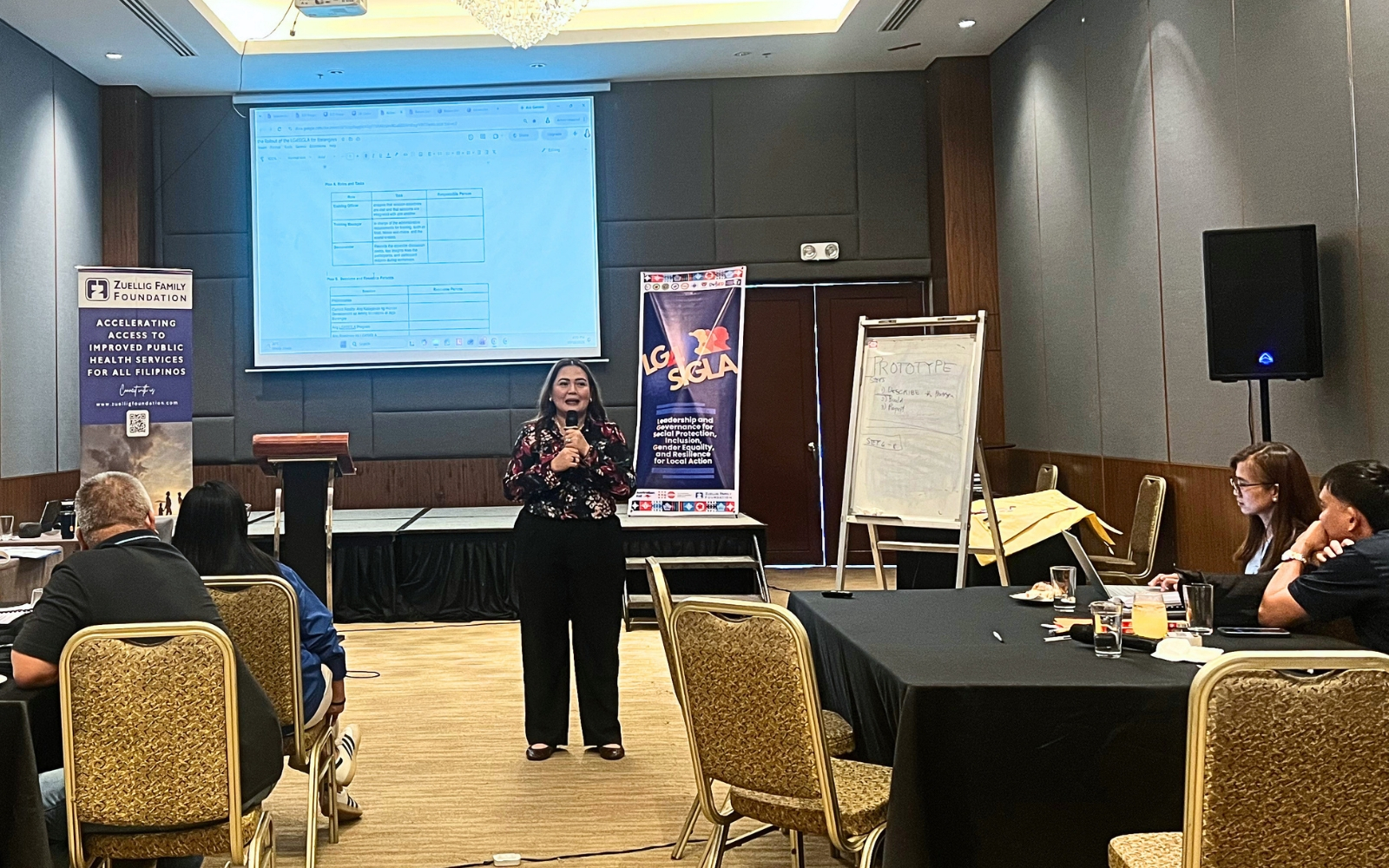 Joflorenn Krestel Regalado, Nurse III, presents the Provincial Core Team’s Behaviour-Centered Design (BCD) Prototype, highlighting the team’s proposed strategies to encourage positive and observable behavior change.
Beyond reviewing the training content, the TOT provided opportunities for the Fellows to practice delivering selected sessions and receive feedback. Through return demonstrations, participants applied their understanding of the sessions’ objectives, key messages, facilitation processes, and expected outputs. The exercise helped the Fellows prepare to translate the module’s concepts into engaging and meaningful learning experiences for barangay participants. It also reinforced the importance of effective facilitation in guiding discussions, encouraging participation, and helping local stakeholders connect human development issues with possible actions in their communities.
The training concluded with action planning for the rollout of LG4SIGLA Module 1 for Barangays. This provided an opportunity for the Provincial and Municipal Core Teams to begin preparing for the next phase of implementation and identify the steps needed to bring the learning sessions closer to communities.
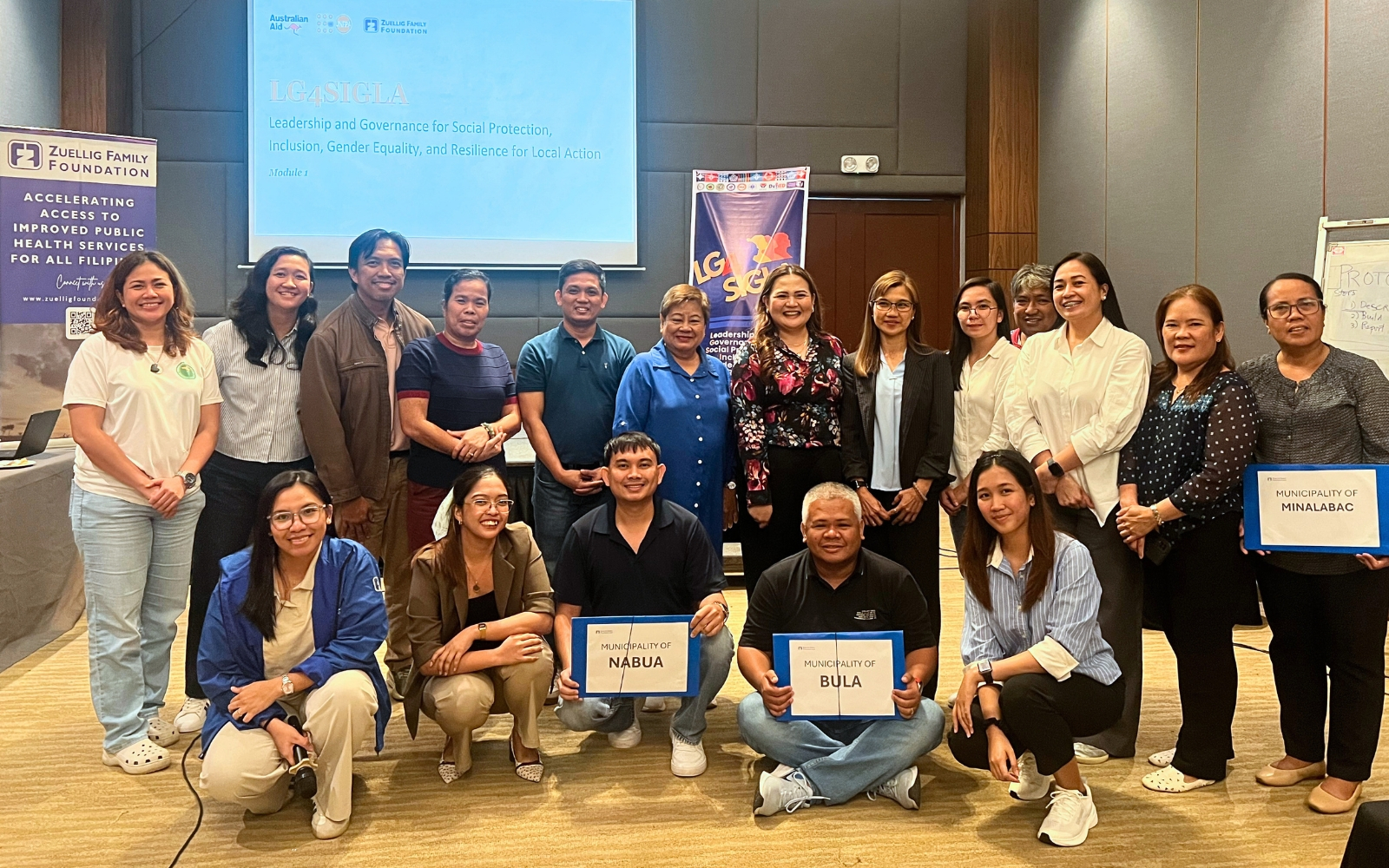 The ZFF team, together with the Camarines Sur Provincial and Municipal Core Teams of Bula, Minalabac, and Nabua poses for a group photo following the successful completion of the three-day Training of Trainers for Barangay LG4SIGLA held at Summit Hotel, Naga City.
The Barangay LG4SIGLA TOT marks an important step in extending the LG4SIGLA learning process to the barangay level. By preparing Provincial and Municipal Core Team Fellows to facilitate the sessions, the initiative seeks to strengthen the capacity of local teams to guide community discussions on human development, social protection, inclusion, and gender equality.
As part of their practicum, the Fellows are expected to facilitate the LG4SIGLA Module 1 rollout in participating barangays in March 2027. This next phase will provide opportunities for barangay stakeholders to examine their current human development realities, articulate their preferred future, and work toward identifying actions responsive to the needs of their communities.
Through the continued engagement of provincial, municipal, and barangay stakeholders, LG4SIGLA aims for a stronger local leadership, more inclusive governance, and coordinated action toward improved human development outcomes in Camarines Sur.