PRESENTATION: Nutrition Leadership in Practice: A Governance Approach through the Pook Malusog Nutrition Governance Program
At 18th Association of Pacific Rim Universities (APRU) Global Health Conference held on October 28–31, 2025, at Universiti Malaya in Kuala Lumpur, Malaysia, Dr. Joyce Viar, Nutrition Director of the Zuellig Family Foundation (ZFF), presented how ZFF strengthens nutrition leadership through a governance approach. She introduced the Pook Malusog Nutrition Governance Program and showed how it equips local leaders to work together, make informed decisions, and build stronger, more resilient nutrition systems.
Benchmarking ZFF city and municipal sites with the Seal of Good Local Governance health performance assessment, 2022 to 2024
This technical paper looks at how Zuellig Family Foundation (ZFF)-supported cities and municipalities performed in the Seal of Good Local Governance (SGLG) Health Compliance and Responsiveness (HCR) assessments from 2022 to 2024, and compares these results with national performance.
Building on the provincial benchmarking study released in May 2025, this follow-up analysis helps ZFF better understand where its partner local governments are progressing and where more support is needed. The findings will guide future program strategies, strengthen collaboration with local government units, and support more responsive capacity development aligned with national priorities for Universal Health Care.
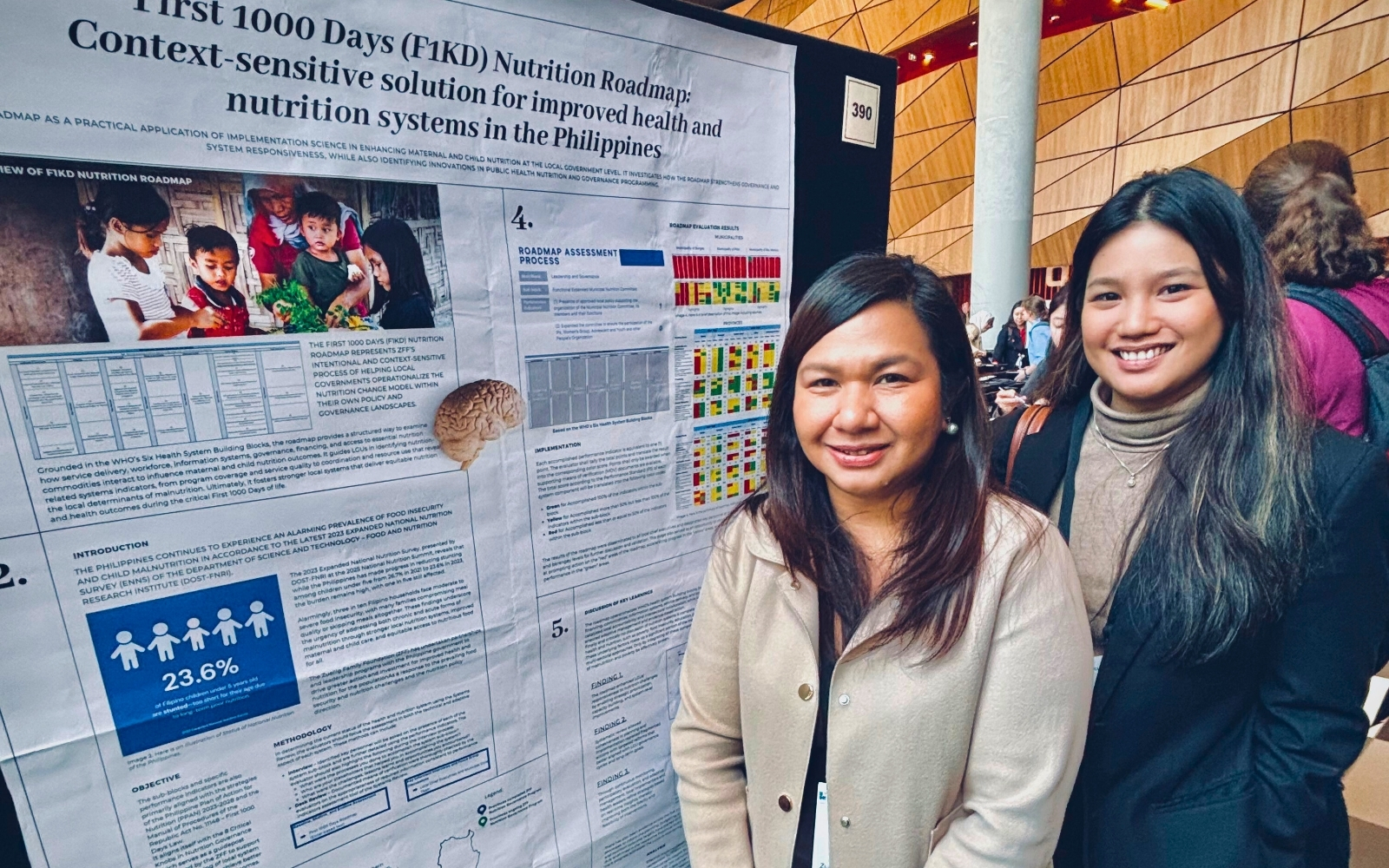
POSTER: First 1,000 Days (F1KD) Nutrition Roadmap: Context-sensitive solution for improved health and nutrition systems in the Philippines
This poster presented at the Evidence and Implementation Summit 2025, held October 27–29, 2025 at the Melbourne Convention and Exhibition Centre, Australia, showcases the First 1,000 Days (F1KD) Nutrition Roadmap. The roadmap guides local governments in strengthening maternal and child nutrition by applying the World Health Organization (WHO)’s health system building blocks and the Zuellig Family Foundation’s Eight Critical Knobs of Nutrition Governance.
From 2019–2022, the roadmap improved governance, planning, financing, data use, and service delivery across five priority provinces under the Philippine Plan of Action for Nutrition (PPAN) through a structured systems review and adaptive learning tools. It enabled local governments to act more cohesively, use evidence effectively, and integrate stronger strategies into their Provincial Nutrition Action Plans (PNAPs). While the country reduced stunting rates nationally, ongoing malnutrition and food insecurity underscore the need to further strengthen multisectoral and locally driven nutrition systems.
Read more:
Bridging Evidence and Action: Lessons in Implementation Science and Early Childhood Development
At the Evidence and Implementation Summit (EIS) 2025, I represented the Zuellig Family Foundation (ZFF) among global leaders in research, policy, and practice. Held in partnership with the Implementation Science Health Conference Australia (ISHCA), the Summit reminded us that in health, nutrition, and early childhood development, having evidence is not enough—how we translate it into action is what truly makes a difference.
Implementation Science: Turning Knowledge into Practice
Implementation science studies how practitioners can turn evidence-based interventions into routine practice. Its goal is simple but profound: to improve lives by ensuring proven programs reach people, adapt to their needs, and remain effective over time. At ZFF, we live this every day. Our First 1,000 Days (F1KD) Nutrition Roadmap serves as a laboratory of learning. We track what works, address challenges, and translate lessons into actionable guidance for local implementers, policymakers, and partner organizations.
The Summit highlighted that scaling up programs never works perfectly from the start. As Cillian Nolan of J-PAL Europe noted, “Scaling up may open more challenges and problems. Having a model doesn’t mean there’s no room for refinement.” Even for our Nutrition Leadership and Equity Acceleration Program (NutriLEAP), a successful pilot requires continuous adaptation to succeed in different contexts. Challenges do not signal failure, but rather they spark creativity, innovation, and learning.
Early Childhood Care and Development: The Power of Early Stimulation
The Summit also featured the power of early childhood care and development (ECCD). Research shows that the earliest years critically shape brain development, language acquisition, and social-emotional growth. In New Zealand, children as young as 1.5 years old engage in structured learning routines, sound play, storytelling, and early mathematical exercises. These activities improve brain development, language skills, and self-regulation, even for children from low-income families. Singapore’s programs highlight social-emotional skill building, showing that strong early foundations help children thrive academically and socially. For the Philippines, these examples underscore both guidance and urgency: investing in early childhood strengthens the nation’s future.
Engaging Local Government: Context is Everything
During a Special Interest Group session on international development, participants discussed how varying government support affects program implementation. I shared ZFF’s experience collaborating with local government units to strengthen health and nutrition systems. The Philippines’ devolved governance structure offers opportunities for local innovation, but outcomes depend on leaders’ capacity and commitment. This session reinforced a key principle of implementation science: context shapes success. Evidence-based programs succeed only when implementers understand local realities, build strong relationships, and exercise effective leadership.
EIS 2025 reminded me that progress requires persistence, learning, and continuous adaptation—not perfect models. Implementation science provides the framework to bridge evidence and action, while ECCD demonstrates why early, evidence-informed interventions shape healthier, more equitable communities. At ZFF, we implement strategies thoughtfully, document lessons rigorously, and share knowledge widely—ensuring every child, regardless of background, can thrive.
Author: Dr. Joyce Viar, ZFF Nutrition Director
From Evidence to Action: Strengthening Nutrition Governance through the First 1,000 Days Roadmap
The Zuellig Family Foundation (ZFF) joined the Evidence and Implementation Summit (EIS) 2025, a global event that brought together experts from different regions to share how they use evidence to guide better decisions in public health, social development, and community welfare. ZFF presented its abstract and poster on the First 1,000 Days Roadmap, becoming the only Filipino organization featured in its category.
Turning Evidence into Action
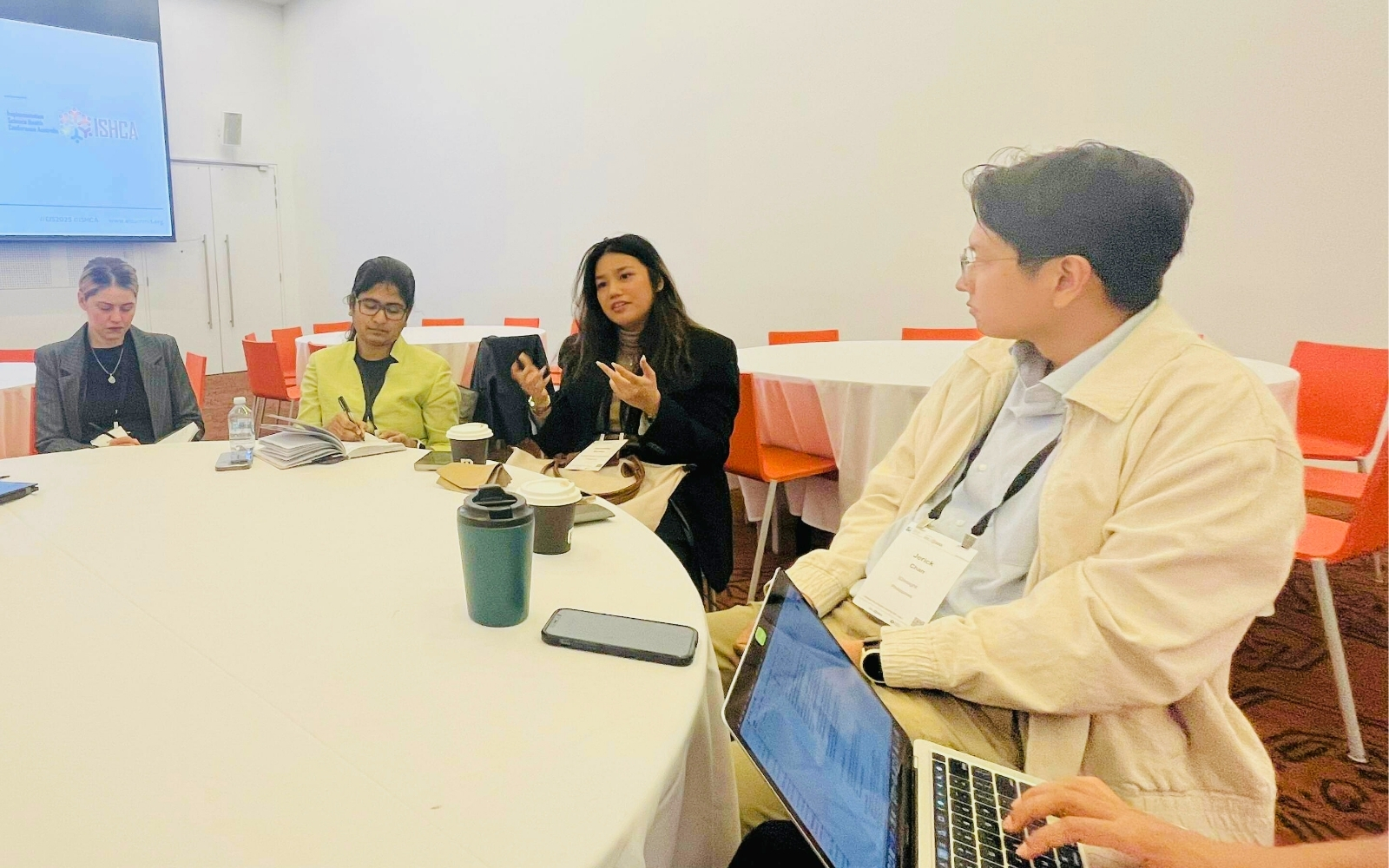
ZFF shared how it applies implementation science to address malnutrition and stunting in the Philippines—challenges that continue to affect children’s growth and development. Through the First 1,000 Days Roadmap, ZFF showed how leadership development, systems thinking, and intersectoral collaboration among local governments and partners strengthen health and nutrition services for families.
ZFF Nutrition Director Dr. Joyce Viar explained that turning evidence into action requires more than technical skills. She noted that collaboration, trust, and a shared understanding of how research improves people’s lives make implementation truly effective.
Sharing the ZFF Pook Malusog Experience
ZFF presented its Nutrition Governance approach through the Pook Malusog Program, which helps local governments strengthen their health and nutrition systems. The program demonstrates how good governance and evidence-based action work together to create lasting change.
Through ZFF’s Pook Malusog Dashboard, local leaders can detect malnutrition early through its automatic calculation of inputted health indicators. The dashboard can be used offline and includes a geo-tagging feature that helps track families needing nutrition support. By consolidating health and nutrition data, it enables timely and informed decisions at the local level.
Inspiration from Global Leaders
New Zealand Prime Minister Christopher Luxon captured the spirit of the event with his message to “make things happen.” He described the summit as truly inspiring, offering practical lessons that can guide continued innovation in health and development.
Several key insights from the sessions resonated with ZFF’s work:
- Balancing speed and strategy in implementing programs recognizing when to move quickly and when to pause for reflection to avoid counterproductive results.
- Ensuring both the quality of evidence and the quality of its use focusing not only on whether research informs policy but also on how effectively it is applied.
- Combining data with compelling storytelling showing that evidence paired with a strong narrative can inspire reforms and motivate stakeholders to act.
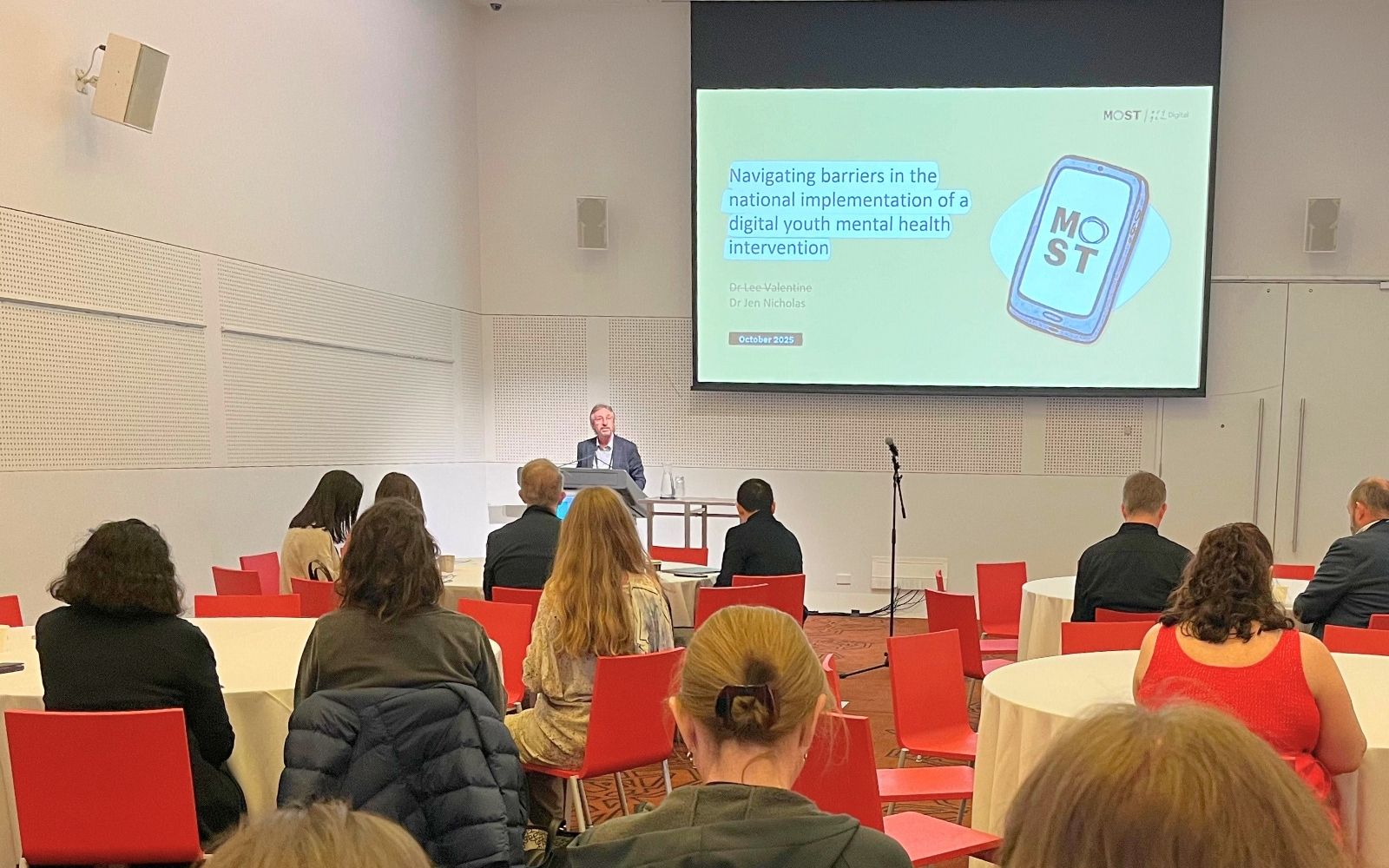
Together with organizations from Asia, Africa, Europe, and the Americas, ZFF contributed to discussions on how countries adapt and scale solutions that fit their own contexts. By engaging with a global community of practice, ZFF continues to “make things happen” for better health and nutrition outcomes in the Philippines. Addressing stunting and wasting among children must remain a national priority, requiring sustained investments in proven interventions that can be replicated and scaled to maximize impact for future generations.
Author: Samantha Morales, ZFF Nutrition Knowledge Management and Communications Associate; Krizzia Esperanza, ZFF Corporate Communications Associate
Faith, Trust, and Health: Reflections from Dr. Manuel Dayrit
Zuellig Family Foundation (ZFF) Chairman Dr. Manuel M. Dayrit shares his reflections in the Georgetown-Lancet Commission on Faith, Trust, and Health, drawing from five decades of public health leadership in the Philippines and abroad.
Dr. Dayrit recalls his early work in rural Mindanao, where he learned that trust begins with listening. “We built a community of kindred spirits,” he said. “We learned to speak the language of the heart by listening to their needs and aspirations.”
As a former Secretary of Health and World Health Organization (WHO) Director, he led efforts to strengthen health systems and unite people around a shared mission. Now as ZFF Chair, he continues to guide programs that build local leadership and advance Universal Health Care (UHC)—work that he sees as both technical and spiritual.
“Promoting [UHC] requires attention not only to political and technical issues, but also to the spiritual journey of individuals and communities toward compassion, fairness, and peace,” he said.
Excerpt from the feature:
Why did you want to join a commission focused on faith, trust, and health, and what are you hoping it will achieve?
The invitation to join the Commission came at an auspicious moment. I had recently returned from Southern Philippines [Mindanao], where I met with Imams to discuss teenage pregnancy prevention in a culture where girls are married off as soon as their monthly periods begin. I also met Catholic educators who were teaching Muslim children about health at school. I saw that our local efforts could be shared and amplified by joining a global Commission that seeks to bring faith and health communities together to improve health care for marginalized populations.
Related article:
ZFF October 2025: Activities, Insights, and Impact
Health Governance
Strengthening UHC leadership
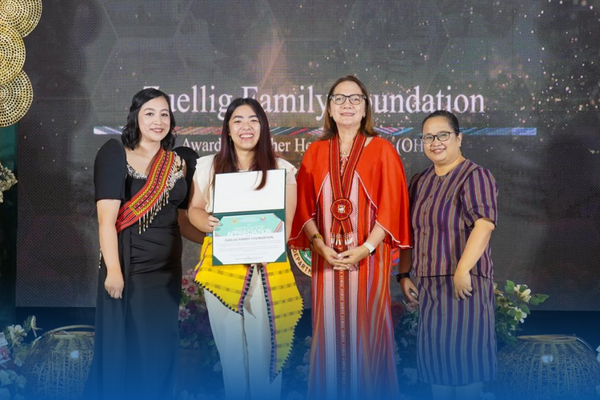
The Department of Health–Cordillera Administrative Region (DOH-CAR) honored the Zuellig Family Foundation (ZFF) with the Gawad Kalusugan Award for advancing Universal Health Care (UHC) in Northern Luzon. The recognition highlights ZFF’s partnership with local governments through the Bayang Malusog Leadership and Development Program, which supports stronger health systems and people-centered services in the Cordillera provinces.
Across the country, ZFF continued supporting local leaders in strengthening their UHC journey. In Benguet, mayors and health officers of Kapangan and Kibungan renewed their commitment to better health governance through the Bayang Malusog onboarding. The Foundation also joined the Provincial Health Officers Association of the Philippines (PHOAP) Annual Conference, helping facilitate reflections on sustaining UHC implementation.
Notes from the field:
Nutrition Governance
Scaling family nutrition through Pook Malusog
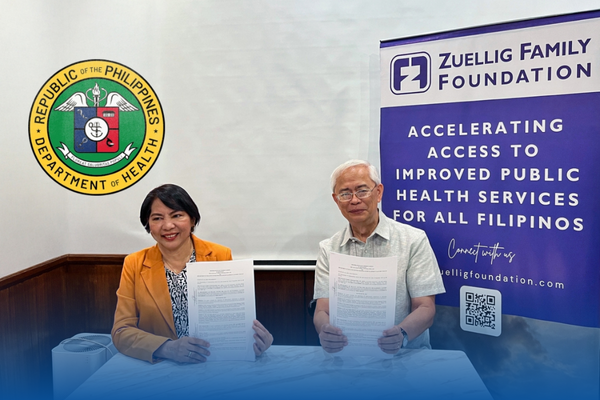
ZFF and the DOH-Eastern Visayas formalized their partnership to strengthen family nutrition and reduce child stunting through the Pook Malusog Family Stunting Reduction Program. The initiative will be piloted in four municipalities in Samar and Northern Samar, combining mentoring, data use, and community-based governance to help families achieve better nutrition in the first 1,000 days and beyond.
ZFF’s nutrition work also reached other parts of the country and the global stage this month. In Tarlac, the Provincial Nutrition Committee and Governor Christian Yap joined an executive briefing and data workshop to guide stronger nutrition action plans. In Siargao, Del Carmen leaders enhanced their data management through the Health and Nutrition Information System training. The Pook Malusog Community of Practice Conference brought together local partners to share lessons on building resilient nutrition systems. ZFF also represented the Philippines at the Evidence and Implementation Summit 2025, sharing evidence-based approaches to improving health and nutrition governance.
Notes from the field:
AYSRH Governance
Local champions lead AYSRH reforms
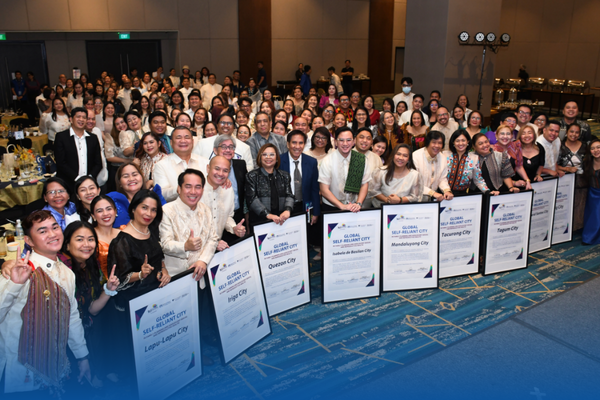
ZFF celebrated the graduation of nine Global Self-Reliant Cities under The Challenge Initiative (TCI)-Philippines: General Santos, Iriga, Isabela de Basilan, Lapu-Lapu, Pasig, Mandaluyong, Quezon City, Tacurong, and Tagum. These cities demonstrated how strong leadership and data-driven decision-making can reduce teen pregnancies and improve family planning and adolescent and youth sexual and reproductive health (AYSRH) outcomes.
In Catanduanes, ZFF helped strengthen the province’s readiness in implementing the Minimum Initial Service Package (MISP) for reproductive health through a three-day Readiness Assessment Workshop. The activity gathered government partners and local leaders to assess gaps, plan actions, and reinforce collaboration for more coordinated emergency responses. Together, these initiatives reflect how ZFF continues to support local governments in building inclusive, evidence-based, and youth-responsive health systems.
Notes from the field:
Partnerships and Global Engagements
Learning and leading with partners
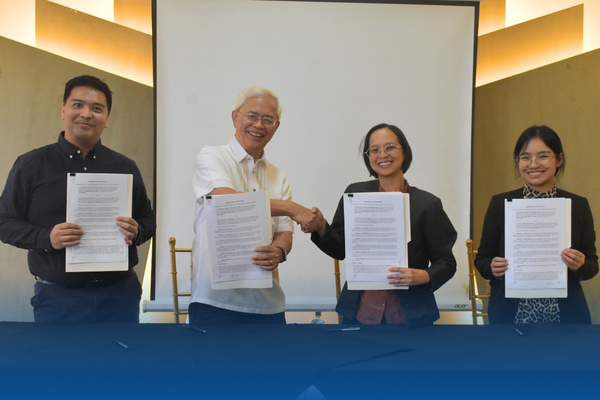
Partnership and shared learning remained central to ZFF’s work this month. The Foundation renewed its partnership with Cordillera College (CCDC) to strengthen leadership and governance training for local health officials in Northern Luzon—continuing a shared commitment to nurturing evidence-based and community-centered health leadership in the region.
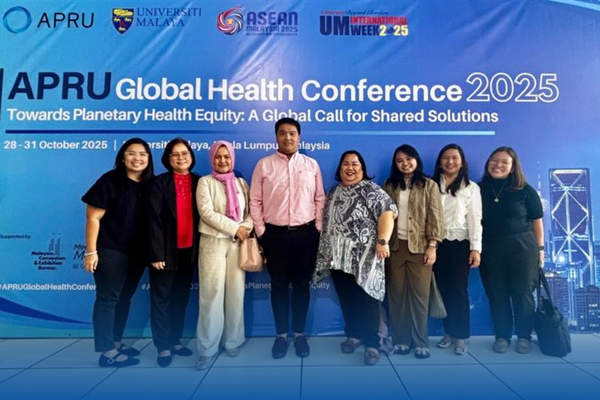
ZFF also joined the Association of Pacific Rim Universities (APRU) Global Health Conference in Malaysia, where it presented its works on health and nutrition governance in the Philippines. The event highlighted ZFF’s role in promoting equity and resilience through local action and collaboration. These engagements reinforce ZFF’s mission to build alliances that ensure sustainable health leadership and stronger, more resilient systems for every Filipino.
Notes from the field:
Welcoming New Faces to the ZFF Family
ZFF is happy to welcome its newest team members who bring fresh energy and expertise to our shared mission. May your work with ZFF be purposeful, fulfilling, and inspiring!
- Rommuelle Ken Sombillo, Provincial Associate Officer for Tarlac and Negros Occidental
- Erickson Manuel Pawig, Project Manager for Bayang Malusog Leadership and Governance Program
Stronger systems, healthier families, better futures.
PRESENTATION: Strengthening DOH Regional Core Teams in North Luzon, Philippines: How the Bayang Malusog Program Empowers Health Leaders to Accelerate Universal Health Coverage
Refocusing on What Matters: Addressing the Structural Drivers of Inequity in Advancing Universal Health Care
As the Philippines advances the implementation of Universal Health Care (UHC), we must stay focused on what truly matters: achieving equity for all.
The Association of Pacific Rim Universities (APRU) Global Health Conference 2025, held at Universiti Malaya in Kuala Lumpur, Malaysia, strongly echoed this call. With the theme “Towards Planetary Health Equity: A Global Call for Shared Solutions,” the conference gathered more than 400 participants from 20 countries, including the Philippines, who shared a common goal: to reimagine health systems that are inclusive, resilient, and sustainable.
Key Insights

The pre-conference session on Delivery of Health Systems with Innovation and Inclusivity emphasized that health equity demands bold and context-specific innovations that address social and environmental determinants of health. Despite ongoing efforts to strengthen primary and preventive care, many systems still face structural inequities and planetary health challenges that slow progress toward UHC.
Speakers during the main conference highlighted innovation as a powerful driver of transformation. They showcased implementation science, telemedicine, mobile medical clinics, and artificial intelligence as tools that expand access, remove barriers, and empower the health workforce. These innovations can only succeed when we pair them with adaptive learning, process improvements, and strong community ownership.
By integrating planetary health into the discussions, participants reinforced that human well-being and environmental sustainability are inseparable. Achieving equitable health outcomes therefore requires not only technical innovation but also ethical stewardship and responsible governance that ensure health systems remain inclusive, fair, and environmentally sound.
Reflections
The conference emphasized a critical insight: while we design many strategies, frameworks, and programs, health systems—including ours—often fail to confront the root causes of inequity.
 Conceptual Model for Community-Based Solutions to Promote Health Equity. Adapted from National Academies of Sciences, Engineering, and Medicine (2017). Redesigned by the Zuellig Family Foundation.
This figure reminds us to ground solutions in community realities and co-create them with those most affected by inequities.
This reflection challenges us to ask: Do we fully understand the structural drivers that sustain inequities? Do our UHC efforts respond effectively to them? And do we integrate planetary health principles to strengthen our systems for the long term?
The Philippines must go beyond expanding access to truly achieve UHC. We must transform our systems to confront inequities at their source. Policies and programs should draw from evidence, engage communities, and align with the broader vision of planetary health equity.
The Zuellig Family Foundation (ZFF) advances this vision through its local health system initiatives. ZFF empowers health leaders, strengthens governance, and fosters collaboration across sectors. Lessons from the APRU Global Health Conference 2025 affirm that the path toward UHC must remain people-centered and planet-conscious, ensuring that no one—and no community—is left behind.
View the full presentation here