Digital Tool in Pilar, Siargao Improves Nutrition Tracking
“Gusto kong gumanda ‘yung buhay ng mga kababayan ko. Kung puro sila masakitin, how can they farm, fish, or study?” says Liza Resurreccion, former Mayor and current Vice Mayor of the municipality of Pilar in Siargao Island, Surigao del Norte.
This 4th class municipality at the center of the beach and surfing island of Siargao is often caught in the push to modernize and develop for tourism, but Vice Mayor Resurreccion chose to prioritize the health and well-being of Pilar, especially its youngest residents. With 163 cases of stunting in the municipality in 2024, malnutrition tops Pilar’s health priorities.
In 2024, the Zuellig Family Foundation (ZFF) introduced the Pook Malusog Dashboard to Pilar. By 2025, this digital health and nutrition information system was used in all 15 barangays of Pilar to record the height and weight measurements of children under the nationwide Operation Timbang (OPT) program. Then Mayor Resurreccion procured 15 tablet computers for each barangay to support the use of the Dashboard.
The Dashboard detects malnutrition early through its automatic calculation of inputted health indicators. It can be used without internet connection, and has a geo-tagging feature that helps in the tracking of families that need nutrition support.
“With the Dashboard, we want to improve the way [health and nutrition] data is gathered, analyzed, and utilized,” says Dr. Joyce Ann Viar, Nutrition Director at ZFF. Since the old pen-and-paper data gathering approach exposes data to human errors, Dr. Viar adds, “It is better na meron talaga tayong application or tool wherein hindi na kailangang isulat. It can be automatically encoded into a system that can then automatically process the information and give you more real-time analysis.”
Related articles:
- Real-Time Health Data: How Pilar, Siargao is Using the ZFF Pook Malusog Dashboard
- Empowering Barangays and Communities through Nutrition Governance: Pilar’s Journey
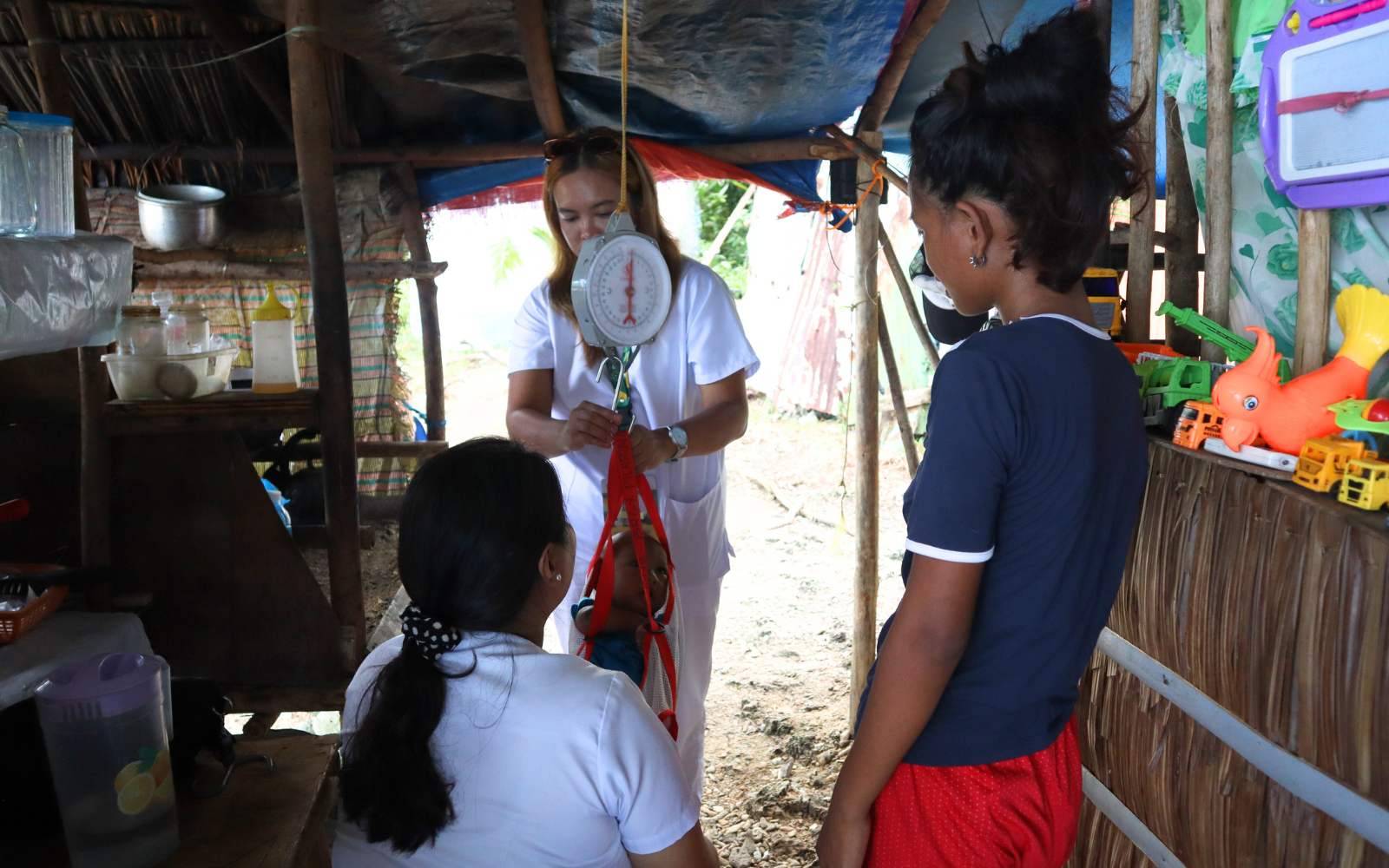
Ginaflor Minguita, Database Manager for Pilar, shares, “Sa [Pook Malusog Dashboard], madaling ma-identify kung ‘yung bata ay malnourished. Kasi pag-[enter] mo ng data, malalaman mo agad ‘yung result.” This allows them to provide intervention as soon as malnutrition is detected, compared to the process before the Dashboard was introduced and used. John Mar Virtudazo, Public Health Nurse of Pilar, notes, “After OPT, ma-receive namin ‘yung final output one month after pa. Kung may ma-identify na MAM/SAM (moderate/severe acute malnourished), it’s late na talaga para magbigay ng intervention.”
ZFF provides hands-on one-on-one sessions and coaching on the use of the Dashboard for the foot soldiers of OPT, the Barangay Nutrition Scholars (BNSs). Dr. Viar considers user acceptability—BNSs’ reluctance to use digital tools—as the primary challenge of the Dashboard rollout. “They have to understand why we need to go digital, why we need to use this application.
“No’ng una [mahirap], no’ng nagte-training pa kami, pero ngayon okay na,” says Joela Balunan, the BNS for Barangay Pilaring, Pilar. She shares that each of the 15 barangays of Pilar has at least one designated BNS, and they would work as a team, in small groups, to make their OPT work easier. “Dito [sa Dashboard], automatic na. Mas nakagaan po ito sa trabaho namin,” adds Ruth Coñado, BNS for Barangay Maasin, Pilar.
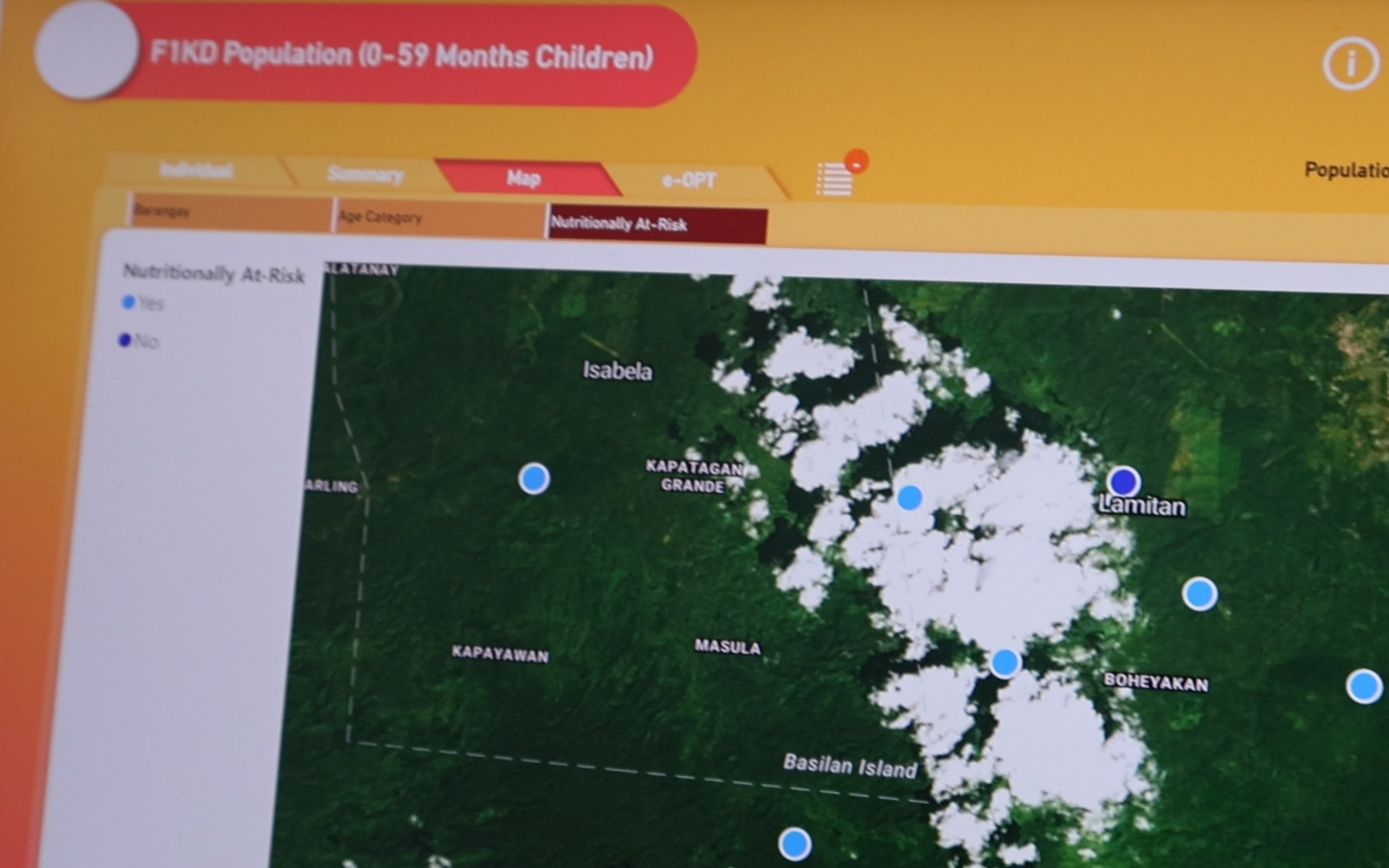
The ZFF Pook Malusog Dashboard, after its successful pilot implementation in Pilar, alongside Tipo-Tipo and Lamitan in Basilan, is set to be introduced in Del Carmen, another Siargao Island municipality, and other Basilan cities and municipalities within the year. “We saw a positive effect of using the tool, and positive feedback, not only from the users, but from the communities,” Dr. Viar says.
“We want more people to experience this. Having accurate data, [we get] higher chances our communities will be able to respond to malnutrition better and faster.”
Better Beginnings in Basilan: Investing in the First 1,000 Days
Once marked by conflict and instability, the Province of Basilan is now making progress in improving health and nutrition outcomes for young children.
Through strong local leadership and a decade of partnership with the Zuellig Family Foundation (ZFF), Basilan has strengthened systems for maternal and child health, food security, and early childhood care—especially during the critical First 1,000 Days (F1KD) of life.
ZFF shared this experience during the Asia-Pacific Regional Network for Early Childhood (ARNEC) Conference 2025. Speaking on a panel hosted by the Tanoto Foundation, ZFF presented how their work in Basilan has transformed early childhood outcomes through governance-focused approaches. Using the Foundation’s Bridging Leadership approach and Health Change Model, ZFF helped local leaders address gaps in health and nutrition despite the province’s complex and fragile context.
Related article:
- Municipal Leaders in Basilan Enhance Nutrition Governance through Zuellig Family Foundation Training
The Basilan Assistance Program (BAP), which built on earlier gains from the Provincial Nutrition Governance Program, trained governors and mayors to co-create local solutions, increase community participation, and strengthen service delivery. As part of the program, 255 barangays deployed community health workers to monitor and support pregnant women and malnourished children. Ten of the thirteen mayors underwent leadership and technical training further embedding nutrition priorities in local governance.
Between 2023 and 2024, stunting among children aged 0–2 dropped by 6.26 percentage points—from 16.74% to 10.48%. Wasting rates also declined, reflecting better capacity to prevent and manage acute malnutrition. Nutrition funding rose nearly fourfold, from 7.2 million pesos in 2021 to 27 million pesos in 2024. These improvements directly support brain development, emotional regulation, and school readiness—giving Basilan’s children a stronger start in life.
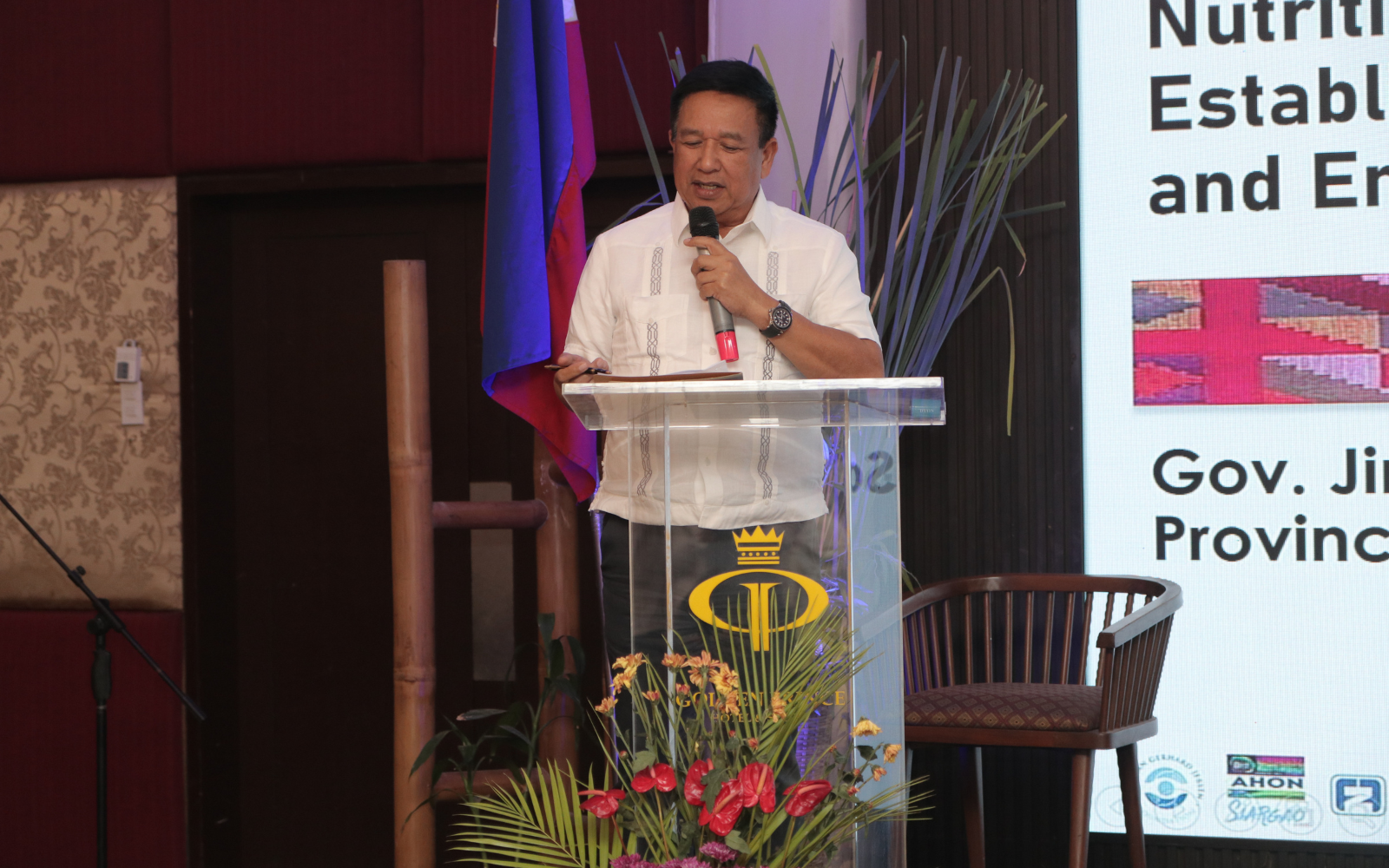
Basilan’s transformation shows that inclusive, equity-driven, and locally led programs can thrive even in post-conflict settings. “When we had peace, we now have the mental space to plan beyond the day after tomorrow,” said former Basilan Governor, now Vice Governor, Jim Hataman Salliman.
“We can now be more strategic and focus our investment in health and nutrition, which was not prioritized before.”