Bridging Evidence and Action: Lessons in Implementation Science and Early Childhood Development
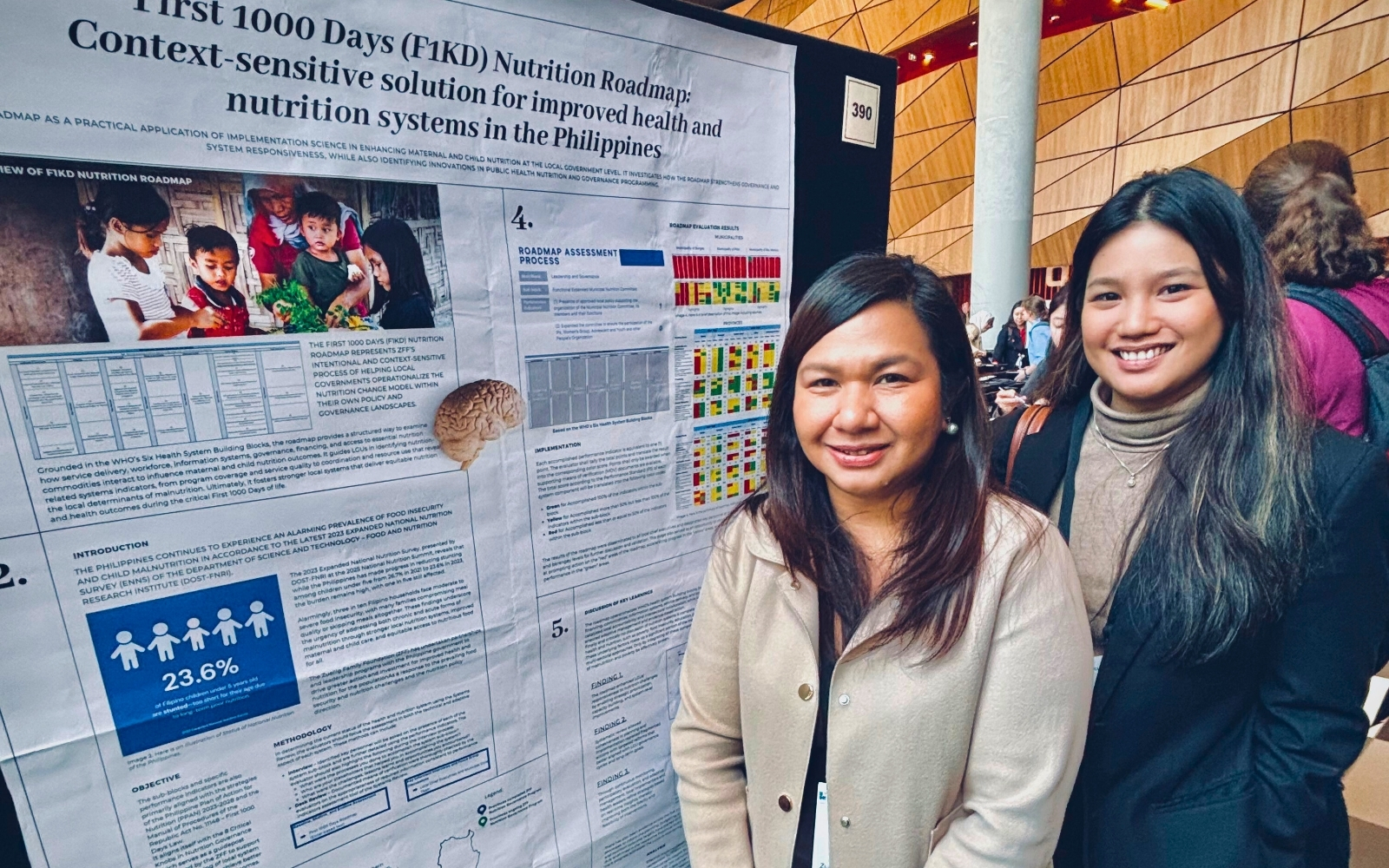
At the Evidence and Implementation Summit (EIS) 2025, I represented the Zuellig Family Foundation (ZFF) among global leaders in research, policy, and practice. Held in partnership with the Implementation Science Health Conference Australia (ISHCA), the Summit reminded us that in health, nutrition, and early childhood development, having evidence is not enough—how we translate it into action is what truly makes a difference.
Implementation Science: Turning Knowledge into Practice
Implementation science studies how practitioners can turn evidence-based interventions into routine practice. Its goal is simple but profound: to improve lives by ensuring proven programs reach people, adapt to their needs, and remain effective over time. At ZFF, we live this every day. Our First 1,000 Days (F1KD) Nutrition Roadmap serves as a laboratory of learning. We track what works, address challenges, and translate lessons into actionable guidance for local implementers, policymakers, and partner organizations.
The Summit highlighted that scaling up programs never works perfectly from the start. As Cillian Nolan of J-PAL Europe noted, “Scaling up may open more challenges and problems. Having a model doesn’t mean there’s no room for refinement.” Even for our Nutrition Leadership and Equity Acceleration Program (NutriLEAP), a successful pilot requires continuous adaptation to succeed in different contexts. Challenges do not signal failure, but rather they spark creativity, innovation, and learning.
Early Childhood Care and Development: The Power of Early Stimulation
The Summit also featured the power of early childhood care and development (ECCD). Research shows that the earliest years critically shape brain development, language acquisition, and social-emotional growth. In New Zealand, children as young as 1.5 years old engage in structured learning routines, sound play, storytelling, and early mathematical exercises. These activities improve brain development, language skills, and self-regulation, even for children from low-income families. Singapore’s programs highlight social-emotional skill building, showing that strong early foundations help children thrive academically and socially. For the Philippines, these examples underscore both guidance and urgency: investing in early childhood strengthens the nation’s future.
Engaging Local Government: Context is Everything
During a Special Interest Group session on international development, participants discussed how varying government support affects program implementation. I shared ZFF’s experience collaborating with local government units to strengthen health and nutrition systems. The Philippines’ devolved governance structure offers opportunities for local innovation, but outcomes depend on leaders’ capacity and commitment. This session reinforced a key principle of implementation science: context shapes success. Evidence-based programs succeed only when implementers understand local realities, build strong relationships, and exercise effective leadership.
EIS 2025 reminded me that progress requires persistence, learning, and continuous adaptation—not perfect models. Implementation science provides the framework to bridge evidence and action, while ECCD demonstrates why early, evidence-informed interventions shape healthier, more equitable communities. At ZFF, we implement strategies thoughtfully, document lessons rigorously, and share knowledge widely—ensuring every child, regardless of background, can thrive.
Author: Dr. Joyce Viar, ZFF Nutrition Director
PRESENTATION: Case of Basilan Province: Applying Governance through the Nurturing Care Framework
Building foundations for brighter futures: Zuellig Family Foundation (ZFF) at the Asia-Pacific Regional Network for Early Childhood (ARNEC) Conference 2025!
On the second day of ARNEC 2025, July 2, held in Manila, ZFF joined organizations across Asia to share inclusive and innovative approaches to early childhood development (ECD). During a panel on good practices hosted by the Tanoto Foundation, ZFF presented its 10-year journey in Basilan, where it worked with local leaders to improve services for children in their first 1,000 days (F1KD). Through its Bridging Leadership approach and Health Change Model, ZFF helped local governments strengthen systems for health, nutrition, responsive caregiving, and safety—despite the area’s long-standing security challenges.
ZFF’s experience in Basilan demonstrated the value of adaptive, locally-led governance in improving early childhood outcomes, especially in conflict-affected areas. While approaches may differ across countries, inclusive and sustainable ECD begins with collective action rooted in local realities.
View full presentation here:
ZFF Presentation_ARNEC