Expanding Horizons: General Santos City’s Drive for Accessible Long-Acting Contraceptives
General Santos City (GenSan) had trained health workers, functioning facilities, and national support for family planning (FP). Still, many families—especially in far communities—had limited access to modern contraceptives, particularly long-acting reversible contraceptives (LARCs), which can protect women for years.
During the pandemic in 2020, modern contraceptive use was only 30%, and LARC use was low across the city. Beyond distance, a key problem was that offices worked in silos, leading to fragmented services and unclear data.
City leaders and advocates also saw gaps in data. Judith Janiola, Head of the City Population and Management Office (CPMO); Desiree Garganian, Regional Director (RD) of the Commission on Population and Development (CPD) Region XII; and Angelina Paule, President of the United Private Midwives of GenSan City, Inc. (UPM), shared that weak and inconsistent reporting hid the real picture of contraceptive use and adolescent pregnancy. This made it harder to design programs based on evidence.
Related article:
In 2023, the city issued Executive Order No. 95-A creating the Family Planning Itinerant Team (FPIT) to reach underserved areas.
With support from the Zuellig Family Foundation through The Challenge Initiative (TCI)-Philippines, the Department of Health (DOH)-Region XII, and CPD-Region XII, GenSan also revived its City Leadership Team (CLT). Backed by former Mayor Ronnel Rivera and Mayor Lorelie Pacquiao, the CLT brought together health, education, social services, youth leaders, and community groups. The review confirmed that offices were not sharing data and that adolescent needs were often overlooked.

GenSan responded by aligning departments around shared data and goals. As RD Garganian noted, “General Santos was willing to lead, build capacity, and maximize TCI’s role in addressing these fundamental challenges.” A city directive required offices to share health data, helping teams see gaps and plan together. Providers were trained through the Family Planning Competency-Based Training (FPCBT), which gave hands-on skills in LARC insertion and removal, and strengthened adolescent-friendly, respectful care.
Trust and community outreach were central. “Earning the trust of clients is crucial,” Paule shared. “Our Enhanced Usapan sessions worked well because they didn’t just inform people about family planning—they also connected them directly to services.” Janiola added, “Family planning is not just about providing methods. It’s about improving quality of life. That’s why we emphasize informed choice and voluntarism.” Barangay nutrition scholars conducted house-to-house visits, and all facilities were upgraded to meet DOH standards for adolescent-friendly services.
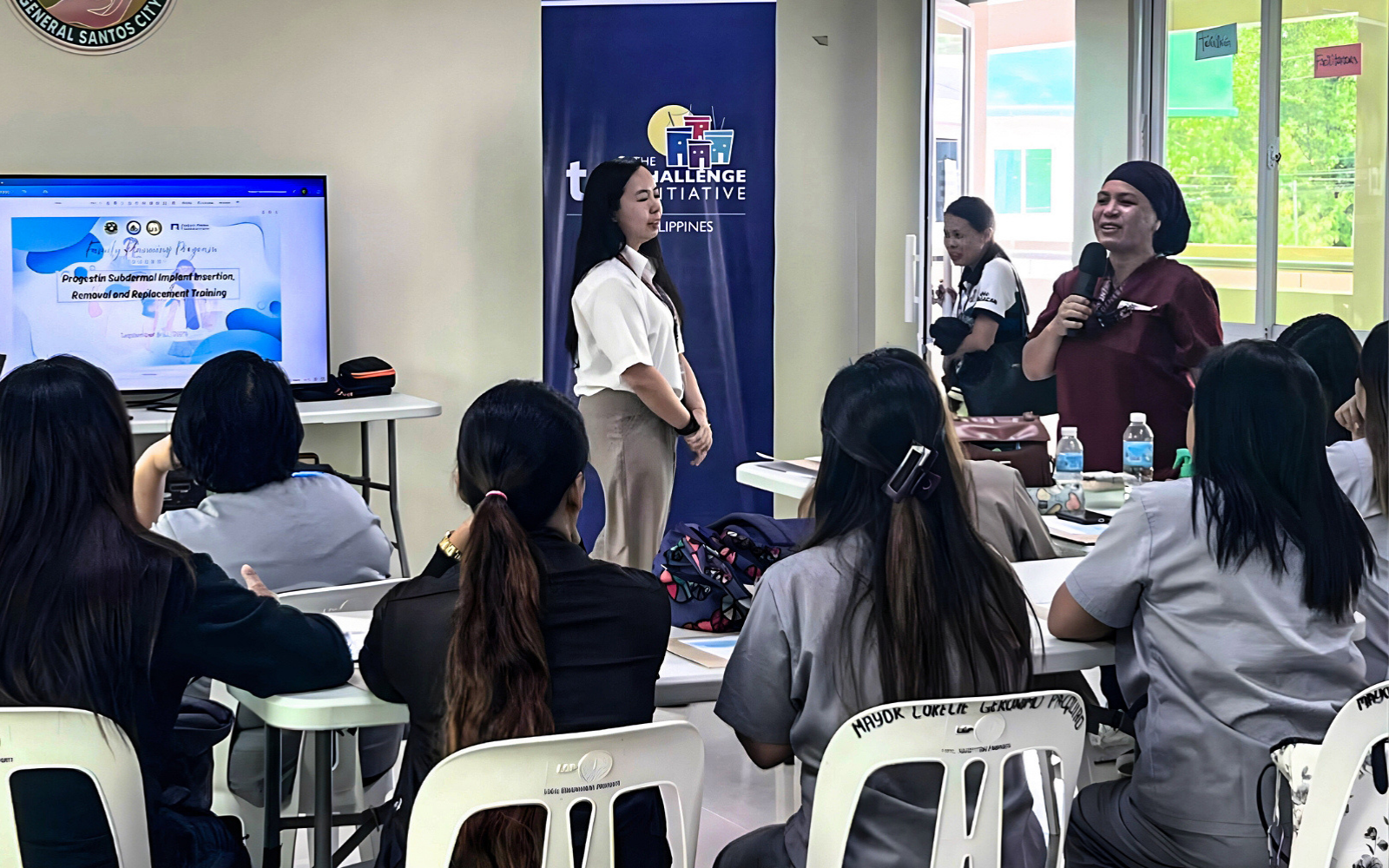
The results were clear. All 46 identified providers completed postpartum FP training, and all health facilities earned DOH certification as adolescent-friendly. With cleaned and harmonized data, GenSan established accurate baselines. Modern contraceptive prevalence rate (mCPR) rose from 30% in 2020 to 34% in 2024, exceeding the national target of 30%. LARC use more than doubled—from about 8,000 users in early 2021 to over 20,000 by mid-2025.
GenSan’s experience shows that lasting gains come from system-wide coordination, strong leadership, trained providers, and shared data. As RD Garganian emphasized, “The GenSan experience was unique… showing that the city’s sustainability can go beyond external support.” For Janiola, the work continues: “With General Santos in such a strong position, we can only hope for more—more policies supporting family planning and adolescent health, and more advanced data collection and monitoring systems.”
Banner photo: GenSan mobile implant outreach
Slowly but Surely: Iriga City’s Inclusive Path to Family Planning among Indigenous Peoples
Iriga City is home to diverse communities, including many indigenous peoples (IPs). Like other areas, the city faces reproductive health challenges such as misconceptions about family planning (FP), cultural hesitations, and difficulty reaching families in geographically isolated and disadvantaged areas (GIDAs).
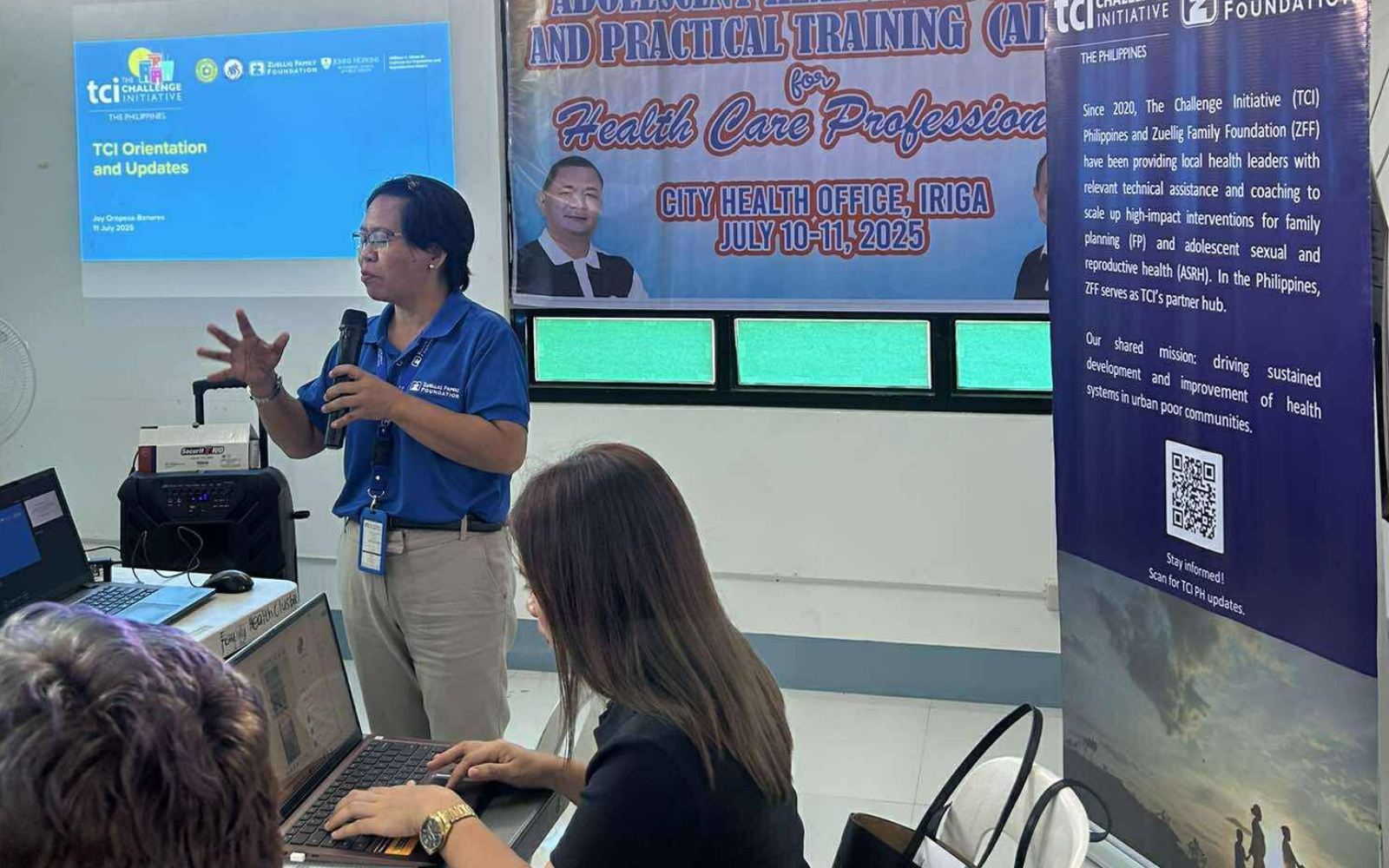
In July 2023, the city joined The Challenge Initiative (TCI), a global platform implemented in the Philippines through the Zuellig Family Foundation. With this partnership, the Iriga City Government and the City Health Office renewed their efforts to strengthen FP and adolescent and youth sexual and reproductive health (AYSRH), ensuring even the most underserved communities were included.
Related article:
Stories from the Frontlines
FP Coordinator Cyrene Oliva shared how TCI’s approaches helped Iriga improve data quality and slowly raise its modern contraceptive prevalence rate (mCPR). “Even if our mCPR dipped at first, we saw this as progress—because this time, our data was accurate. Now, with strengthened verification and continuous community engagement, our mCPR is climbing steadily again,” she said.
City Health Officer Dr. Ronald Pereña noted that mothers often hesitated to pursue family planning methods due to side effects, irregular supplies, and cultural expectations to seek their husband’s approval. Adolescents were also shy at first, but Oliva said that repeated discussions helped them open up. Several barangays later earned Certificates of Compliance as Level 1 Adolescent-Friendly Health Facilities—an important step under the AYSRH program.
Population Program Officer Mayet Amoroso Nacario observed that continuous awareness campaigns helped shift attitudes. “Before, many youth and even officials had little knowledge of adolescent health. Now, they are aware and more open. Teenage pregnancy still rises and falls, but families and schools are no longer ignoring it. There is now action and support,” she said.
Bridging Culture and Care
The city expanded FP access through Purok Kalusugan, a barangay-based initiative that integrates Department of Health (DOH) services at the purok level. Teams provided counseling, commodities, and even long-acting methods through house-to-house visits.
TCI supported Family Planning Competency-Based Training (FPCBT), enabling barangay workers to offer methods like implants and IUDs. This investment helped Iriga reach more IP communities in remote areas. Acceptance grew when IP barangay health workers—who were FP users themselves—became local champions.
Nacario shared that trust improved through repeated visits, conversations with leaders, and visible examples such as a chieftain choosing an implant. Dr. Pereña added, “Slowly but surely, you have to make them realize the big picture, that family planning will protect their health and wellbeing.”
Regular quality implementation checks, including monthly reviews and coaching, strengthened service delivery and ensured that adolescent-friendly facilities and FP programs remained responsive.
Stepping Up, Growing Up
Iriga also encouraged male involvement. More men began to ask for condoms and join FP discussions. Oliva recalled one husband who offered to have a vasectomy as a Valentine’s gift to his wife, saying it was his turn to share the responsibility.
The city also expanded AYSRH work in schools through the Department of Education (DepEd). Activities such as U4U Teen Trail sessions and age-appropriate film showings helped students learn about reproductive health and their rights. “Schools now invite us on their own,” Nacario said. “They even ask, ‘When will you come to our students?’ That’s proof that adolescent health is no longer taboo in Iriga—it is a collective priority.”
Sustaining Progress Together
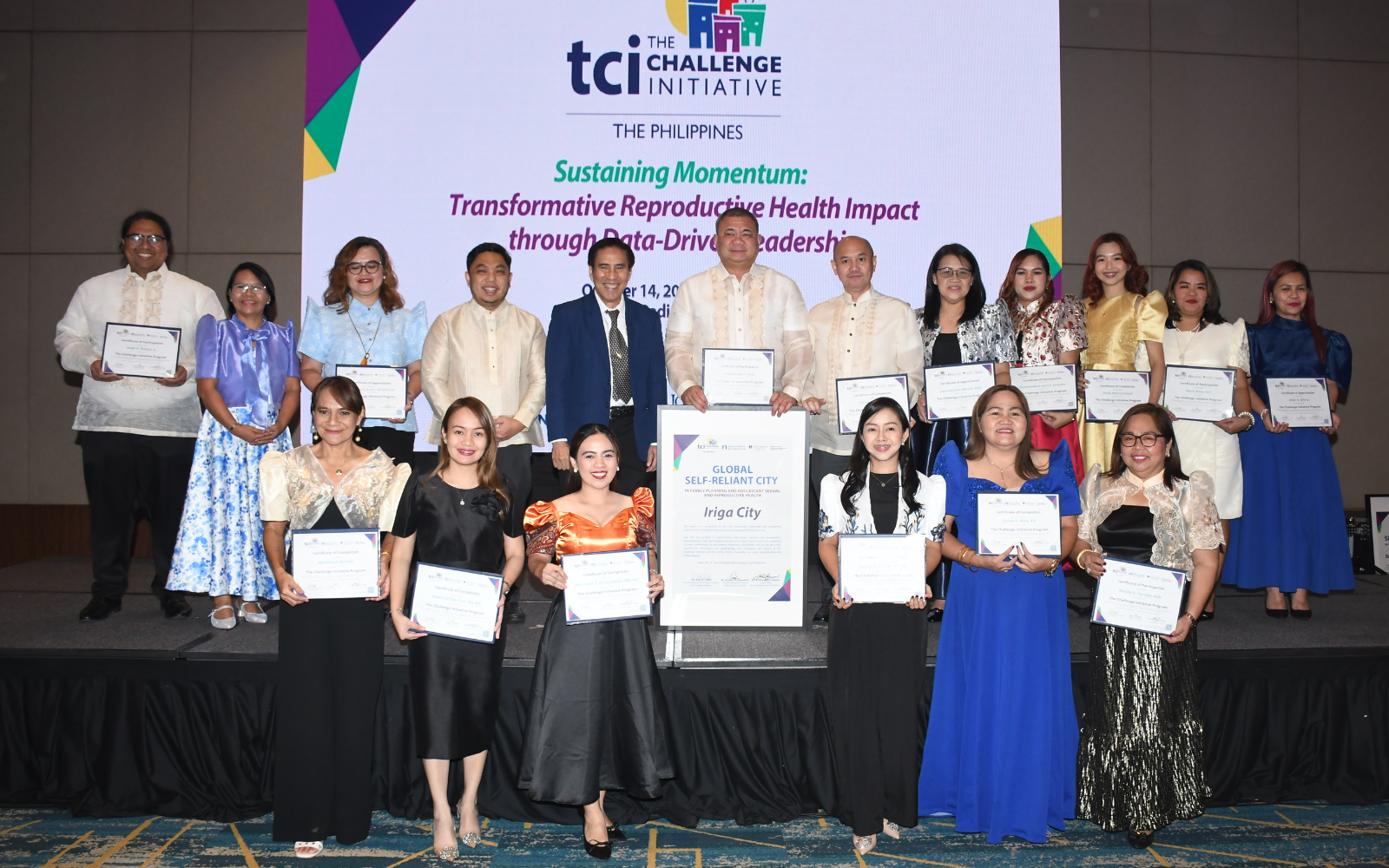
Iriga built its FP and AYSRH efforts on trust, cultural sensitivity, and sustainability. The city allocated local funds, including support for IP communities, to ensure programs continue even after external support ends. Partnerships with DOH, the Commission on Population and Development (CPD), ZFF, and TCI provided coaching and capacity-building, while local leaders and women’s organizations strengthened community ownership.
As Dr. Pereña shared, family planning is now part of Iriga’s long-term development plans. The city’s journey shows that even the most hard-to-reach families can make informed choices when programs are inclusive, respectful, and community-driven.