Strengthening Baguio’s Health System through Shared Leadership and Reflection
The Zuellig Family Foundation (ZFF), together with the Department of Health-Cordillera Administrative Region (DOH-CAR) and the City Government of Baguio, hosted a two-day City Health System Strengthening Program (CHSSP) workshop on November 20–21, 2025 at Mines View Park Hotel, Baguio City. The activity, part of the Bayang Malusog Leadership and Governance Program, brought the Baguio Local Health Board and health leaders from the City Camp and Irisan District Health Centers into one space to reflect on the city’s health challenges and opportunities.
Baguio’s Health Situation: Key Points
The workshop began with a grounding on Baguio’s 2024 health situation—a clear picture of both progress and continuing gaps. The leading causes of illness (acute respiratory infections, dental cavities, and hypertension) and the main causes of death (vascular diseases, cancer, and heart disease) showed the city’s dual burden of infectious and lifestyle-related conditions.
Dr. Celia Flor Brillantes, City Health Officer, added other important concerns. Maternal deaths remain high; antenatal care and full immunization percentages are still below national targets; and procurement delays have limited the availability of medicines for people with hypertension and diabetes. Partnerships—such as Abbott’s support for viral load testing—continue to enhance HIV services, but mental health cases increased sharply from 241 in 2023 to 525 in 2024, pointing to urgent psychosocial needs.
The city also faces staffing gaps, with 11 more health workers needed across facilities. Accreditation efforts under the Yaman at Kalusugan Para sa Pamilyang Pilipino (YAKAP) Program continue, supported by better population registration. The Mines View Health Center is preparing for accreditation by the end of the year.
Workshop Learning Sessions

Given this context, participants joined sessions on Universal Health Care (UHC), PhilHealth benefits, systems thinking, visioning, and ZFF’s Bridging Leadership Framework. Resource persons from DOH-CAR, PhilHealth, the Baguio Health Services Office (HSO), and ZFF guided the discussions, which helped deepen appreciation for shared leadership and collective action.
Throughout the workshop, health leaders shared reflections that captured the spirit of the program.
“Change does not happen overnight, but we can always start with our own,” said Dr. Vanessa Fagcangan of the Irisan District Health Center.
Dr. Ma. Lourdes Pakoy of the HSO spoke about the need to widen their perspective: “Ang lawak pala ng kailangan naming punan. Even with UHC, the problem of strengthening primary care facilities is still the same today. We really need to step up and unite.”
Meanwhile, Dr. Nelson Hora of the City Camp District Health Center emphasized adaptability in a changing health landscape: “We are in a changing world… you always have to grow your capital. Invest in your expertise. Kung ano ang meron ka, pagyamanin mo para madali mong i-offer.”

The workshop closed with a renewed sense of co-ownership—the third and last phase of ZFF’s Bridging Leadership Framework—between the Baguio Health Services Office and the Local Health Board. Both teams committed to addressing health inequities through coordinated leadership and stronger engagement with communities and partners.
ZFF and its partners continue to nurture health leaders who demonstrate technical skill, grounded leadership, and a shared commitment to strengthen Baguio’s health system—one collaborative step at a time.
Author: Joan Kidatan, ZFF Bayang Malusog Leadership and Governance Program Associate
ZFF Spotlights Governance-Driven Solutions to Address Malnutrition
Delegates from the Zuellig Family Foundation (ZFF) showcased nutrition-focused governance solutions at the 18th Association of Pacific Rim Universities (APRU) Global Health Conference held at Universiti Malaya, Kuala Lumpur, Malaysia, on October 28–31, 2025. Three representatives from the ZFF Nutrition team presented lessons from ZFF’s governance-focused approach to strengthening local nutrition systems during the Global Health Nutrition Parallel Sessions.
Dr. Joyce Viar, Nutrition Director at ZFF, demonstrated nutrition leadership in practice through a governance approach, highlighting how the Pook Malusog Nutrition Governance Program strengthens local leadership and builds resilient nutrition systems. Jennifer Nandu, ZFF Nutrition Project Expert, illustrated how improved governance in Basilan transformed peace gains into better nutrition outcomes, showing how nutrition can serve as a dividend of peace. Rio Fe del Valle, ZFF Nutrition Monitoring, Evaluation and Learning Expert, showcased how ZFF’s First 1,000 Days (F1KD) Nutrition Roadmap helps local government units (LGUs) build more coherent, accountable, and functional nutrition systems.
View the presentations:
- Nutrition Leadership in Practice: A Governance Approach through the Pook Malusog Nutrition Governance Program
- From Conflict to Care: Nutrition as a Dividend of Peace through Good Governance in Basilan
- Strengthening Local Nutrition Systems through Governance: Implementation of the F1KD Nutrition Roadmap by the Zuellig Family Foundation
- More knowledge products

These presentations emphasized that nutrition governance relies on building leadership, systems, and structures that drive sustainable change. Strong governance enables LGUs to integrate sectors, use data effectively, safeguard programs across political cycles, and design solutions tailored to local realities. The presenters stressed that sustained improvements in child and maternal nutrition occur only when governance is strong, coordinated, and people-centered.
The ZFF delegates’ contributions complemented broader conference discussions on how interconnected factors—health systems, maternal health, education, mental well-being, climate risks, and community conditions—shape nutrition. Presenters showed how school environments, caregiving practices, and exposure to environmental hazards affect children’s growth and learning. They also highlighted the needs of vulnerable groups and the expanding role of digital tools in promoting food literacy and healthier behaviors among youth.

Overall, the sessions reinforced a key insight: governments and development partners must address malnutrition through a multisectoral, systems-oriented approach that goes beyond feeding programs and accounts for the social, environmental, and health-related factors influencing the well-being of children and families, not only across the Asia-Pacific region, but also globally.
Author: Rio Fe Del Valle, ZFF Nutrition Monitoring, Evaluation and Learning Expert
Survey on the health and nutrition service delivery and nutritional outcomes in Tacurong City, Tagum City, and Puerto Princesa City
Recognizing the critical importance of nutrition during the First 1000 Days of life for a child’s health and development, the Zuellig Family Foundation and Nutritional International commissioned a survey to assess health and nutrition service delivery and outcomes in Puerto Princesa City, Tacurong City, and Tagum City to support their project on developing urban nutrition systems in the Philippines.
ZFF Survey_Nutrition-Tacurong-Tagum-Puerto PrincesaSupporting accelerated improvements in Sarangani Province: Pivotal role of nutrition governance
From 2019 to 2022, Sarangani Province made significant improvements in the nutritional status of pregnant women, infants, and children due to strong political commitment, substantial health system investments, and active convergence programs, though challenges remain in the coherence and integration of nutrition-specific and nutrition-sensitive programs, necessitating local legislation and enhanced convergence mechanisms.
ZFF Policy Brief_Nutrition-SaranganiA Case Study on Sarangani’s Nutrition Program Implementation
This case study analyzes the factors that contributed to the improvement of Sarangani Province’s nutritional outcomes from 2018 to 2022, describing changes in nutritional outcomes, identifying effective strategies and mechanisms, and examining the influence of leadership and governance interventions as well as lessons learned in planning, implementing, and monitoring nutrition programs.
ZFF Case Study_Nutrition-SaranganiLeadership and Governance in Nutrition for the First 1000 Days Intervention Package in Samar, Northern Samar, and Zamboanga del Norte: Baseline Assessment of Three Philippine Provinces
This baseline assessment report evaluates the existing governance measures related to the implementation of first 1,000 days (F1KD) services in Samar, Northern Samar, and Zamboanga del Norte, providing a detailed analysis of current nutrition and governance landscapes and offering strategic recommendations for improvement.
Final_ZFF Baseline AssessmentZuellig Family Foundation’s Provincial Leadership and Governance Program Featured in 2025 Voluntary National Review
The Provincial Leadership and Governance Program (PLGP) of the Zuellig Family Foundation (ZFF) was recently featured in the Philippines’ 2025 Voluntary National Review (VNR) as a key example of how civil society and local government partnerships are helping the country achieve Sustainable Development Goal (SDG) 3: Good Health and Well-Being.
Implemented from 2019 to 2022 in the provinces of Aklan, Agusan del Sur, and Bataan, the PLGP strengthened provincial governments’ capacity to lead and manage local health systems. The program supported governors, mayors, and their health teams through leadership training, coaching, and technical assistance, with the goal of improving access to primary healthcare, particularly maternal and child health, infectious disease control, and non-communicable disease management.
Assessments conducted in 2023 and 2024 showed positive results. Maternal deaths at the provincial level declined, while skilled birth attendance and facility-based deliveries increased. These improvements reflected the provinces’ strengthened health systems and commitment to prioritizing frontline health services.
The PLGP is part of ZFF’s broader effort, in collaboration with the Department of Health (DOH), academic institutions, and development partners, to enhance local health leadership and governance. The program has since informed the design of the Bayang Malusog Program, which is now being implemented in several regions by DOH Centers for Health and Development, with academic partners, ensuring that lessons from the PLGP contribute to the nationwide acceleration of Universal Health Care.
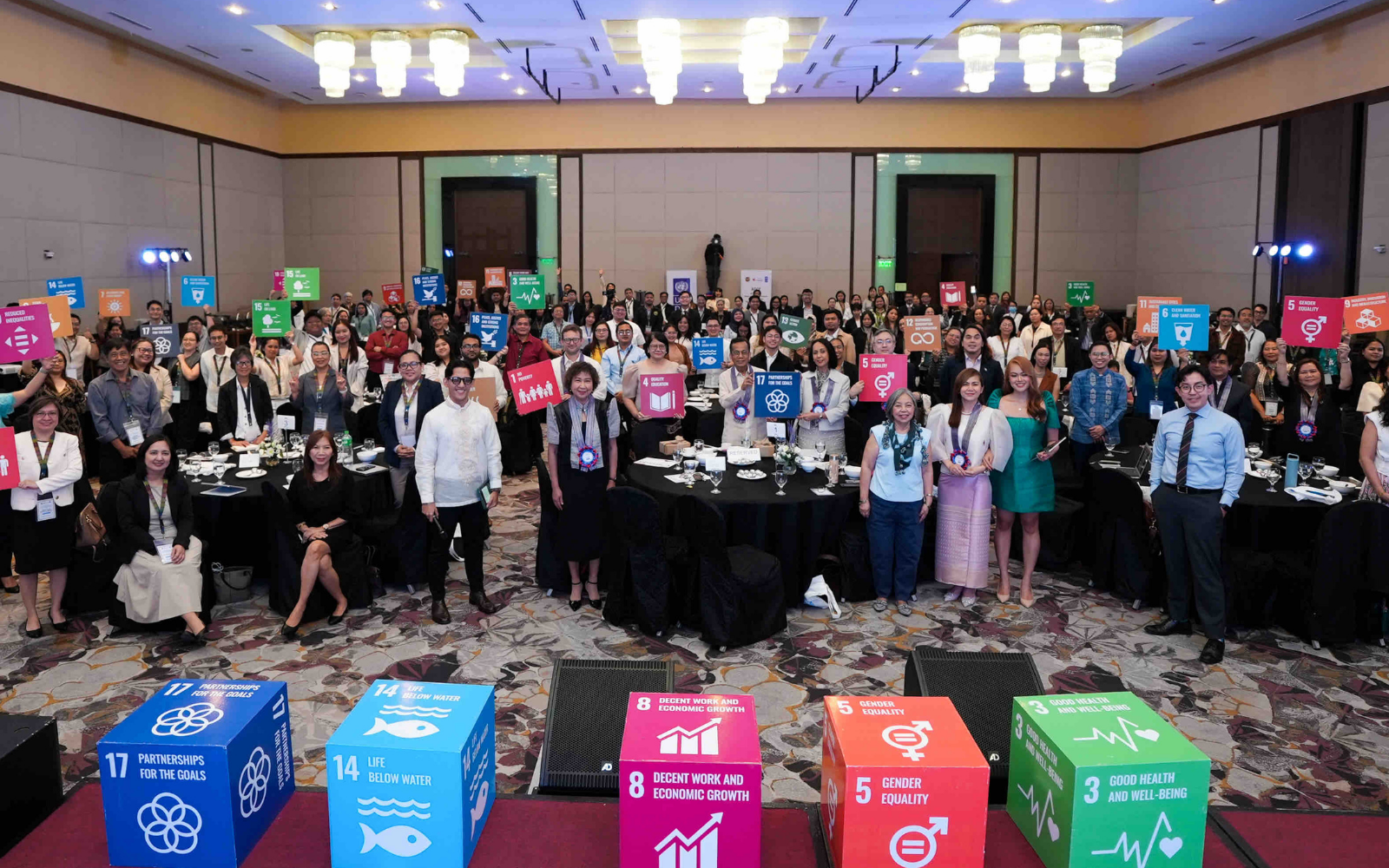
The 2025 VNR, presented nationally on August 27, 2025, provides a comprehensive assessment of the Philippines’ progress in achieving the SDGs. In his message, Department of Economy, Planning, and Development Secretary Arsenio Balisacan stressed the importance of sustained collaboration across sectors to institutionalize reforms and meet critical SDG targets.
The full 2025 VNR can be accessed here: https://sdg.depdev.gov.ph/voluntary-national-review-2025/
The State of Nutrition in the Philippines: 2023 Findings and Next Steps
The Department of Science and Technology–Food and Nutrition Research Institute (DOST-FNRI) held the 2025 National Nutrition Summit on June 5, 2025 at Dusit Thani Manila, unveiling the results of the 2023 Expanded National Nutrition Survey. Covering 36,703 households and 115,651 individuals nationwide, the survey provides updated, evidence-based insights into the country’s nutrition landscape.
The findings serve as a critical resource for policymakers, program planners, and implementers, offering timely data to guide national and regional efforts. They highlight both the progress made and the persistent challenges in achieving the Philippines’ health and nutrition goals, reaffirming the urgency of sustained, evidence-based, and locally driven action.
The 2023 Expanded National Nutrition Survey reports that stunting among children under five has declined from 26.7% in 2021 to 23.6% in 2023. However, the burden remains significant, with one in five children still affected. Wasting, an indicator of acute malnutrition, continues to be a concern at 5.6% among children under five and 6.8% among those under two.
These figures point to persistent nutrition gaps, particularly during the critical First 1,000 Days (F1KD) of life. Only 50.4% of infants less than 6 months old are exclusively breastfed, and just 13.9% of children aged 6–23 months receive a minimum acceptable diet. Vitamin A deficiency remains a moderate public health concern, particularly among preschool children aged 6 months to 5 years. Additionally, only 26.6% of infants and preschoolers in this age group meet the recommended energy intake, highlighting significant nutritional gaps in early childhood.
The proportion of nutritionally-at-risk pregnant women has risen to 19.1%, signaling growing concern. While prenatal care coverage is improving, only 22.7% complete the WHO-recommended eight visits for comprehensive care. Alarmingly, just 13.7% of pregnant women meet their recommended daily energy intake.
In addition, three in every ten households experience moderate to severe food insecurity, often forced to reduce meal quality or skip meals altogether. Dietary diversity remains low, particularly among low-income families reliant on staple foods like rice, while food waste is rising, with households discarding an average of 130 grams daily, mostly rice, vegetables, and fish.
These findings call for urgent and coordinated actions. Local Government Units (LGUs) are in a strong position to improve community nutrition. Efforts should focus on the following areas:
- Prioritize the F1KD and sustain nutrition through the next 1,000 days (up to age five) by strengthening maternal and child nutrition programs, breastfeeding support, complementary feeding services, and timely micronutrient supplementation.
- Improve access to quality maternal care by ensuring timely and consistent prenatal visits, comprehensive nutrition counseling, and access to essential supplements such as iron, folic acid, and calcium.
- Invest in local food systems by promoting household food production, improving access to affordable nutritious food, and regulating local food environments. LGUs should integrate nutrition-sensitive agriculture and livelihood programs to enhance dietary diversity and food security, especially in vulnerable communities.
- Promote data-driven, multisectoral governance by strengthening local nutrition committees, utilizing data for planning and accountability, and coordinating across health, agriculture, and social services to effectively sustain and scale nutrition interventions at the community level.
Meeting our national and global nutrition targets by 2030 demands empowered local leadership, evidence-based decision-making, and integrated, multisectoral action that begins with coordinated efforts at the community level today.
—
The Zuellig Family Foundation (ZFF)’s Pook Malusog program helps communities support children’s nutrition. Learn more: https://zuelligfoundation.com/programs/nutrition/
Author: Rio Fe Del Valle, ZFF Nutrition Monitoring, Evaluation and Learning Expert
Better Beginnings in Basilan: Investing in the First 1,000 Days
Once marked by conflict and instability, the Province of Basilan is now making progress in improving health and nutrition outcomes for young children.
Through strong local leadership and a decade of partnership with the Zuellig Family Foundation (ZFF), Basilan has strengthened systems for maternal and child health, food security, and early childhood care—especially during the critical First 1,000 Days (F1KD) of life.
ZFF shared this experience during the Asia-Pacific Regional Network for Early Childhood (ARNEC) Conference 2025. Speaking on a panel hosted by the Tanoto Foundation, ZFF presented how their work in Basilan has transformed early childhood outcomes through governance-focused approaches. Using the Foundation’s Bridging Leadership approach and Health Change Model, ZFF helped local leaders address gaps in health and nutrition despite the province’s complex and fragile context.
Related article:
- Municipal Leaders in Basilan Enhance Nutrition Governance through Zuellig Family Foundation Training
The Basilan Assistance Program (BAP), which built on earlier gains from the Provincial Nutrition Governance Program, trained governors and mayors to co-create local solutions, increase community participation, and strengthen service delivery. As part of the program, 255 barangays deployed community health workers to monitor and support pregnant women and malnourished children. Ten of the thirteen mayors underwent leadership and technical training further embedding nutrition priorities in local governance.
Between 2023 and 2024, stunting among children aged 0–2 dropped by 6.26 percentage points—from 16.74% to 10.48%. Wasting rates also declined, reflecting better capacity to prevent and manage acute malnutrition. Nutrition funding rose nearly fourfold, from 7.2 million pesos in 2021 to 27 million pesos in 2024. These improvements directly support brain development, emotional regulation, and school readiness—giving Basilan’s children a stronger start in life.
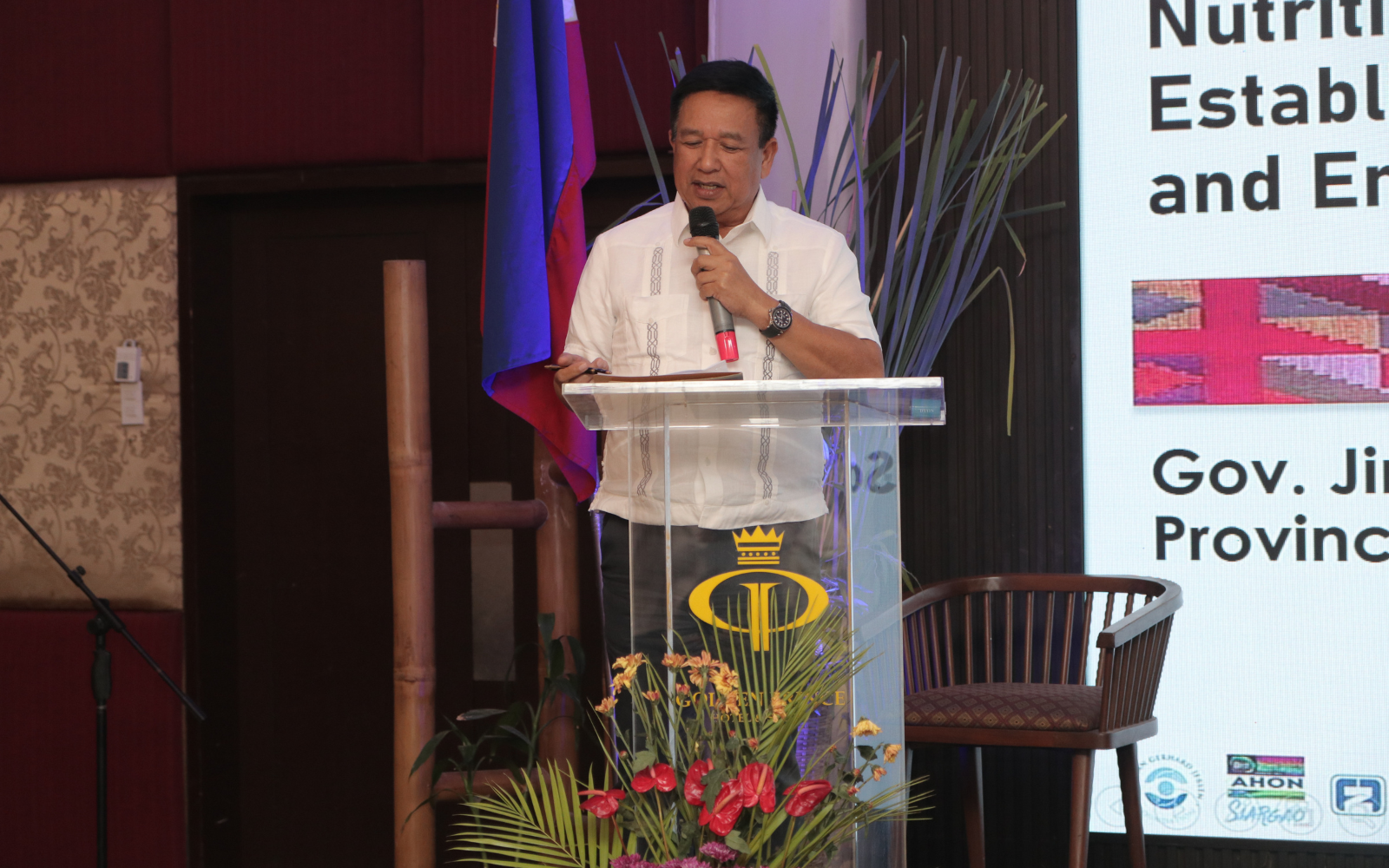
Basilan’s transformation shows that inclusive, equity-driven, and locally led programs can thrive even in post-conflict settings. “When we had peace, we now have the mental space to plan beyond the day after tomorrow,” said former Basilan Governor, now Vice Governor, Jim Hataman Salliman.
“We can now be more strategic and focus our investment in health and nutrition, which was not prioritized before.”