POSTER: First 1,000 Days (F1KD) Nutrition Roadmap: Context-sensitive solution for improved health and nutrition systems in the Philippines
This poster presented at the Evidence and Implementation Summit 2025, held October 27–29, 2025 at the Melbourne Convention and Exhibition Centre, Australia, showcases the First 1,000 Days (F1KD) Nutrition Roadmap. The roadmap guides local governments in strengthening maternal and child nutrition by applying the World Health Organization (WHO)’s health system building blocks and the Zuellig Family Foundation’s Eight Critical Knobs of Nutrition Governance.
From 2019–2022, the roadmap improved governance, planning, financing, data use, and service delivery across five priority provinces under the Philippine Plan of Action for Nutrition (PPAN) through a structured systems review and adaptive learning tools. It enabled local governments to act more cohesively, use evidence effectively, and integrate stronger strategies into their Provincial Nutrition Action Plans (PNAPs). While the country reduced stunting rates nationally, ongoing malnutrition and food insecurity underscore the need to further strengthen multisectoral and locally driven nutrition systems.
Read more:
ZFF Poster_F1KD Nutrition RoadmapZFF and DOH-Eastern Visayas Partner to Strengthen Family Nutrition
The Zuellig Family Foundation (ZFF) and the Department of Health (DOH)-Eastern Visayas formalized its continuing collaboration to strengthen family health and nutrition in the region. On October 29, 2025, ZFF President and Executive Director Austere Panadero and DOH-Eastern Visayas Regional Director Dr. Exuperia Sabalberino signed a Memorandum of Understanding (MOU) for the implementation of the Pook Malusog Family Stunting Reduction (FaStR) Program.
The Pook Malusog FaStR Program focuses on supporting families during the first 1,000 days (F1KD) of life—a crucial period for a child’s growth and development. It seeks to strengthen the knowledge and practices of families in preventing stunting, while enhancing the leadership and technical capacity of health and nutrition frontliners.
Through this partnership, the Pook Malusog FaStR Program will be piloted in four municipalities of Eastern Visayas: Gandara and San Jose De Buan in Samar Province, and Mapanas and Lope De Vega in Northern Samar Province from 2025 to 2026.
Under the agreement, ZFF will provide coaching, mentoring, and technical assistance to DOH-Eastern Visayas and the pilot municipalities to guide them in effectively implementing the Pook Malusog FaStR model. By working together to localize the Pook Malusog approach, both institutions aim to build lasting systems of care that empower families, strengthen local leadership, and sustain progress in reducing child stunting across Eastern Visayas.
Healthy Beginnings, Stronger Tomorrows: Pook Malusog Community of Practice Conference 2025
The Zuellig Family Foundation (ZFF) continues to promote shared learning and collaboration through the Pook Malusog Community of Practice (CoP), a platform that enables local government units (LGUs) to exchange experiences, innovations, and lessons on nutrition leadership and governance.
Held on October 7, 2025, this year’s conference, themed “Healthy Beginnings, Stronger Tomorrows: Advancing Nutrition Resilience from the First 2,000 Days and Beyond,” gathered local chief executives, local legislative council members, health and nutrition action workers, volunteers, private sector partners, representatives from the academe, and national government agencies, including Regional Nutrition Program Coordinators of the National Nutrition Council.
Participants from the five alumni provinces of the Pook Malusog Provincial Nutrition Governance Program (PNGP), Siargao Islands, and Manila shared how leadership and governance can build sustainable nutrition systems that remain strong despite political changes and crises.
The program featured three main plenary discussions and breakout learning sessions:
- Generating Sustained Political Commitment for Nutrition. Shared experiences from the PNGP cohort (Northern Samar, Samar, Basilan, Zamboanga del Norte, and Sarangani) on translating political will into institutionalized systems. This panel discussion highlighted key leadership acts that established institutional arrangements, policies, and plans and budgets that enabled these provinces to reduce malnutrition prevalence and strengthen mechanisms to sustain these improvements on the ground.
- Building Resilient Nutrition Systems, the TRANSFORM (Transdisciplinary Approach for Resilient and Sustainable Communities) Experience. Showcased how leaders in Siargao Islands, Surigao del Norte and the Caraga Region strengthened resilience through people-centered, data-driven approaches, noting that resilience is a continuous process of transformation.
- Beyond the First 1,000 Days, Seamless Pathways to the First 2,000 Days. Featured the municipality of Malungon, Sarangani and the provinces of Basilan and Sarangani, responding to what’s next after F1KD efforts, centering on Early Childhood Care and Development (ECCD) in ensuring continuity of care and support for children beyond infancy.
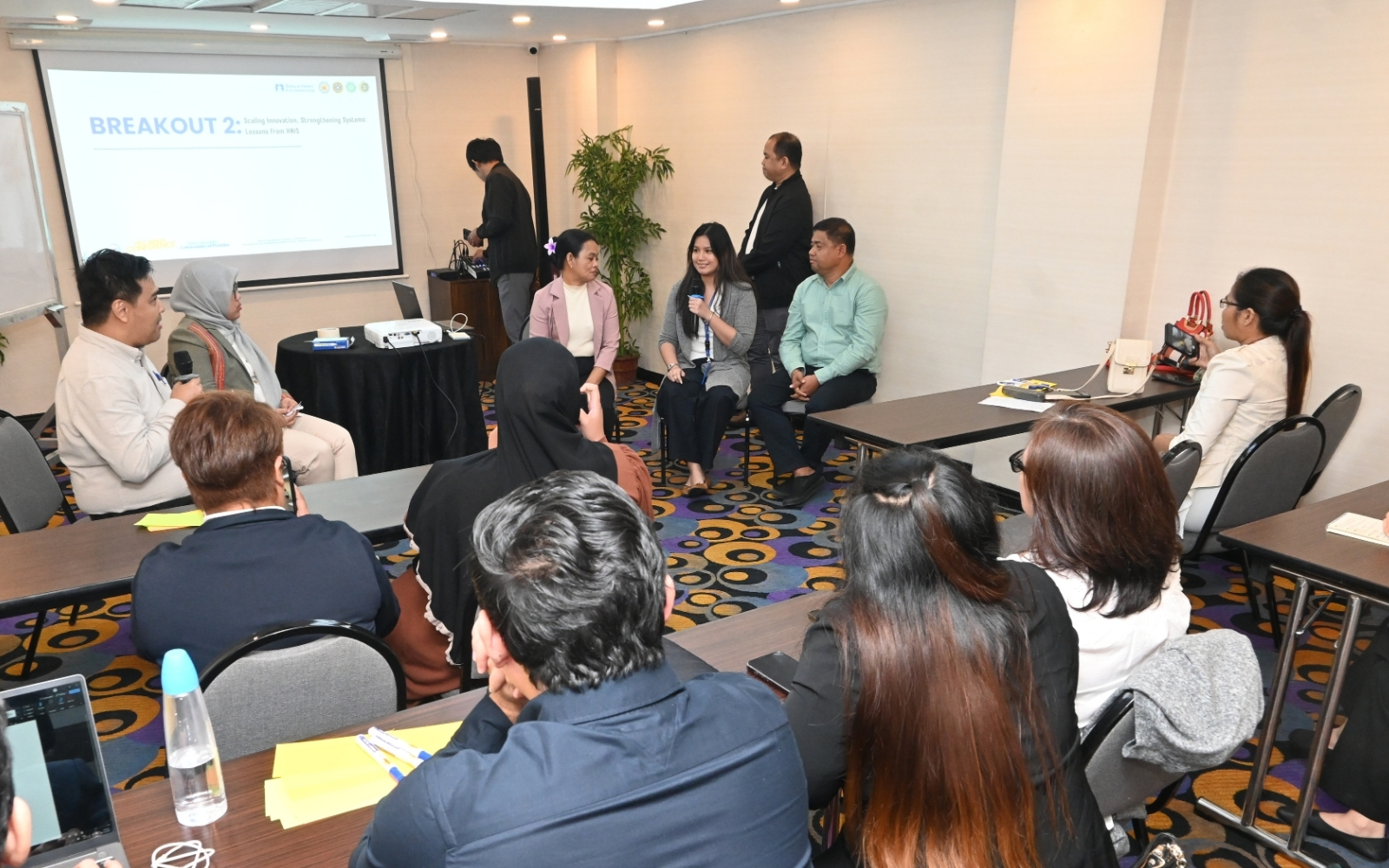
- Breakout Sessions: Scaling Innovation, Strengthening Systems. Focused on ZFF’s key programs—Pook Malusog Dashboard, ZFF’s health and nutrition information system (HNIS), and the Family Stunting Reduction (FaStR) program, a family-centered approach to addressing malnutrition. LGU implementers sat on the panel and responded to questions from participants, sharing ongoing learnings and best practices from pilot implementations, as well as their priority actions moving forward.
Discussions showed that political will is critical—it sets direction, drives the right systems, and ensures that budgets are allocated for nutrition. But political will must be backed by more support. It needs to evolve into strong, institutionalized systems that can sustain progress across political terms.
Provincial leaders shared how creating permanent positions for nutrition officers, integrating nutrition into local development plans, and mobilizing diverse sectors can embed accountability and continuity. Municipalities, on the other hand, demonstrated how community co-ownership, data utilization, and frontline worker empowerment ensure that nutrition efforts reach even the most vulnerable families.
Nutrition expert, Dr. Cecilia Acuin, in her synthesis, said that nutrition resilience requires long-term, systemic investment. Improving nutrition outcomes must focus on, quoting Mayor Alfredo Coro II of Del Carmen, Siargao Islands, “the least, the last, and the lost”—families and communities that remain hardest to reach. Dr. Acuin pointed out that while political commitment is vital, equally important are strong governance systems, responsive service delivery, and community ownership. “Our focus should be on building systems, not one-time solutions,” she said, calling for convergence among LGUs and partners.

In his keynote message, Dr. Manuel Dayrit, ZFF Chairman, reminded attendees that the CoP represents “a microcosm of what needs to happen nationally: leaders listening, learning, and acting together.” The conference ended with a hopeful call: when leaders and communities work together, every Filipino child can have a healthy beginning and a stronger tomorrow.
Leadership and Governance in Nutrition for the First 1000 Days Intervention Package in Samar, Northern Samar, and Zamboanga del Norte: Baseline Assessment of Three Philippine Provinces
This baseline assessment report evaluates the existing governance measures related to the implementation of first 1,000 days (F1KD) services in Samar, Northern Samar, and Zamboanga del Norte, providing a detailed analysis of current nutrition and governance landscapes and offering strategic recommendations for improvement.
Final_ZFF Baseline AssessmentFinancing Nutrition: Insights from the Pook Malusog Community of Practice Session
The Zuellig Family Foundation (ZFF), through the Pook Malusog Community of Practice (CoP), gathered partners to confront one of the toughest issues in nutrition governance: financing.
Nutrition governance core teams from the provinces of Sarangani, Samar, Northern Samar, Basilan, and Zamboanga del Norte joined the webinar, together with municipal cohort graduates under these provinces. AHON Siargao municipalities and the Manila Health Department also shared their experiences from the ground.
The National Nutrition Council’s Regional Nutrition Program Coordinators and technical staff added their expertise, while consultants Dr. Esmeralda Silva-Javier and Dr. Cecilia Cristina Acuin provided evidence and analysis. ZFF Chairman Dr. Manuel Dayrit offered guidance and reflection. Their participation underscored the Community’s role as a space where local leaders, national agencies, and research partners learn and collaborate to strengthen nutrition systems.

Understanding the Financing Challenge
Dr. Silva-Javier presented findings from a ZFF Case Study on Investments for Nutrition in Sarangani and Northern Samar. The research revealed a persistent mismatch between nutrition responsibilities and the fiscal capacity of local governments. Even with higher budgets—rising from 1 million to 2.75 million pesos annually—up to 90% of Local Nutrition Action Plan activities remain unfunded. Most of the money goes to salaries, leaving little for programs, supplies, and monitoring.
Yet the study confirmed that even modest increases in spending produce measurable improvements. For instance, Northern Samar would need just 250 pesos per capita annually to cut wasting by one percentage point. Sarangani would need 204 pesos. These findings echo global evidence: well-targeted, consistent investments at the frontline can significantly reduce stunting and wasting.
The study also highlighted the role of “enterprising” local chief executives who bridge gaps through creativity and partnerships. Examples include Alabel’s Nutri-bun bakery, Kiamba’s egg distribution, and Gamay’s nutrition trust fund. While promising, Dr. Silva-Javier cautioned that these remain small-scale. Closing the financing gap will require bolder arrangements such as revenue earmarking, trust funds, and strategic purchasing.
Lessons from the Community of Practice
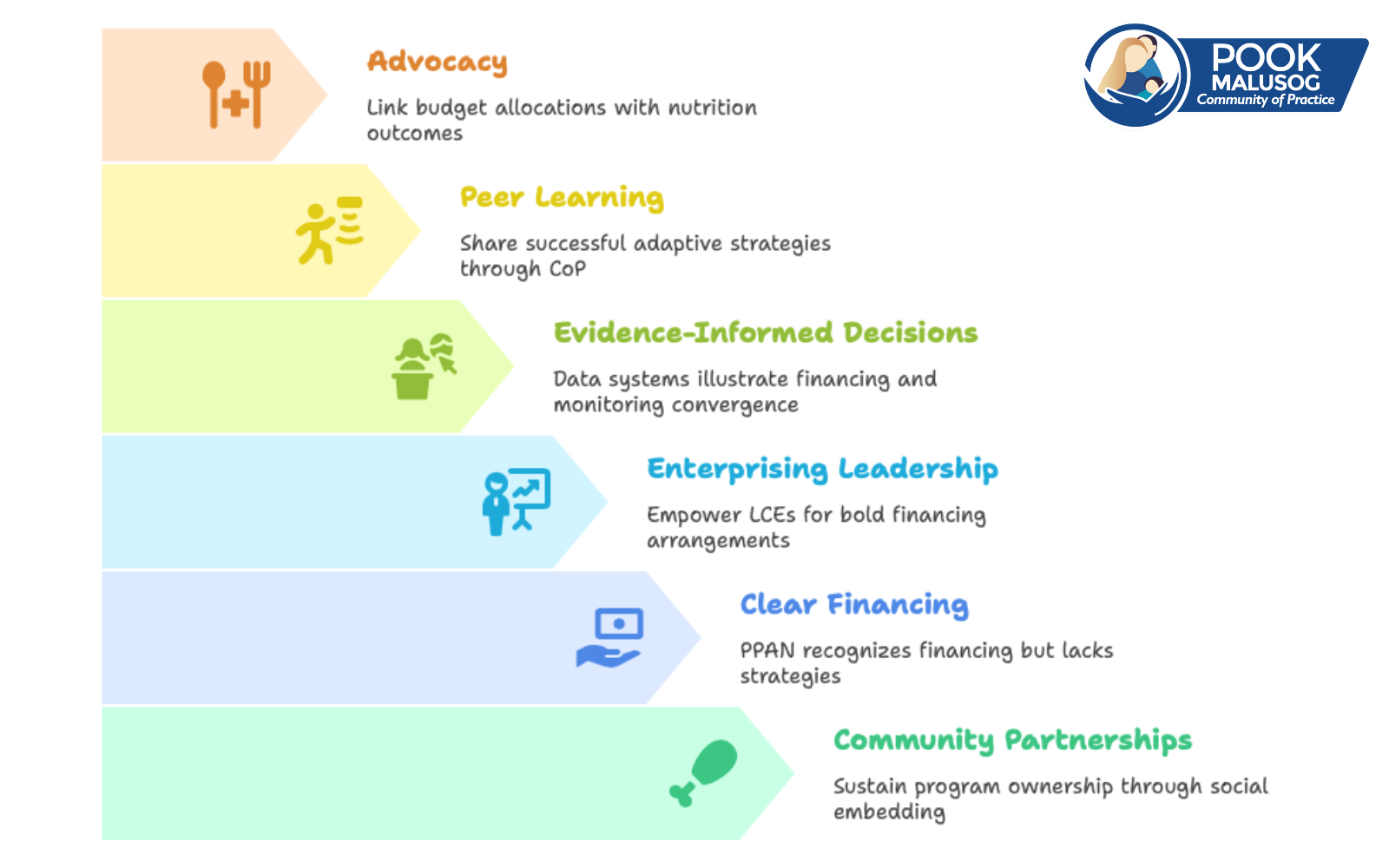
Discussions from the webinar brought out several key insights:
- The Community of Practice Framework Works. By centering on Purpose, People, and Practice, the Community helps LGUs sustain and expand gains through continuous learning and application.
- Critical Knobs in Action. Field stories showed how ZFF’s 8 Critical Knobs for Nutrition Governance provide a practical guide for strengthening systems, from institutionalizing nutrition staff to forging cross-sector partnerships.
- Local Innovations Matter. Enterprising leaders have piloted food processing plants, Nutri-bakeries, egg production, and trust funds, proving that creative solutions can fill gaps.
- Financing Gaps Remain. Despite local allocations, most plans remain underfunded. Evidence shows, however, that even small but steady investments pay off in nutrition outcomes.
- Other Factors Count. Socio-economic conditions, maternal education, water and sanitation, disasters, and household income also shape nutrition outcomes. This underlines the need for nutrition-sensitive programs alongside nutrition-specific ones.
Breakout group discussions shed more light on what is working and where challenges remain. Strong leadership from local chief executives, adoption of national policies, and partnerships with communities and donors emerged as effective practices. However, LGUs struggle with unclear budget guidance, limited fiscal space, and the lack of permanent positions for nutrition staff.
Participants emphasized the need for better budget-tagging tools, clearer allocation guidelines, and stronger multi-sectoral planning. They also called for peer-to-peer exchanges to spread successful innovations, from donor-supported feeding programs to local bakeries financing nutrition.
Implications for Nutrition Governance
The webinar made clear that:
- Provinces must integrate systems, while municipalities deliver services on the ground.
- Evidence-based decisions strengthen the case for nutrition in fiscal planning.
- Community ownership and partnerships keep programs sustainable.
- Clearer financing pathways and national policy guidance are essential.
- Local leaders must be empowered to design innovative financing strategies.
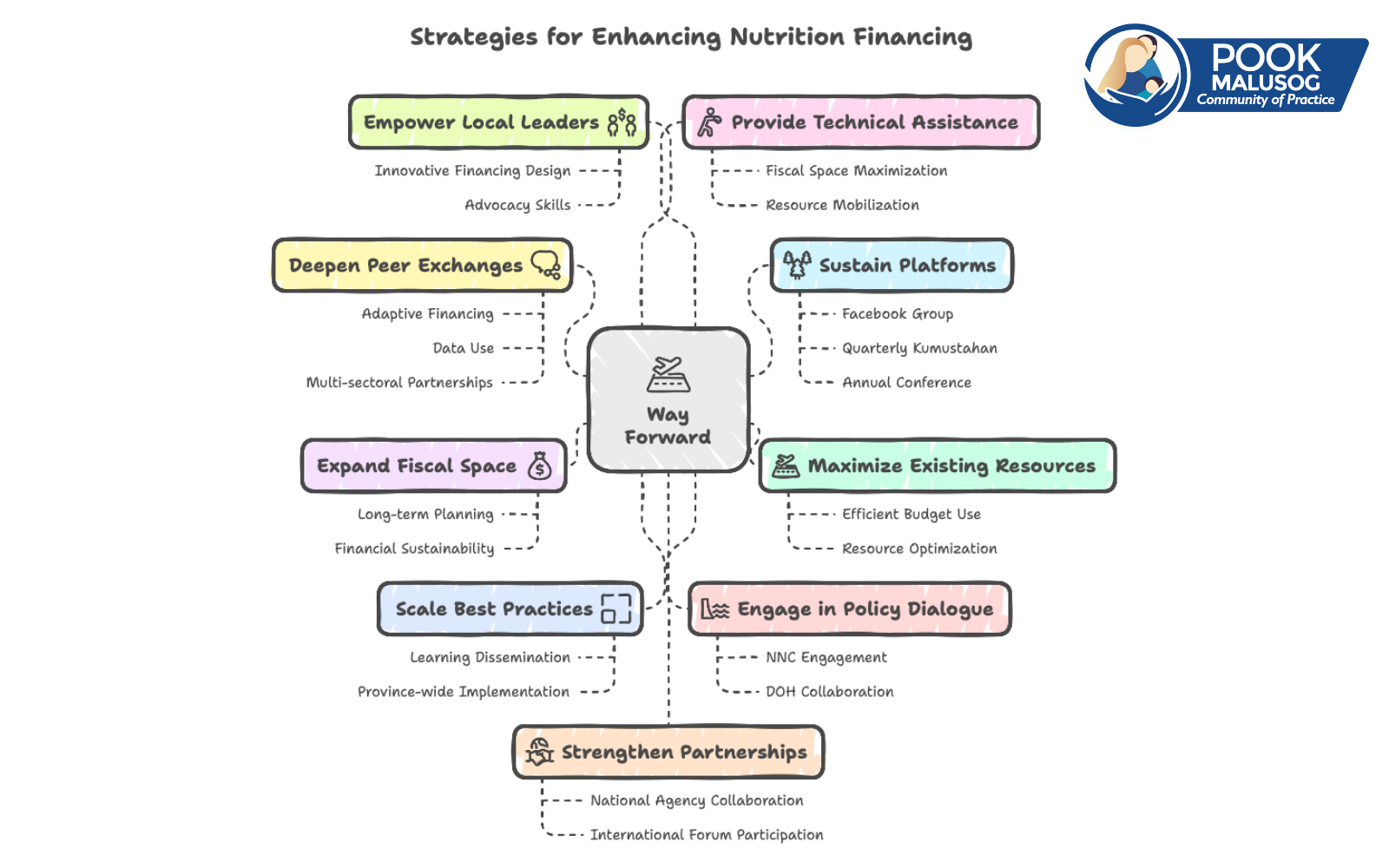
The Pook Malusog Community of Practice must now focus on sustaining momentum and scaling innovations. Empowering local chief executives to design and advocate new financing arrangements will be crucial, as will expanding peer-to-peer learning that highlights adaptive practices, smart data use, and cross-sectoral collaboration. Providing technical support to help LGUs maximize fiscal space and mobilize resources can ensure that nutrition programs are not only launched but also sustained over time. The Community should also act as a channel for scaling up proven practices from pioneering LGUs to more provinces and municipalities, ensuring that lessons learned do not remain isolated. Finally, engaging national agencies and policy actors is essential to institutionalize sustainable financing pathways, while maintaining spaces for local solutions to flourish.
By linking research, local innovations, and strong leadership, it demonstrates how LGUs can move from scattered efforts to collective strategies. The future of nutrition governance in the Philippines depends not only on increased funding, but also on smarter, evidence-informed, and community-driven use of resources.
Authors: Samantha Morales, ZFF Nutrition Knowledge Management and Communications Associate; Krizzia Esperanza, Corporate Communications Associate
Zuellig Family Foundation Annual Report 2024
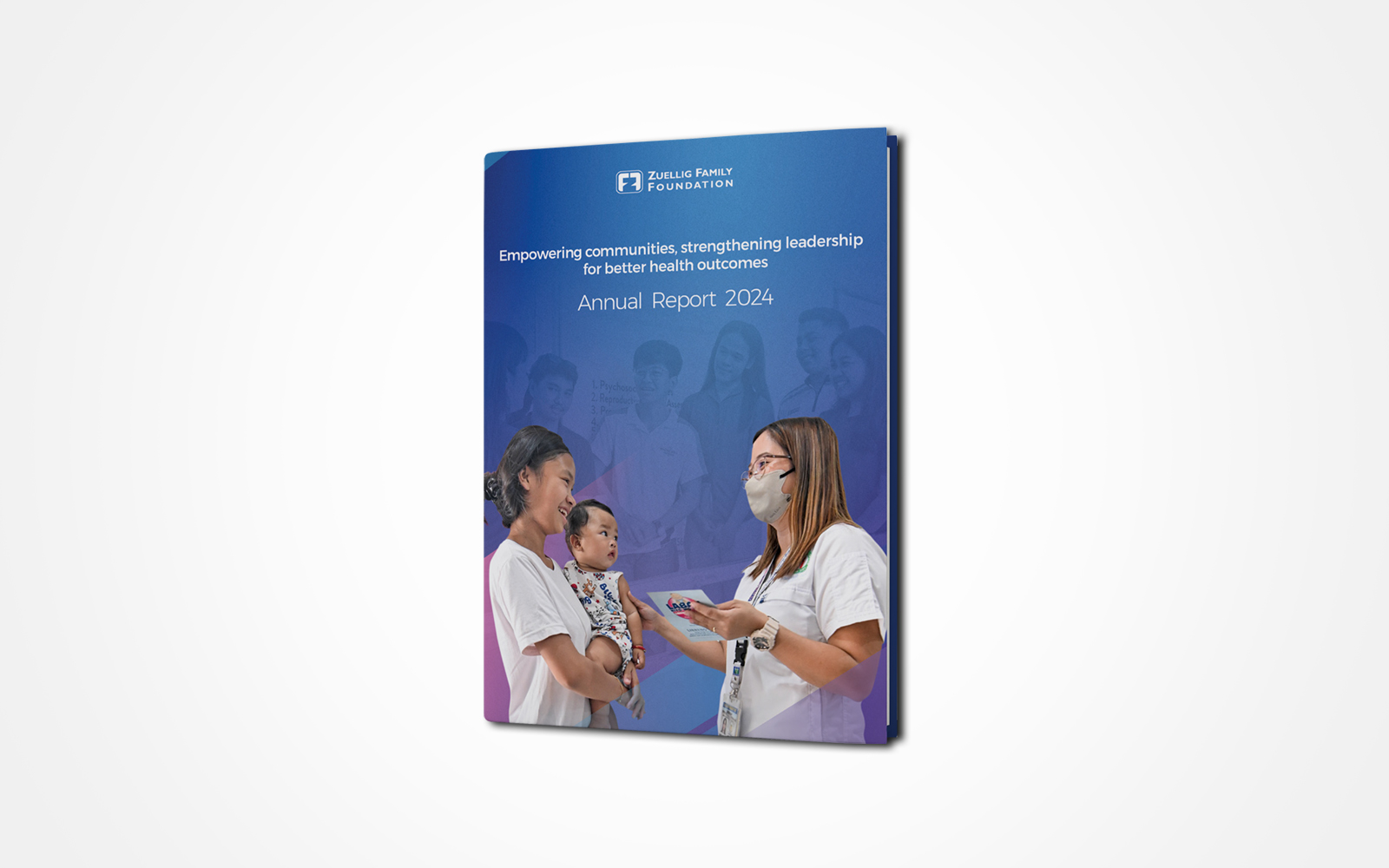
Empowering communities, strengthening leadership for better health outcomes
About the report
The Zuellig Family Foundation (ZFF) Annual Report 2024 shares stories of change, lessons learned, and milestones in improving health outcomes for Filipinos.
Our work in 2024 focused on:
2024 at a glance
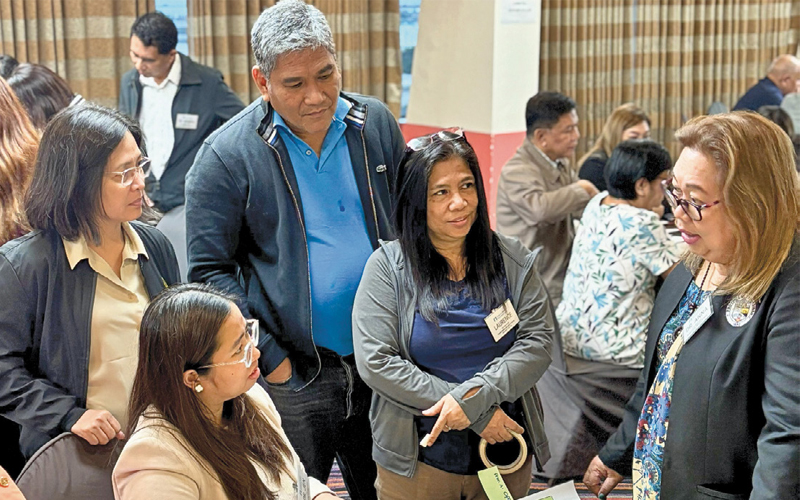
Local Health Systems
- 3.2M people registered under PhilHealth KONSULTA in partner areas.
- 100% primary care facility accreditation in almost all areas.
- UHC Champion Series shared practical lessons across LGUs.
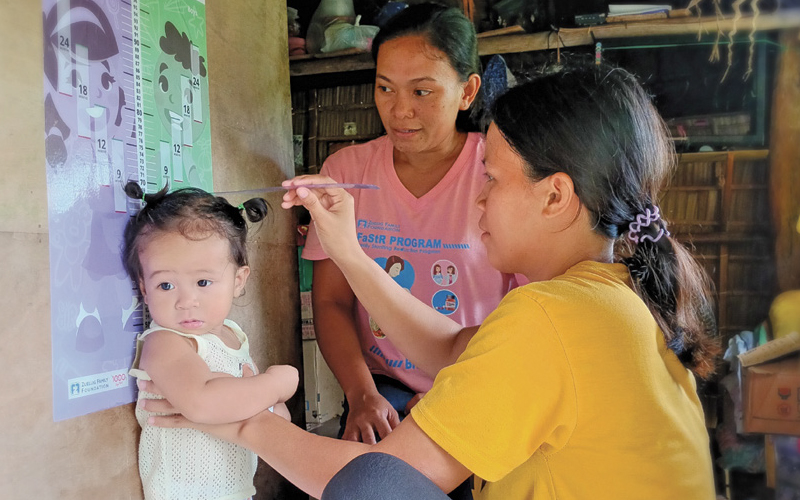
Nutrition
- Reduced stunting and wasting in Basilan, Samar, Northern Samar, Sarangani, Zamboanga del Norte, and Siargao towns.
- Launched Nutrition Leadership and Equity Acceleration Program (NutriLEAP) with the League of Provinces of the Philippines to strengthen provincial leadership.
- Rolled out the Pook Malusog Dashboard for easier, data-based decisions.
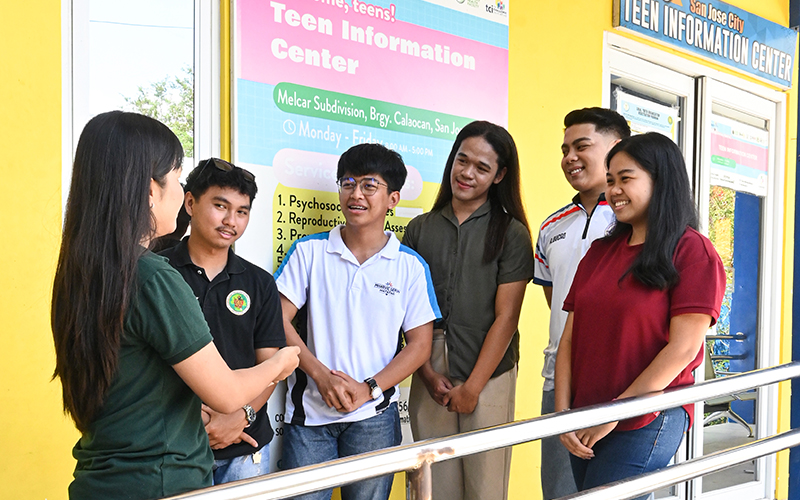
Adolescent and Youth Sexual and Reproductive Health
- 11 cities lowered the adolescent birth rate below 20 per 1,000.
- Adolescent-friendly health facilities grew to 555.
- Recognized work with partners through national and global learning events.
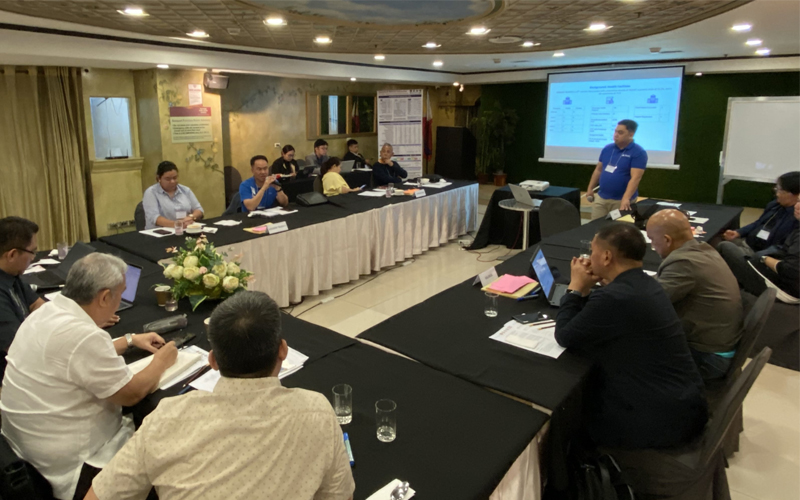
ZFF Institute for Health Leadership
- Coached and trained fellows under the RRR Fellowship to solve health system gaps.
- Worked with academic partners to scale leadership programs.
- Sustained ISO-certified learning quality and CPD accreditation.
ZFF will continue working with provinces, cities, and municipalities to accelerate health reforms, scale nutrition programs, and empower youth and communities.
Read the full report here:
ZFF Annual Report 2024Download
Download: Audited Financial Statements 2024
Eastern Visayas Pushes Forward with Universal Health Care
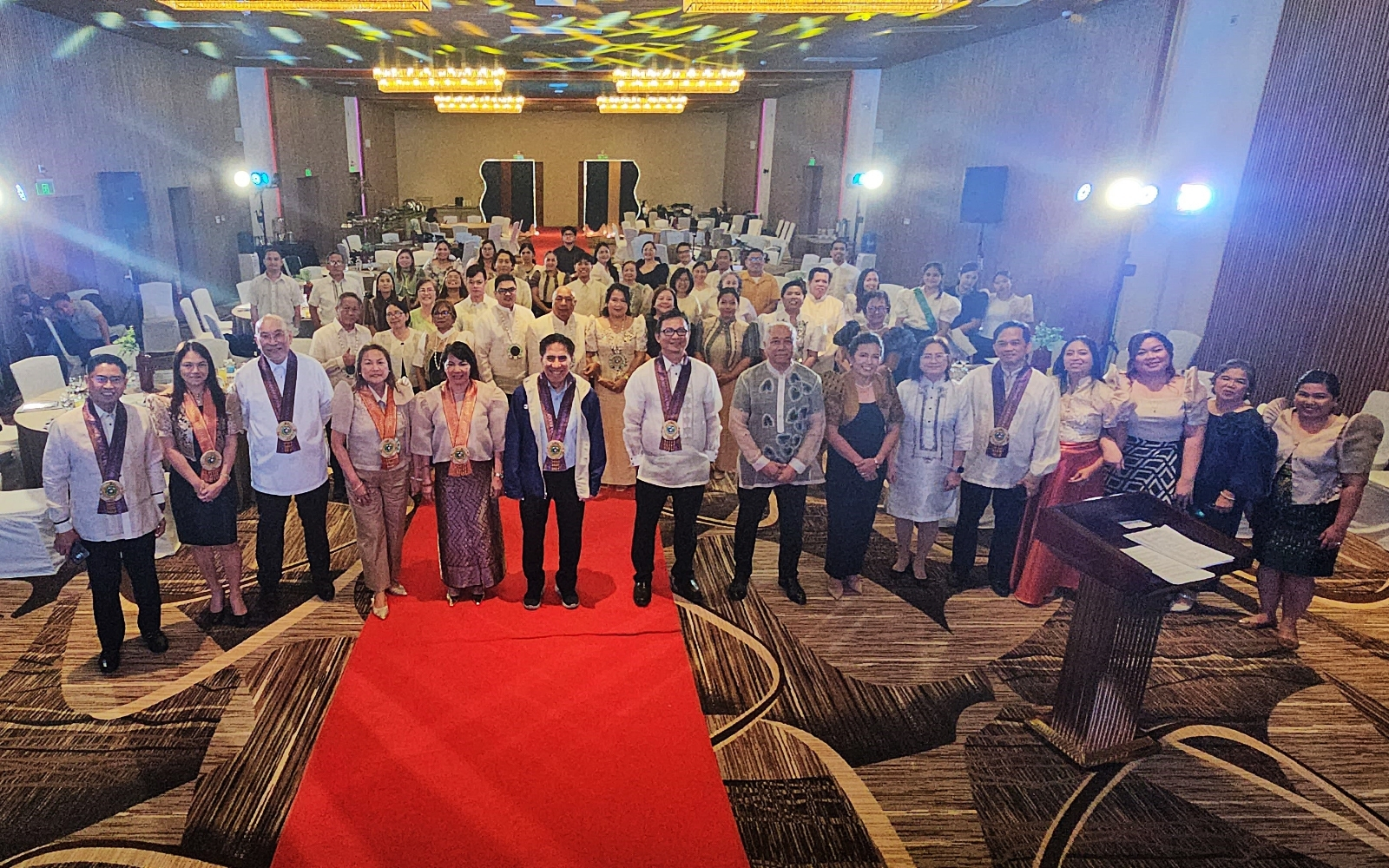
“Is there a way of digitizing preventive care?” Dr. Manuel M. Dayrit, Chair of the Zuellig Family Foundation, asks during the Provincial Leadership and Development Program (PLDP) Colloquium in Eastern Visayas on July 3, 2025. He continued, “Because if you can get a big picture, bring the spectrum—of clinical care and preventive care—together, then you have a total approach to UHC (Universal Health Care).”
The colloquium marked the completion of the Bayang Malusog PLDP (2022–2024) run in Eastern Visayas, a partnership between the Department of Health (DOH) Eastern Visayas, University of the Philippines Manila School of Health Sciences, and Zuellig Family Foundation. The program supported provincial leaders in all six provinces—Leyte, Southern Leyte, Northern Samar, Samar, Eastern Samar, and Biliran—to lead local health reforms as part of their push for UHC. Each province made its own progress, with efforts focused on improving nutrition, and adolescent and youth sexual and reproductive health (AYSRH).
Related article:
Among the gains celebrated were integrated provincial UHCroadmaps, 70% achievement of organizational targets, and progress in qualifying nearly all provinces for Health Care Provider Network (HCPN) contracting. Dr. Dayrit pointed out that the program’s strength lies in developing both political and technical leadership—a combination essential to navigating demographic, economic, and system-level challenges.
Keynote speaker Dr. Alvin Marcelo, Professor, Lecturer, and Program Lead for the Standards and Interoperability Lab (SILab), noted that achieving UHC requires seamless interoperability of health information systems. He stressed the need to address governance, technical, and programmatic gaps through a structured framework: teaming, tooling, training, testing, and transfer.
Local leaders also shared real results. Southern Leyte Vice Governor Rosa Emilia Mercado highlighted how an immersion activity, the Deep Dive, inspired policy changes. After meeting a 15-year-old mother, Governor Damian Mercado and his team passed ordinances that funded AYSRH programs and strengthened pregnancy prevention.
Leyte Governor Carlos Petilla introduced the Quick Medical Record (QMeR) system, which connects patient records, referral services, and PhilHealth claims in one digital platform. This system now powers efficient healthcare across multiple facilities, with potential for wider rollout.
Despite these successes, DOH Eastern Visayas Regional Director Dr. Exuperia Sabalberino reminded participants that more work lies ahead. She called for scaling up innovations, deepening partnerships, and ensuring equitable access to health services for every Eastern Visayan. With strong foundations laid, the region’s leaders are now tasked with turning the full promise of UHC into reality.