Negros Occidental Builds Stronger Nutrition Leadership
“The strength of our workforce, the potential of our children, and the dignity of every Negrense family are closely intertwined with the quality of life that we are able to provide.”
Negros Occidental is now part of Zuellig Family Foundation (ZFF)’s Nutrition Leadership and Equity Acceleration Program (NutriLEAP). Governor Eugenio Jose “Bong” Lacson, together with mayors and other local leaders and health officers in the province participated in the Executive Session under NutriLEAP, in partnership with Kain Tayo Pilipinas supported by the Philippine Business for Social Progress, last February 3, 2026. The session centered on building a shared understanding of challenges and creating strategies to improve nutrition outcomes in Negros Occidental.
Dr. Joyce Viar, Nutrition Director at ZFF, provided context and framing, guiding the participants through the activity’s objectives: to analyze the provincial nutrition landscape, articulate personal and shared leadership commitments, and co-create strategies for priority nutrition challenges. ZFF’s approach emphasized practical, systems-focused processes rather than abstract discussions, ensuring that every activity was tied to measurable action.
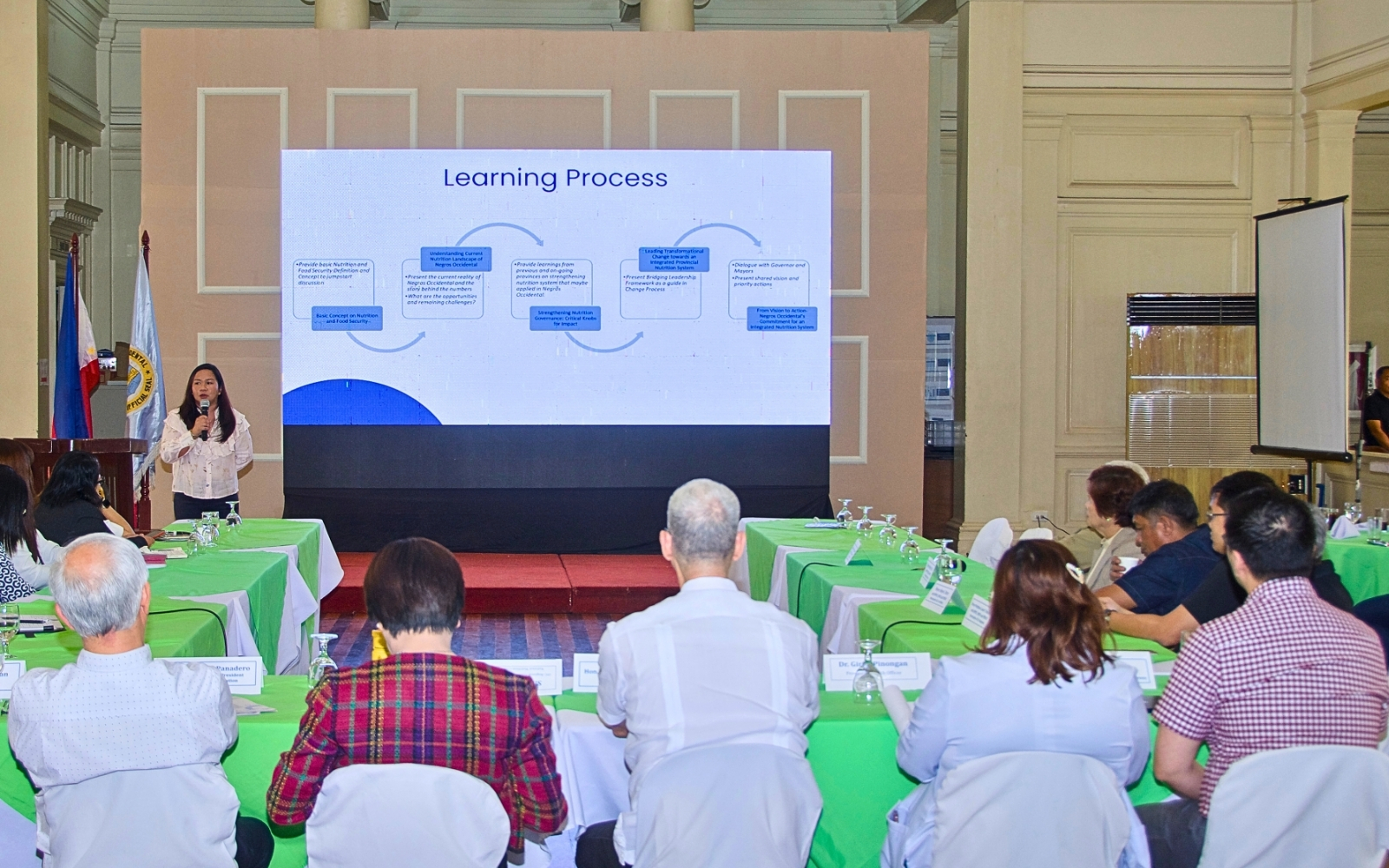
Participants reviewed key data on nutrition in the region. Western Visayas has a malnutrition prevalence rate of 6.4%, affecting 33,832 children aged 0–5. Negros Occidental is included among the 34 priority areas under the Philippine Plan of Action for Nutrition (PPAN). Within the province, stunting among children 0–5 stands at 3.15% (7,134 children), while wasting affects 0.59% (1,327 children) as of 2025. Areas with the highest stunting rates include Salvador Benedicto at 14.18%, the City of La Carlota at 8.74%, and Calatrava at 8.68%.
Austere Panadero, ZFF President and Executive Director, noted that undernutrition in the Philippines is decreasing, but the change remains minimal—around 1–2 percentage points annually for stunting. He introduced ZFF’s 8 Critical Knobs for Nutrition Governance, offering a structured approach to strengthen nutrition programs across multiple levels of government.
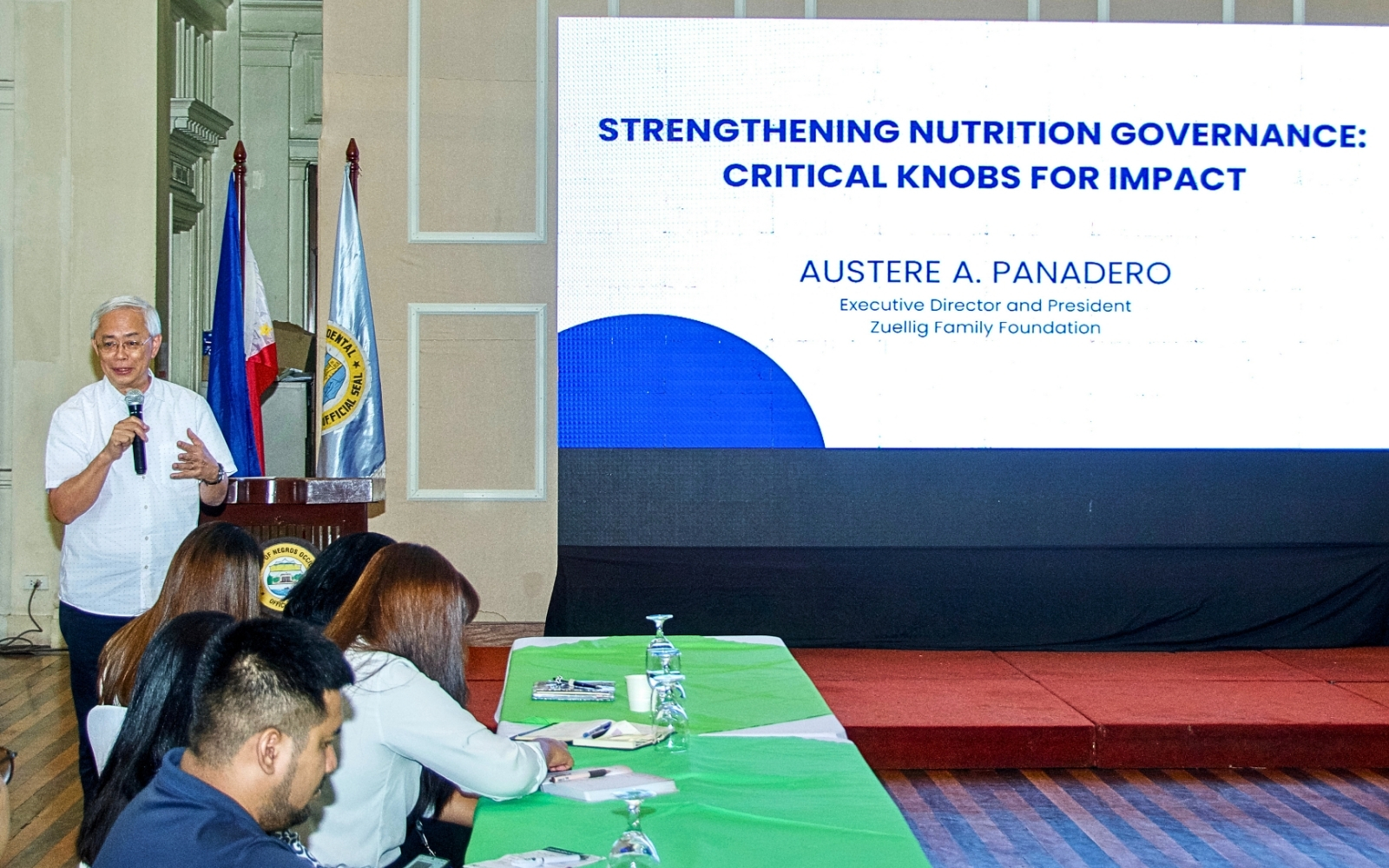
Using this framework, the session included a workshop facilitated by Hadji Balajadia, faculty at Ateneo de Davao University and ZFF consultant, where participants reflected on their priorities, defined guiding principles, and developed concrete action plans, from institutionalizing provincial nutrition programs and securing dedicated funding to coordinating multi-sector efforts at the city, municipal, and barangay levels.
Governor Lacson reinforced the process by translating these discussions into a rough provincial action plan. He stressed data-driven governance, investment in frontline health workers, sustained financing, and community-centered programs as critical steps toward a responsive, integrated nutrition system.
In closing, Governor Lacson said with encouragement, “Let this session mark not the end of our discussions, but the beginning of a deeper and more deliberate alignment of our efforts.”
Iloilo City Takes Bold Steps in Family Planning and Adolescent Health
Iloilo City has been working hard to improve its Family Planning (FP) and Adolescent Sexual and Reproductive Health (ASRH) services since joining The Challenge Initiative (TCI)-Philippines in May 2023. With committed leaders and policies based on data, the city is making huge progress in bringing health programs closer to communities and solving long-standing problems with high-impact, locally adapted solutions.
A recent trip to the field on August 20, 2025 gave a firsthand look at the progress being made and the energy that everyone is putting into it.
Health in Action in the Community
The opening of Iloilo City’s first PuroKalusugan in the Arevalo District was a big step forward for community-based service delivery. This program provides health services right to the purok, which is the smallest unit of a community. This makes healthcare easier to get, especially for people who don’t have access to it.
At the launch, attendees had access to a full range of services, such as PhilHealth membership, consultations on maternity and child health, family planning counseling and provision, adolescent health services, nutrition support, and vaccinations. Putting services together shows that there is a plan to cover several health requirements in one easy-to-reach place.
I met two young doctors, Earl Sevilla and Lysander Quintia, working as health center physicians in Iloilo. They are examples of what it truly means to serve the public. Even though they didn’t have a lot of resources and were dealing with problems like teenage pregnancy, rising cases of sexually transmitted diseases (STIs), and the growing trend of vaping among young people, Sevilla and Quintia were nevertheless very determined and passionate. Their choice to work in community settings instead of more lucrative jobs shows how strongly they care about public health and equity.
Related articles:
- Iloilo’s Youth Health Movement in Action
- Eight Cities Share Success in Family Planning and Adolescent Health
Leadership That Listens and Leads
Strong leadership is setting Iloilo’s health agenda at the policy level. During a visit to City Hall, Vice Mayor Lady Grace Julie Baronda, a vibrant leader with legislative experience, showed great interest in learning more about the health concerns that need policy assistance or institutionalization. Her willingness to a dialogue shows that she believes in a style of government that values evidence, working together, and community voices.

Grace Hofilena, representative from the Office of Mayor Raisa Trenas, said the same thing. She conveyed that the Mayor strongly supports the program and wants to keep working with TCI. This support from institutions is really important for sustainability and ensuring programs and policies have lasting effect.
The City Leadership Team’s data shows the results of these concerted efforts. From 2020 to 2025, the modern contraceptive prevalence rate (mCPR) went up from 39% to 41%, while the percentage of demand satisfied* rose from 79% to 88%. Although the adolescent birth rate (ABR) has stayed the same at 19 per 1,000, it is evident that further action is needed.
The city’s big budget increase for family planning—from 765,000 pesos in 2023 to 8 million pesos in 2025—may be the best indicator of political will. This jump shows that FP is not only a programming priority, but also a financial one, thanks to excellent leadership.
Persistence and Progress
When local leaders, health workers, and communities work together toward a common goal, like they did in Iloilo City, progress in public health is both attainable and realistic. But there are still challenges. Teenage pregnancies, STIs, and dangerous behaviors among teens are still putting a lot of stress on the system. To solve these problems, we need more than just technical fixes. We need to keep coming up with new ideas, work together across sectors, and get the community involved.
The field visit showed not only what the city has done well, but also the qualities that support those achievements: compassion, resilience, and responsibility. Health workers are making services more accessible to people who live nearby. Local leaders are using policy and budgets to drive sustainability. And young professionals are putting service and making a difference ahead of their own interests.
A Model for Local Health Governance
The last two years have shown how powerful local governments can be in Iloilo City. They can achieve real, quick progress in important health areas when they have the necessary tools, data, and assistance. The city’s increasing investments in FP and ASRH demonstrate that robust political commitment, alongside community-driven innovation, can yield tangible outcomes.
The lessons from Iloilo are clear: to improve family planning and adolescent health, we need more than just one-time action. It needs changes to the whole system, shared accountability, and working together. Iloilo City is a great example for other communities in the Philippines that want to invest in the health and future of their families and young people.
—
* Demand satisfied refers to the percentage of women of reproductive age who want to delay or avoid pregnancy and are actually using a modern contraceptive method.
Author: Dr. Anthony Faraon, ZFF TCI-Philippines Chief of Party
Western Visayas LGUs Complete Health Leadership Program
“Relentless follow-through is the name of the game,” said Zuellig Family Foundation (ZFF) President and Executive Director Austere Panadero as he addressed graduates of the Municipal Leadership and Governance Program (MLGP) Cycle 4 in Western Visayas. He challenged them to go beyond planning and focus on execution—encouraging collaboration, innovation, and long-term thinking in addressing persistent health issues, including teenage pregnancy and malnutrition.
Seventeen local government units (LGUs) from across Western Visayas completed the 18-month MLGP journey during the Colloquium held on July 10 in Iloilo City. These included 1 LGU from Guimaras, 2 from Antique, 3 from Iloilo, and 7 from Negros Occidental. The graduates included local chief executives (LCEs), municipal health officers, and designated “third leaders”, mostly municipal planning and development officers.
Led by the Department of Health (DOH)-Western Visayas, in partnership with the University of the Philippines (UP)-Visayas and ZFF, MLGP builds the leadership and governance skills of local health leaders using ZFF’s Bridging Leadership framework. Since 2014, more than 250 health leaders in the region have completed the program.
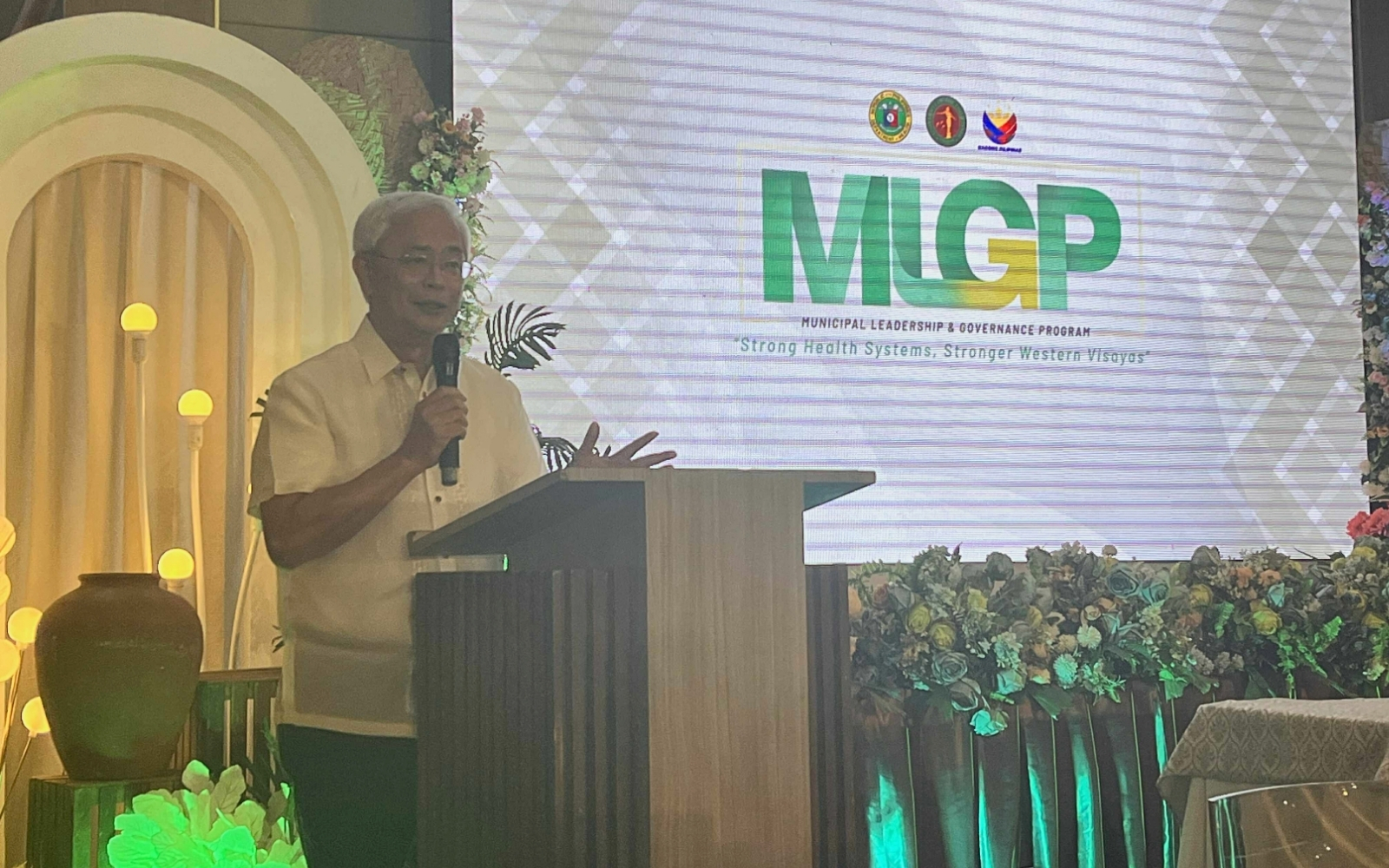
Dr. Philip Ian Padilla, MLGP Project Leader from UP Visayas, proudly noted that this cycle reached a 100% graduation rate—a first in the program. “This reflects the strong commitment of local leaders to improve their health systems,” he said.
DOH-Western Visayas Regional Director Dr. Annabelle Yumang shared that MLGP shifted the health governance mindset among LGUs. “Health is not for the health sector alone, but truly the responsibility of our LCEs to own the health of the people,” she said, drawing from her past experience as a municipal health officer.
DOH Undersecretary Dr. Mary Ann Palermo-Maestral called on the graduates to lead with heart and inclusion: “Let us remain steadfast not just in implementing health programs, but in building a health movement that advances justice, dignity, and hope for every Filipino.”
The graduates presented best practices and results from their MLGP practicum work—tackling health issues such as maternal health, WASH (water, sanitation, and hygiene), teenage pregnancy, malnutrition, tuberculosis, and mental health. Their presentations showcased not just improvements in health indicators but also strengthened community involvement and collaboration.
Mayor Aser Baladjay of Laua-an, Antique, shared how community dialogues helped respond to the needs of an Indigenous Peoples group in a remote area. Mayor Benjie Miranda of Kabankalan City, Negros Occidental, stressed the importance of creating a long-term health roadmap beyond one-time financial assistance. Mayor Adi Lazaro of Pototan, Iloilo, credited MLGP for helping them meet all their health roadmap indicators.
Throughout the event, local leaders expressed appreciation to ZFF for its guidance in applying Bridging Leadership to real-life health challenges.
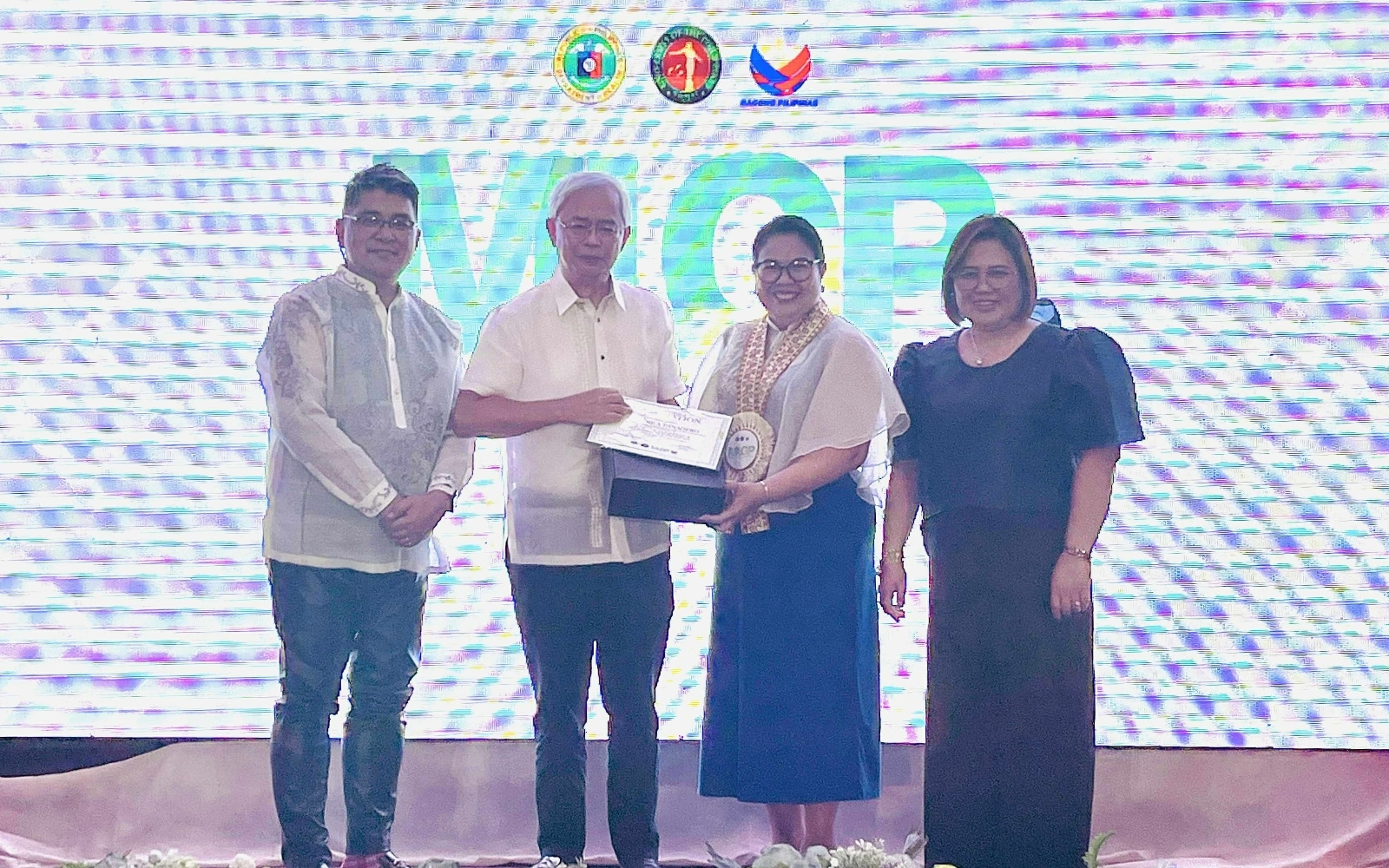
As Cycle 4 ends, the graduates are equipped not just with knowledge, but with stronger resolve to implement Universal Health Care in their communities—anchored on leadership, systems change, and a commitment to better health for all.