UP College of Public Health and Zuellig Family Foundation: A Decade of Strengthening Local Health Leadership
The University of the Philippines Manila – College of Public Health (UP-CPH) is a premier academic institution dedicated to training professionals and leaders in public health. For over a decade, it has partnered with the Zuellig Family Foundation (ZFF) to strengthen the capacities of local government leaders in delivering better health services to their communities.
Dr. Ernesto “Jun” Gregorio Jr., Associate Professor and focal person for UP-CPH’s Health Leadership and Governance Program (HLGP), has been part of this collaboration since its early stages. “We were tapped by ZFF in 2013 to become their academic partner for Region 4A (Calabarzon),” he said. “The Department of Health (DOH) was scaling up the HLGP nationwide, and ZFF needed academic institutions to help with implementation. We were endorsed by then DOH Region 4A Director Dr. Ed (Edgardo) Gonzaga, who was also our alumnus.”
Since then, UP-CPH has trained multiple batches of local leaders from municipalities across Cavite, Batangas, Rizal, and Laguna. The goal: to equip mayors, municipal health officers, and other local leaders with the knowledge and tools to improve local health outcomes.
One standout example of success was San Luis, Batangas. “They had creative initiatives like an ‘alkansya’ (“piggy bank”) system for pregnant women, so they could save money during prenatal visits and have funds when they give birth,” Dr. Jun shared. “Even the mayor personally drove the ambulance when no one else could. That level of involvement really made an impact.”
Another remarkable transformation happened in Noveleta, Cavite, a third-class municipality. “From a mostly red scorecard, they improved dramatically in just under two years,” he explained. “They didn’t just improve health indicators—they addressed social determinants of health. They trained out-of-school youth for call center jobs and even accompanied them to Manila for interviews. They boosted income and community pride.”
Noveleta also cleaned up its polluted coastline, previously a garbage site, and revived it into a thriving fishery and tourist area. “They reduced coliform levels, saw fish and even turtles return, and built a fish port,” said Dr. Gregorio. “They showed that improving the environment can uplift public health and the local economy.”
This partnership has not only improved communities—it has also enriched teaching and curriculum at UP-CPH. “The lessons we learned in the field have become part of our coursework. I now use real stories from Noveleta and San Luis in my classes on health promotion and social determinants of health,” Dr. Jun said.
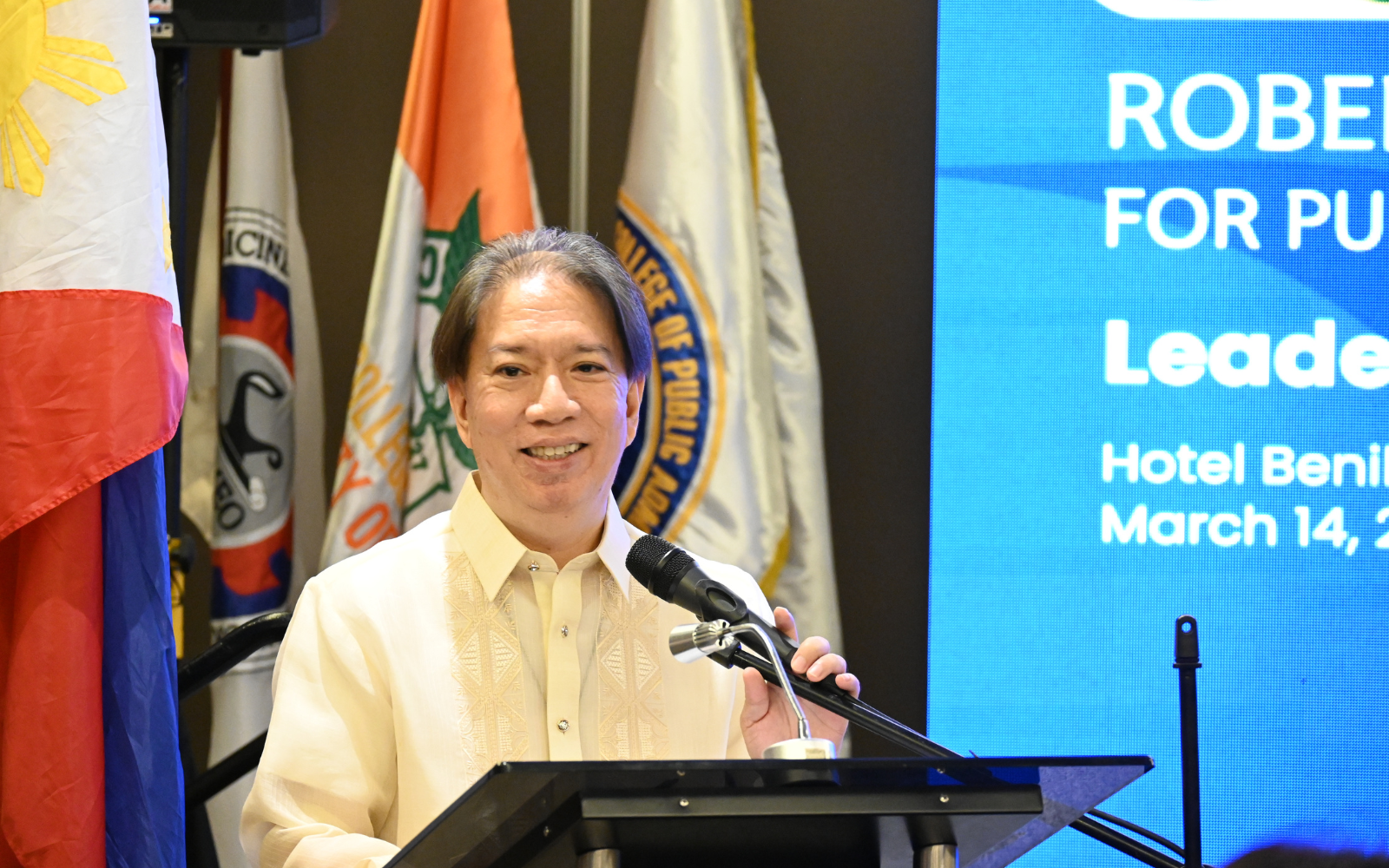
Another product of this partnership is the Roberto R. Romulo Fellowship, which supports emerging leaders from local government units to gain deeper expertise in public health leadership and governance. This fellowship strengthens capacity building by providing additional opportunities for advanced learning and mentorship. The first batch of fellows graduated last March 2025.
The collaboration has even led to new academic programs. “We’re developing a ladderized curriculum—starting with a certificate course in public service, then moving to diploma and eventually a master’s degree,” he said. “This gives local leaders a clear academic path while applying what they learn in real-world settings.”
Beyond programs and training, Dr. Gregorio stressed the value of ZFF’s support: “ZFF provided a platform where theory meets practice. We learn from the mayors just as they learn from us. That two-way exchange has been powerful.”
Looking ahead, he sees room to grow the partnership. “We want to help revise the Barangay Health Leadership and Management Program (BHLMP) and align it with the new DOH initiative, Purok Kalusugan. The indicators need updating to include social and educational determinants.”
Ultimately, Dr. Jun believes that public health must be community-centered and multi-sectoral. “Our health system remains hospital-centric. Strengthening local public health leadership is essential. If we can institutionalize these programs and scale them up, we’ll move closer to achieving real health equity.”
Related articles:
Eight Cities Share Success in Family Planning and Adolescent Health
The Zuellig Family Foundation (ZFF) and The Challenge Initiative (TCI)-Philippines concluded a three-day webinar series titled “Sustaining Momentum: Driving Leadership in Building Responsive Systems for Family Planning (FP) and Adolescent Sexual Reproductive Health (ASRH).” Held on May 26, 28, and 30, the series showcased the work of eight local government units (LGUs): Iligan, Naga, Santiago, Biñan, Mandaue, Manila, Iloilo, and Las Piñas.
Kate Graham, Deputy Director of the William H. Gates Sr. Institute for Population and Reproductive Health, co-implementer of the TCI program, framed the event as a new chapter for local leadership: “This event marks not only a culmination, but a new beginning—one where cities take the lead in building stronger, more responsive systems for FP and ASRH.”
Day 1: Cities at the Forefront
Iligan, Naga, and Santiago shared how strong leadership fosters systems change. Mayor Frederick Siao of Iligan treated FP as a governance priority, while Naga Mayor Nelson Legacion institutionalized grassroots collaboration to address teen pregnancy. Santiago Mayor Alyssa Sheena Tan, represented by Population Program Officer Johanna Gabriel, highlighted youth empowerment through peer-led education programs. Adding depth to the discussions, Joyce Dela Paz, Commission on Population and Development (CPD) Region V Director, and Theresa Soriano, CPD Region II Director, served as reactors.
“Our cities aren’t just predicting change; they’re creating it, one policy, one partnership, and one empowered young person at a time,” said Dr. Anthony Faraon, Chief of Party of TCI-Philippines at Zuellig Family Foundation, as he challenged participants to move from “best practices” to “next practices”.
Day 2: Expanding Family Planning Through Outreach
The second day began with opening remarks from Dr. Ann Ysabel Andres, OIC-Division Chief of the Child, Adolescent and Maternal Health Division of the Department of Health (DOH). Biñan Mayor Arman Dimaguila, Jr. emphasized co-ownership in tackling health system weaknesses. Mandaue City Health Officer Dr. Debra Maria Catulong presented their Women’s Health Caravan, which delivers life-stage appropriate services directly to communities. Manila Family Planning Coordinator Dr. Evelyn Rimando explained how they reconnected with women through house-to-house family planning services.
Reacting to these presentations, Marilyn Ogaya, CPD Regional Director for CALABARZON, and Reynaldo Wong, CPD Regional Director for MIMAROPA, highlighted the importance of community outreach, data-driven programming, and integrated strategies that address both demand and service delivery gaps in family planning.
Dr. Manuel Dayrit, ZFF Chairman, identified four drivers of success: strong leadership, technical excellence, adequate resources, and community engagement.
Related articles:
- Cities Lead the Way in Family Planning and Adolescent Health—Webinar Series to Spotlight Local Innovations
- Five Cities Celebrate Milestone in Adolescent Health and Family Planning Efforts
Day 3: Reaching Adolescents through Adolescent-Friendly Services
On the final day, Iloilo and Las Piñas presented their adolescent health strategies. Dr. Justine Hernandez, Medical Officer of the Adolescent Health and Development (AHD) Program at Las Piñas City Health Office, shared how a referral network streamlined services among adolescent-serving agencies. Richard Magullado, Information Officer and AHD Focal Person at Commission on Population and Development (CPD) Region VI, described how Iloilo created safe spaces that encouraged youth expression and participation.
“As a continuous commitment to lead and sustain, graduating from TCI is not an end point. It is now your city’s duty to sustain your progress and motivate others to guide, support, and proactively create an efficient and equitable health system,” said Mylin Mirasol Quiray, Division Chief of Knowledge Management and Communications Division at CPD.
Adding further insights, Jackylin Robel, CPD National Capital Region Director, and Harold Alfred Marshall, CPD Region VI Director, responded to the city presentations emphasizing that adolescent-responsive systems must go beyond access—they must provide consistent, youth-friendly engagement that respects the rights and realities of young people.
Celebrating Local Innovation and Ownership
Over the three days, the webinar emphasized local ownership, integration of services, and community-driven change. Dr. Faraon praised the eight cities for their leadership and encouraged others to scale up proven models and build partnerships across sectors.
The eight featured cities—now TCI graduates—will serve as models for other LGUs working to improve family and adolescent health outcomes. Their stories underline a clear message: responsive governance saves lives.
Cities Lead the Way in Family Planning and Adolescent Health—Webinar Series to Spotlight Local Innovations
Eight cities will take center stage next week in a three-day webinar series hosted by the Zuellig Family Foundation (ZFF) through The Challenge Initiative (TCI)-Philippines, a global program supporting high-impact practices in family planning (FP) and adolescent and youth sexual and reproductive health (AYSRH).
The event, titled “Sustaining Momentum: Driving Leadership in Building Responsive Systems for Family Planning and Adolescent Sexual Reproductive Health”, aims to showcase how local governments have taken bold, data-driven actions to improve access to reproductive health services. The webinar series will run on May 26, 28, and 30, from 10:00 AM to 1:00 PM, via Zoom.
Launched in 2020, TCI is a five-year global platform co-managed with the William S. Gates Sr. Institute for Population and Reproductive Health. In the Philippines, TCI has worked closely with city governments to support policies and programs that reduce adolescent pregnancies and improve access to FP services. The program encourages cities to adopt self-reliant, gender-responsive strategies that empower women and youth.
The cities of Iligan, Naga, Santiago, Biñan, Mandaue, Manila, Iloilo, and Las Piñas have been recognized as Global Self-Reliant Cities in FP and AYSRH under the program.
Each city’s approach reflects local leadership and innovation:
- Iligan City expanded FP and AYSRH services by empowering women and girls with access to information and health services.
- Naga City focused on youth-centered policies and community mobilization to address teenage pregnancy.
- Santiago City promoted peer education and youth leadership as a tool for reproductive health education.
- Biñan City tailored FP services to meet the real-life needs of women through integrated outreach.
- Mandaue City launched a Women’s Health Caravan to bring services closer to communities.
- Manila City used its Bayanihan Outreach Program to reach underserved areas with FP services.
- Iloilo City created adolescent-friendly healthcare environments using culturally sensitive, gender-aware strategies.
- Las Piñas City developed a multisectoral approach by aligning efforts across health, education, and social services.
The webinar series will allow participants to hear directly from local officials, program leaders, and partners about their experiences in building responsive and sustainable systems. Participants will also gain insights into effective strategies that can be applied to other cities and towns across the country.
Webinar Details:
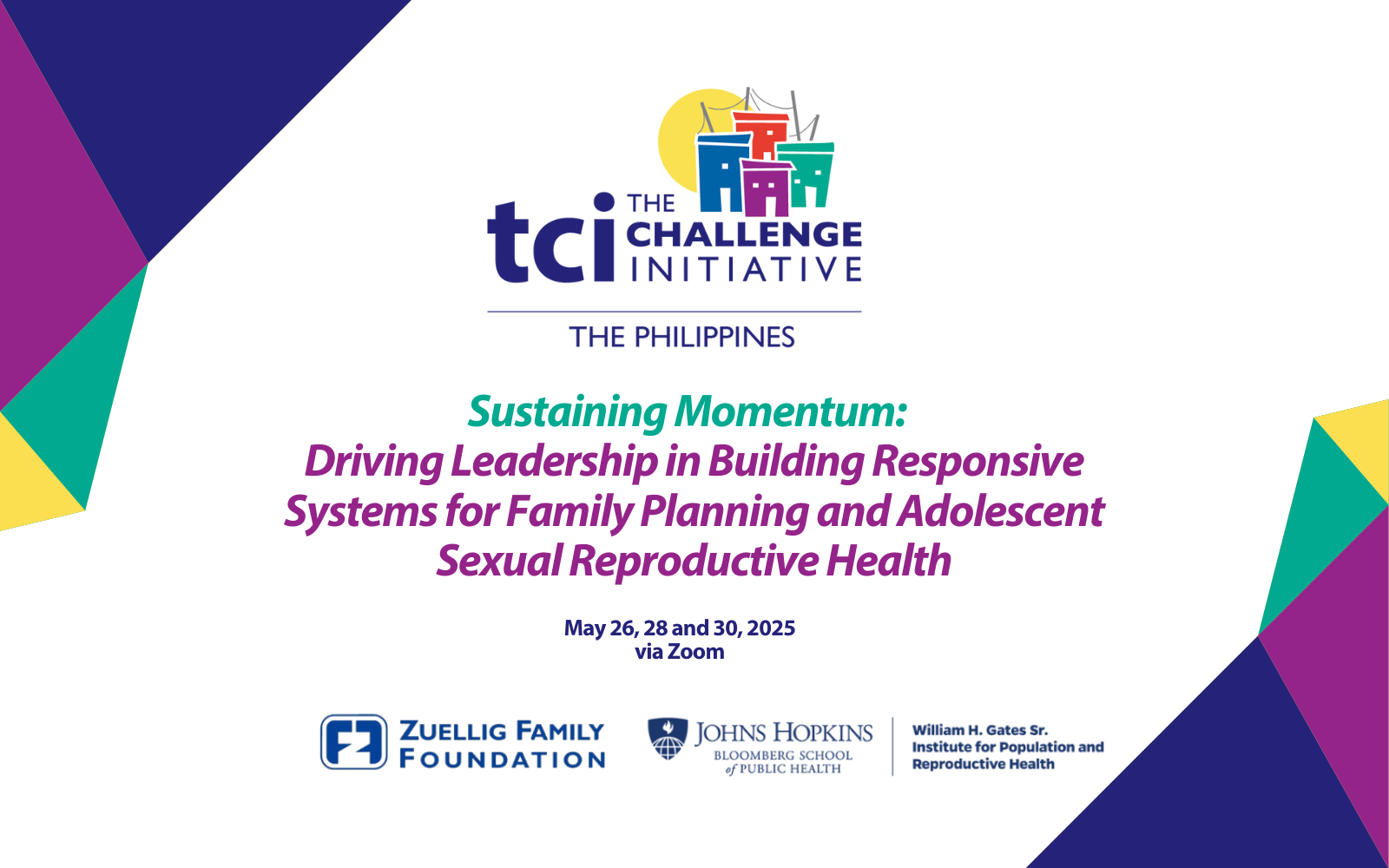
- Day 1 – May 26: Cities at the Forefront (no CPD units applied)
Join via Zoom: https://bit.ly/zff-tciwebinar1 - Day 2 – May 28: Expanding Family Planning Services to Priority Populations through Targeted Outreach
(with accredited CPD units: Medicine: 1; Nursing: 3; Midwifery: 1)
Register: https://bit.ly/zff-tciwebinar2 - Day 3 – May 30: Expanding Access to Adolescents through Adolescent-friendly Health Services
(with accredited CPD units: Medicine: 1; Nursing: 2; Midwifery: 1)
Register: https://bit.ly/zff-tciwebinar3
The webinar marks both a culmination and a new chapter for these cities as they continue to strengthen systems that protect and promote reproductive health. ZFF encourages health workers, local policymakers, advocates, and community leaders to join the discussion and explore how these stories can inspire wider change.
Related article:
Barangay Leaders Showcase Progress in Fight Against Adolescent Pregnancy in Padre Burgos
Padre Burgos, Southern Leyte — Local leaders from the pilot barangays of Cantutang, Santa Sofia, and Poblacion presented their efforts to address adolescent pregnancy during the rollout of Module 2 of the Barangay Expanded Youth Leadership and Governance Program (BEYLGP) held on May 20–21, 2025. The two-day training involved workshops and peer-sharing sessions for 30 barangay and youth leaders to strengthen their roles as advocates for adolescent health.
Medeline Razon, a Barangay Health Worker from Santa Sofia, shared her community’s initiatives to raise reproductive health awareness during a gallery walk that featured outputs from the three barangays. Leaders highlighted both achievements and ongoing challenges in their local campaigns.
Since the program’s launch in 2023, Cantutang recorded a rise in adolescent pregnancy cases from one in 2023 to four in 2024, including a 12-year-old. Santa Sofia also saw an increase, while Poblacion reported its first case in two years. In 2025, however, all three barangays reported no new cases in recent months, which leaders view as a sign of progress.
Cantutang is the only barangay where adolescents have accessed contraceptives from the Barangay Health Station, though the number remains low. Leaders consider this a positive development and a step toward improving access to reproductive health services.
Mayor Hermenegildo C. Culpa, in his message of support, stressed the importance of preventing early pregnancies to secure a bright future for young people. He called for stricter curfew enforcement, a joint intervention with adolescents’ parents. He encouraged more inclusive consultations with parents, schools, out-of-school youth and community members. He also highlighted the need for comprehensive reproductive health education.
Santa Sofia’s Sangguniang Kabataan Chairperson Razel Rose Iballa presented their redesigned Behavior-Centered Design (BCD) plan, “Session for Kumustahan: Sama-sama ang mga Kabataan”, which uses peer education to connect with at-risk youth and discourage early sexual activity.
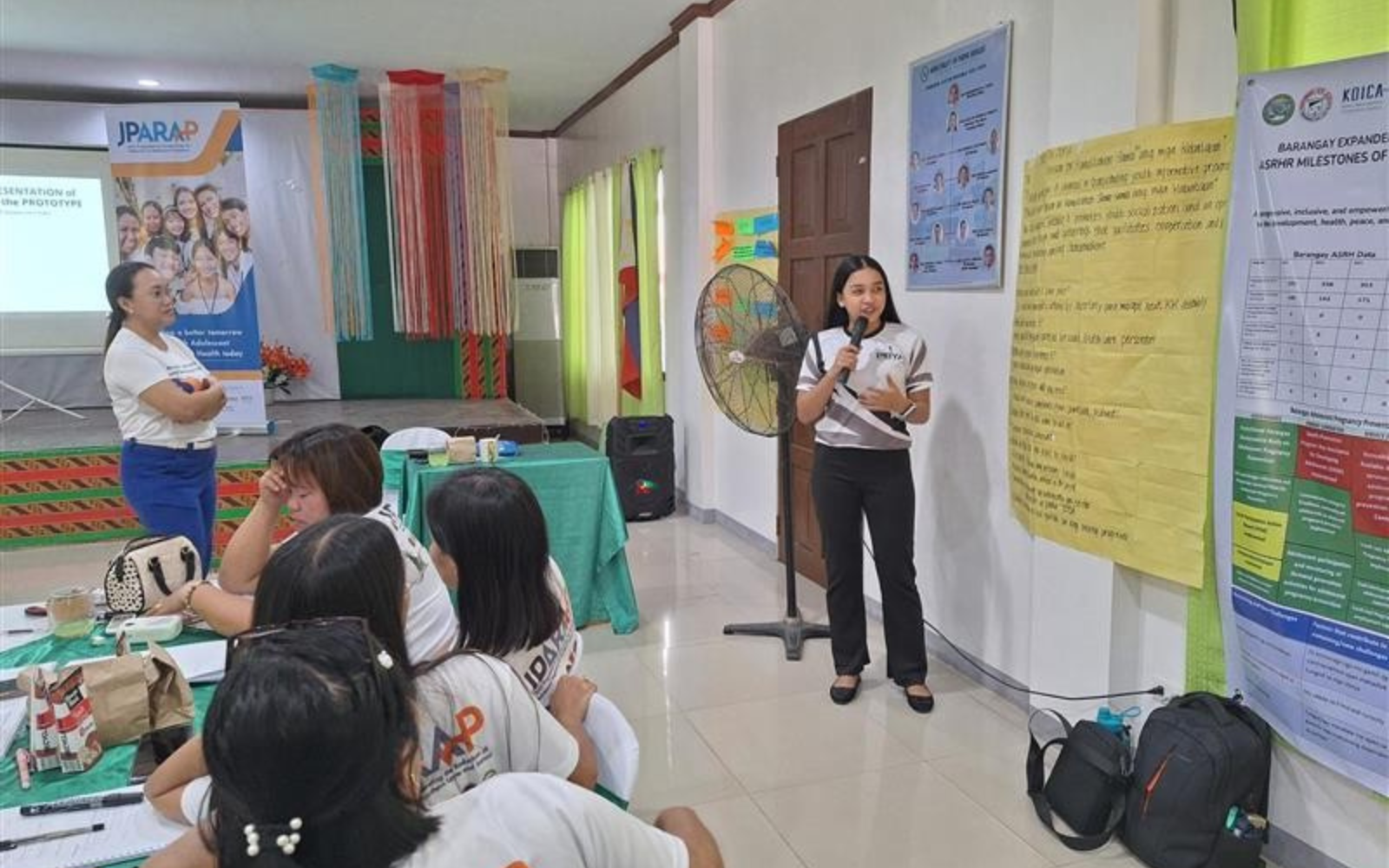
The BEYLGP is implemented by the Zuellig Family Foundation (ZFF) under the Joint Program on Accelerating the Reduction of Adolescent Pregnancy (JPARAP), in partnership with the Provincial Government of Southern Leyte and the Municipal Government of Padre Burgos, with support from the United Nations Population Fund (UNFPA) and the Korea International Cooperation Agency (KOICA).
Stakeholders emphasized the importance of sustained community involvement and local leadership in creating long-term solutions to adolescent reproductive health issues. The Municipal Guiding Coalition reaffirmed its support for barangay-led initiatives to sustain and scale the progress made.
Author: Floro Acaba Jr., ZFF EYLGP Provincial Account Officer for Samar
ZFF on the Invisible Crisis: Very Early Adolescent Pregnancy
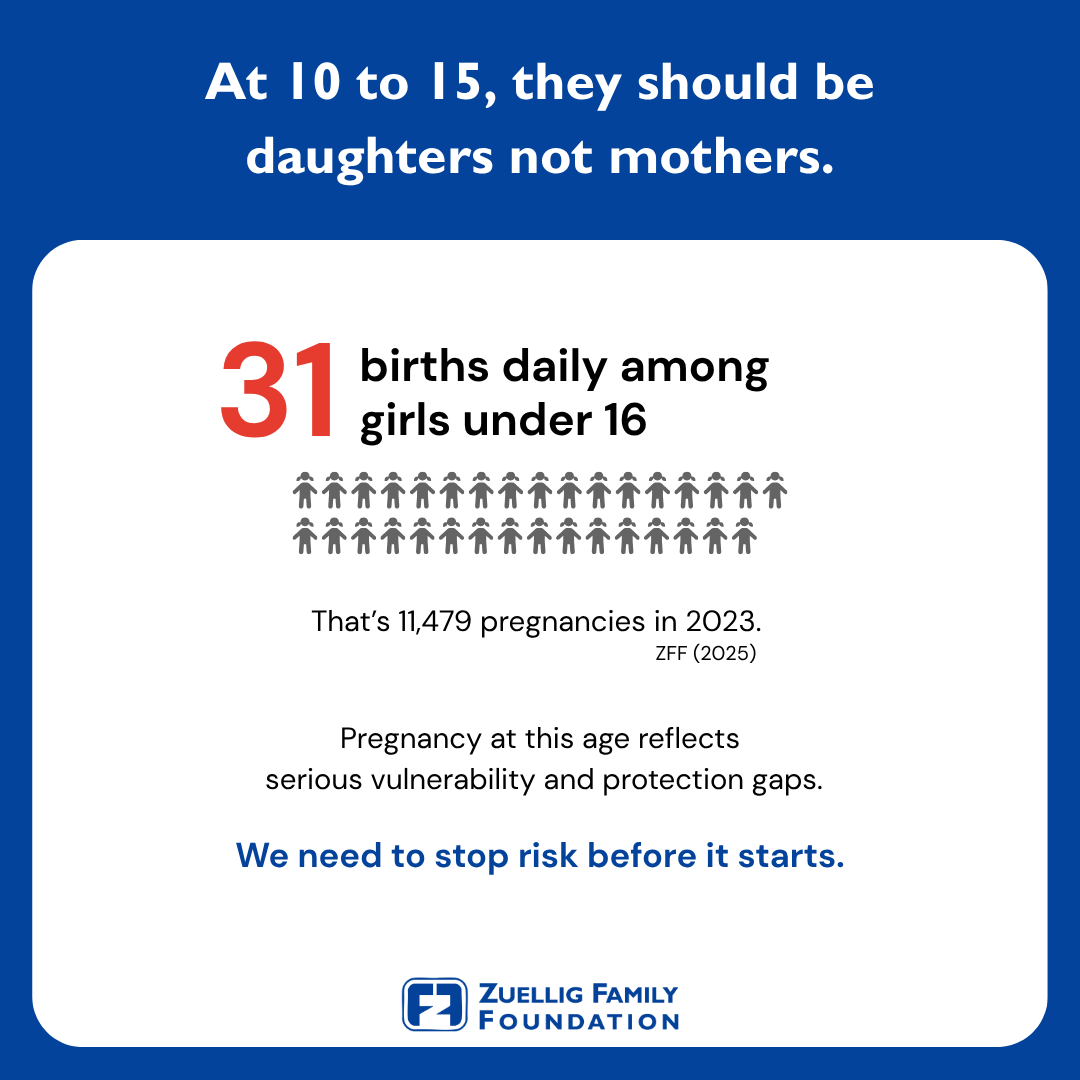
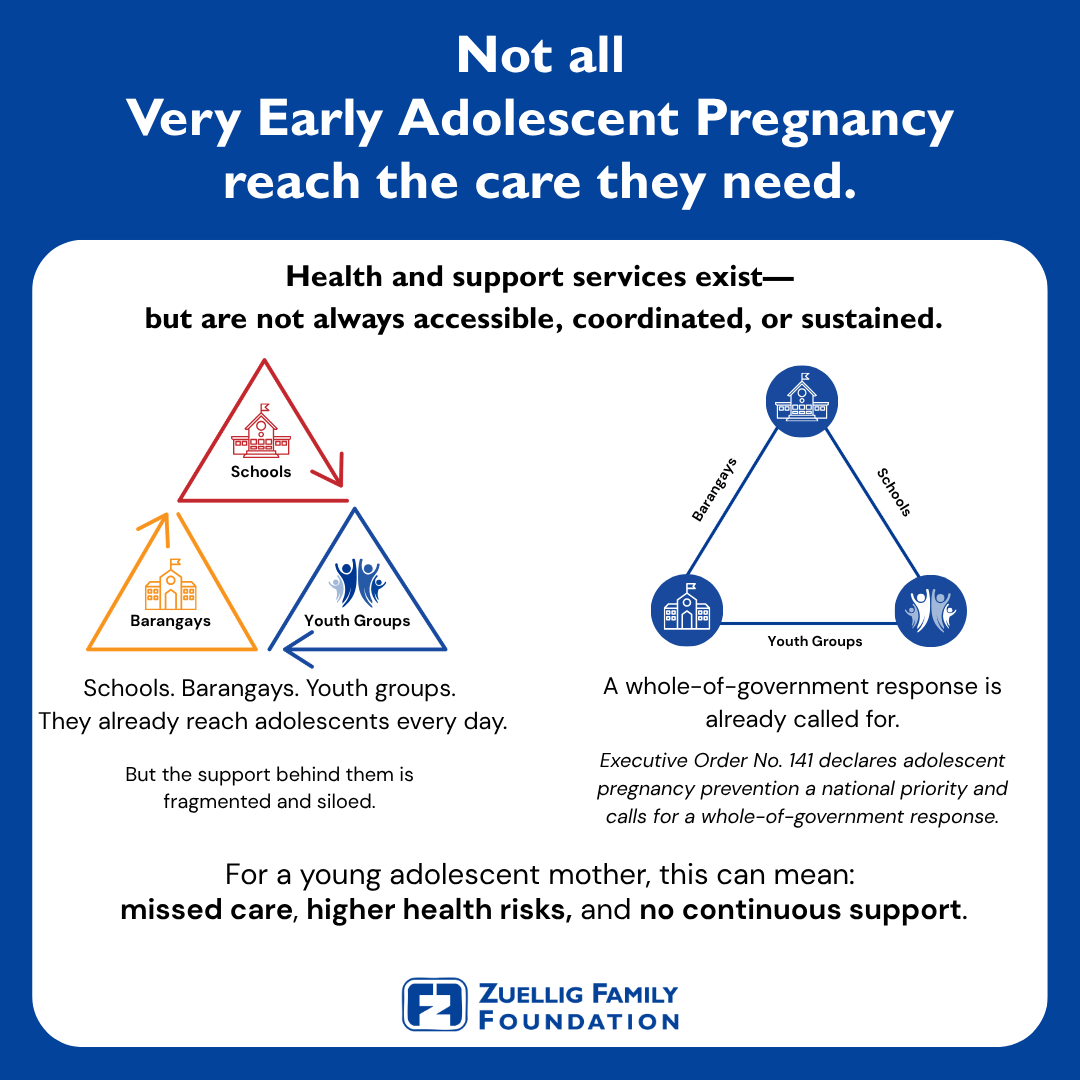
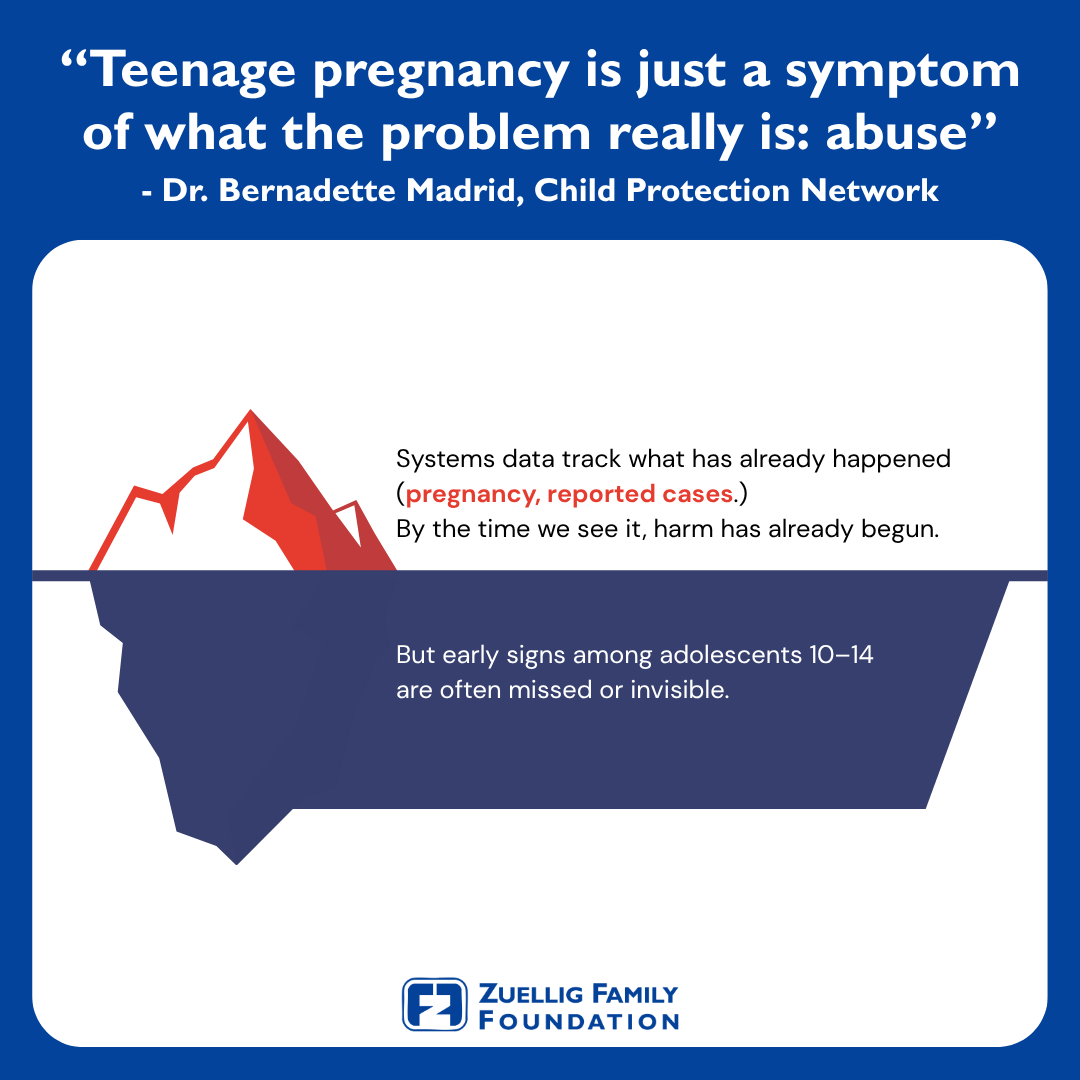
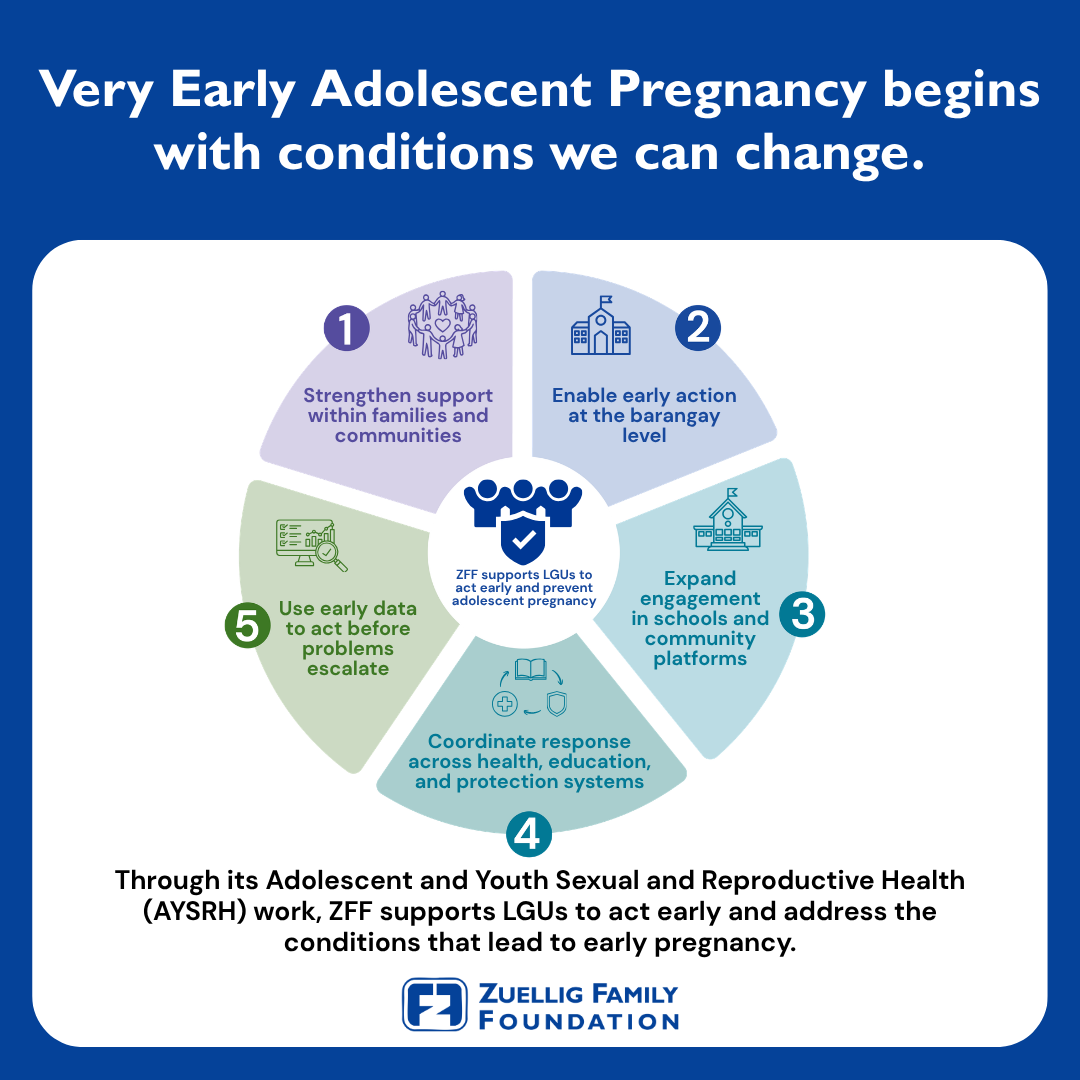
Every day, 31 girls under 16 give birth in the Philippines—that’s 11,479 pregnancies in 2023, each one a sign of deep vulnerability, not choice. At Zuellig Family Foundation (ZFF), we believe Very Early Adolescent Pregnancy (VEAP) starts with conditions we can change. Services exist, but they are fragmented, and young mothers fall through the cracks. Teenage pregnancy is a symptom of abuse; it’s time to stop risk before it starts.
Read more ground-level insights on VEAP, and our call for more responsive approaches to protecting and supporting adolescents here.
Nine Cities Recognized as Global Self-Reliant Cities in Reproductive Health
The Zuellig Family Foundation (ZFF) celebrated the graduation of nine Global Self-Reliant Cities under The Challenge Initiative (TCI)-Philippines: General Santos, Iriga, Isabela de Basilan, Lapu-Lapu, Pasig, Mandaluyong, Quezon City, Tacurong, and Tagum. Held on October 14, 2025, this TCI-Philippines’ Batch 3 Colloquium showcased how these cities are advancing family planning and adolescent and youth sexual and reproductive health (AYSRH) through data-driven leadership and community innovation.
Read more:
The Challenge Initiative-Philippines Webinar Series Day 3: Reaching Adolescents through Youth-Friendly Services (Las Piñas, Iloilo)
Day 3 of the The Challenge Initiative (TCI)-Philippines Webinar Series (May 30, 2025) featured Las Piñas and Iloilo’s efforts to make health services more responsive to adolescents. Speakers highlighted referral networks, safe spaces, and youth participation. Invited reactors from the Commission on Population and Development emphasized that cities must sustain progress and ensure services remain engaging, respectful, and youth-centered.
Read more:
The Challenge Initiative-Philippines Webinar Series Day 2: Expanding Family Planning through Outreach (Biñan, Mandaue, Manila)
Day 2 of the The Challenge Initiative (TCI)-Philippines Webinar Series (May 28, 2025) focused on how the cities of Biñan, Mandaue, and Manila are reaching more women through community-based family planning. Speakers emphasized shared leadership, house-to-house services, and mobile health caravans. Dr. Manuel Dayrit of the Zuellig Family Foundation pointed to leadership, technical skills, resources, and community engagement as key success drivers.
Read more:
The Challenge Initiative-Philippines Webinar Series Day 1: Cities at the Forefront (Iligan, Naga, Santiago)
Day 1 of the The Challenge Initiative (TCI)-Philippines Webinar Series (May 26, 2025) featured Iligan, Naga, and Santiago Cities showing how strong leadership drives systems change. Mayors prioritized family planning, youth empowerment, and community collaboration to tackle teen pregnancy. “Our cities aren’t just predicting change; they’re creating it,” said Dr. Anthony Faraon, Chief of Party of TCI-Philippines at Zuellig Family Foundation, urging everyone to move beyond BEST practices and toward NEXT practices.