Building Nutrition Resilience: Lessons from Indonesia
Insights from the Field

Dr. Joyce Viar, Nutrition Director at Zuellig Family Foundation (ZFF), distills key lessons from the AVPN Forum and Learning Visit in Indonesia: effective interventions do not guarantee sustainability without genuine government ownership. Malnutrition is a systemic challenge requiring coordinated governance, not isolated projects. These insights are shaping ZFF’s Pook Malusog strategy as it shifts toward nutrition resilience.
—
The AVPN Forum and Learning Visit in Indonesia provided an opportunity to reflect on some of the most pressing issues in nutrition and early childhood development and nutrition across Asia. While countries differ in context and development trajectories, many of the challenges discussed during the forum resonated strongly with the Philippine experience, persistent malnutrition despite available interventions, fragmented systems, insufficient financing, and the struggle to sustain innovations beyond donor support.
The forum reinforced a critical realization: malnutrition is not simply a health problem. It is a systems challenge that requires coordinated action across sectors, strong governance, sustained financing, and community ownership. Equally important, the learning visit to Tanoto Foundation’s Rumah Anak SIGAP (RAS) program demonstrated both the promise and limitations of innovative community-based interventions. Evidence of effectiveness alone does not guarantee scale or sustainability; ultimately, government ownership determines whether promising interventions become lasting solutions.
Several insights emerged from the experience that are highly relevant to ongoing efforts to strengthen nutrition systems and build nutrition resilience.
Malnutrition is a Systems Problem
One of the strongest messages from the forum was the recognition that malnutrition is inherently multidimensional. Nutrition outcomes are shaped by the interaction of food systems, maternal health, education, social norms, governance, and economic conditions. Consequently, addressing malnutrition requires moving beyond isolated interventions toward a systems approach.
This insight reinforces the importance of viewing nutrition not as a standalone sector but as an outcome produced by multiple interconnected systems. Fragmented interventions may yield short-term gains, but sustainable improvements require stronger coordination across sectors and alignment of policies, programs, and investments.
For nutrition resilience efforts, this means strengthening the capacity of systems to adapt and continue delivering essential nutrition services even in the face of shocks and competing priorities.
The First 1,000 Days Remain Foundational
The forum reiterated that maternal health and nutrition during pregnancy and early childhood continue to be among the most powerful determinants of child nutrition outcomes. Persistent challenges in Infant and Young Child Feeding (IYCF) practices indicate that technical interventions alone are insufficient.
Behavior change begins at home. Families and caregivers ultimately determine feeding practices, care behaviors, and health-seeking decisions. This highlights the need to complement service delivery interventions with stronger community engagement and social and behavior change strategies.
The emphasis on early childhood also broadened the understanding of nutrition outcomes. Child development extends beyond physical growth and includes cognitive, emotional, and social development, all of which are profoundly influenced by nutrition during the earliest years of life.
Frontline Workers are the Face of the System
Another recurring theme was the critical role of frontline workers. The quality of nutrition services is highly dependent on the competencies, confidence, and motivation of health workers and community volunteers.
The experience from Indonesia further demonstrated how community-based facilitators can bridge service delivery gaps, particularly in early childhood development and parenting support. However, it also exposed the limitations of relying solely on volunteerism without institutionalized competency standards and government support.
Strengthening frontline capacity therefore remains an essential investment. Building resilient nutrition systems requires not only technical interventions but also a capable workforce that can effectively translate policies into services that reach families and communities.
Data Must Inform Decisions, Not Just Reporting
The forum emphasized that data should serve as a tool for decision-making rather than merely a reporting requirement.
Many local governments have access to substantial amounts of nutrition information, yet translating these data into strategic action remains a challenge. Data literacy among local leaders and implementers is equally important as data availability.
When local decision-makers understand and use data effectively, they are better positioned to prioritize interventions, allocate resources efficiently, and target the populations most in need. Ultimately, evidence-informed governance is a cornerstone of effective nutrition systems.
Investing in Girls is Investing in Nutrition
An important insight from the discussions was the recognition that education, particularly for girls, functions as a long-term nutrition intervention.
Girls who remain in school are more likely to delay pregnancy, seek health services, adopt better caregiving practices, and attain improved economic opportunities. These outcomes collectively contribute to better nutrition for both women and children.
This reinforces the need to frame nutrition not only as a health issue but also as a human capital and development agenda that cuts across multiple sectors.
Financing Determines Sustainability
The forum repeatedly highlighted that successful interventions often fail to achieve scale because of insufficient and unsustained financing.
Development partners and philanthropic organizations can provide catalytic funding and demonstrate innovative approaches. However, long-term impact depends on whether governments adopt, finance, and institutionalize these interventions.
The experience of the RAS program illustrates this reality clearly. Despite strong evidence of positive child development outcomes, only three of the fourteen pilot sites were sustained by local governments. The primary barriers were the absence of dedicated government programs and insufficient budget allocations.
This experience reinforces an important lesson: sustainability planning must begin from the outset. Interventions should be designed with a clear pathway toward government financing and institutionalization.
Government Ownership is the Ultimate Measure of Success
Perhaps the most compelling lesson from both the forum and the learning visit is that evidence alone is insufficient. Innovative programs often assume that successful pilots will naturally be adopted by governments. However, the RAS experience demonstrates that effectiveness does not automatically translate into policy uptake or financing commitments.
Government ownership must therefore be intentionally cultivated through continuous engagement, alignment with government priorities, policy advocacy, and integration into existing systems.
Programs that remain external or operate in parallel structures face significant risks once donor support ends. Sustainable change occurs when governments and communities perceive interventions as their own and commit resources toward their continuation.
Integrating Nutrition and Early Childhood Development
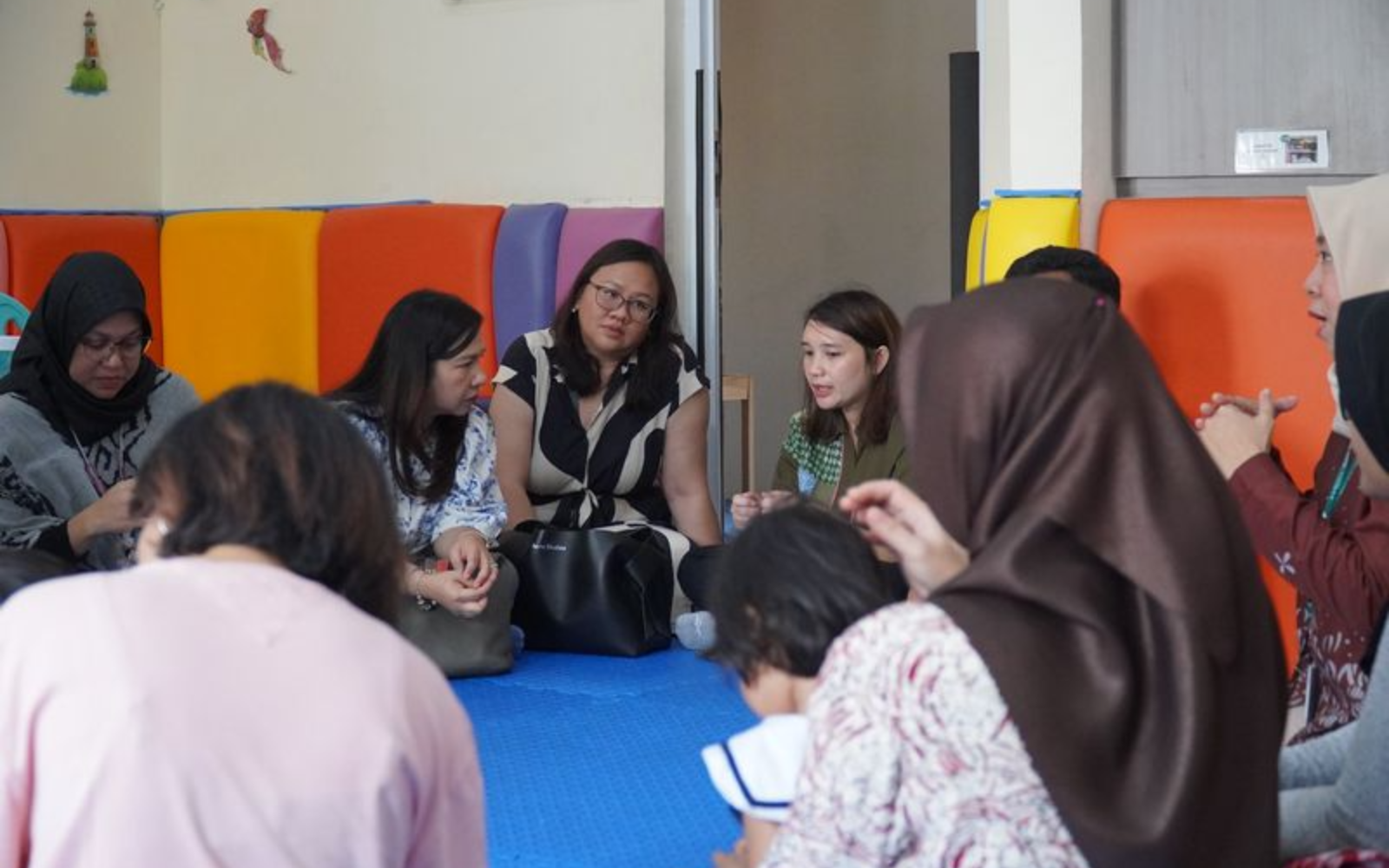
The learning visit further underscored the inseparable relationship between nutrition and early childhood development.
Nutrition interventions that focus solely on physical growth miss opportunities to influence cognitive and socio-emotional development. Likewise, early learning programs that do not address nutrition risk limiting children’s developmental potential.
The RAS model demonstrates how integrated approaches that combine responsive caregiving, nutrition, parenting support, and early stimulation can produce holistic benefits for children.
This integrated perspective has significant implications for nutrition programming, particularly in strengthening life-course approaches and advancing multisectoral collaboration.
Implications for Nutrition Resilience
Collectively, the insights from the AVPN Forum and Learning Visit point toward a broader understanding of nutrition
resilience.
Resilient nutrition systems are not merely those that continue operating during crises. They are systems that possess strong governance, capable frontline workers, evidence-informed decision-making, sustainable financing, and deep government and community ownership.
Building nutrition resilience therefore requires:
- Strengthening systems rather than implementing isolated interventions;
- Investing in the first 1,000 days and early childhood development;
- Building frontline capacities and community engagement;
- Enhancing data use for decision-making;
- Securing sustainable financing and government ownership; and
- Integrating nutrition within broader human development agendas
The AVPN Forum and Learning Visit reaffirmed that the pathway to improved nutrition outcomes extends far beyond technical interventions. Lasting progress depends on the ability of governments, communities, and development partners to build systems that are adaptive, coordinated, and owned by those responsible for sustaining them.
The experiences from Indonesia offer an important reminder: successful innovations do not achieve impact simply because they work. They achieve impact when they become embedded within government systems, supported by public financing, and embraced by communities.
These lessons strongly resonate with the evolution of the ZFF’s Pook Malusog strategy. Since its inception, Pook Malusog has recognized that sustainable nutrition gains cannot be achieved through project-based interventions alone. Instead, it has focused on strengthening local governance, generating political commitment, building multisectoral coordination, and enabling local governments to lead and sustain nutrition actions. The program’s emphasis on local ownership, evidence-informed decision-making, and institutionalization mirrors the key success factors highlighted during the forum.
As Pook Malusog transitions toward a nutrition resilience agenda, these insights become even more relevant. Nutrition resilience calls for systems that can not only deliver nutrition interventions effectively under normal conditions but can also adapt, respond, and recover amid shocks, competing priorities, and changing contexts. This requires strengthening governance systems, ensuring sustainable financing, investing in frontline capacities, and embedding nutrition within broader development and human capital agendas.
Ultimately, the journey toward nutrition resilience is a journey from demonstration to institutionalization, from externally supported interventions to locally owned systems, and from short-term program successes to enduring government commitment. The experiences from Indonesia reaffirm that the future of nutrition lies not merely in implementing effective interventions, but in building resilient systems that enable these interventions to be sustained, scaled, and continuously owned by communities and governments alike.