Bridging Leadership in Action: Governor’s Journey from Deep Dive to Collective Action Against Malnutrition in Davao Oriental
Stories
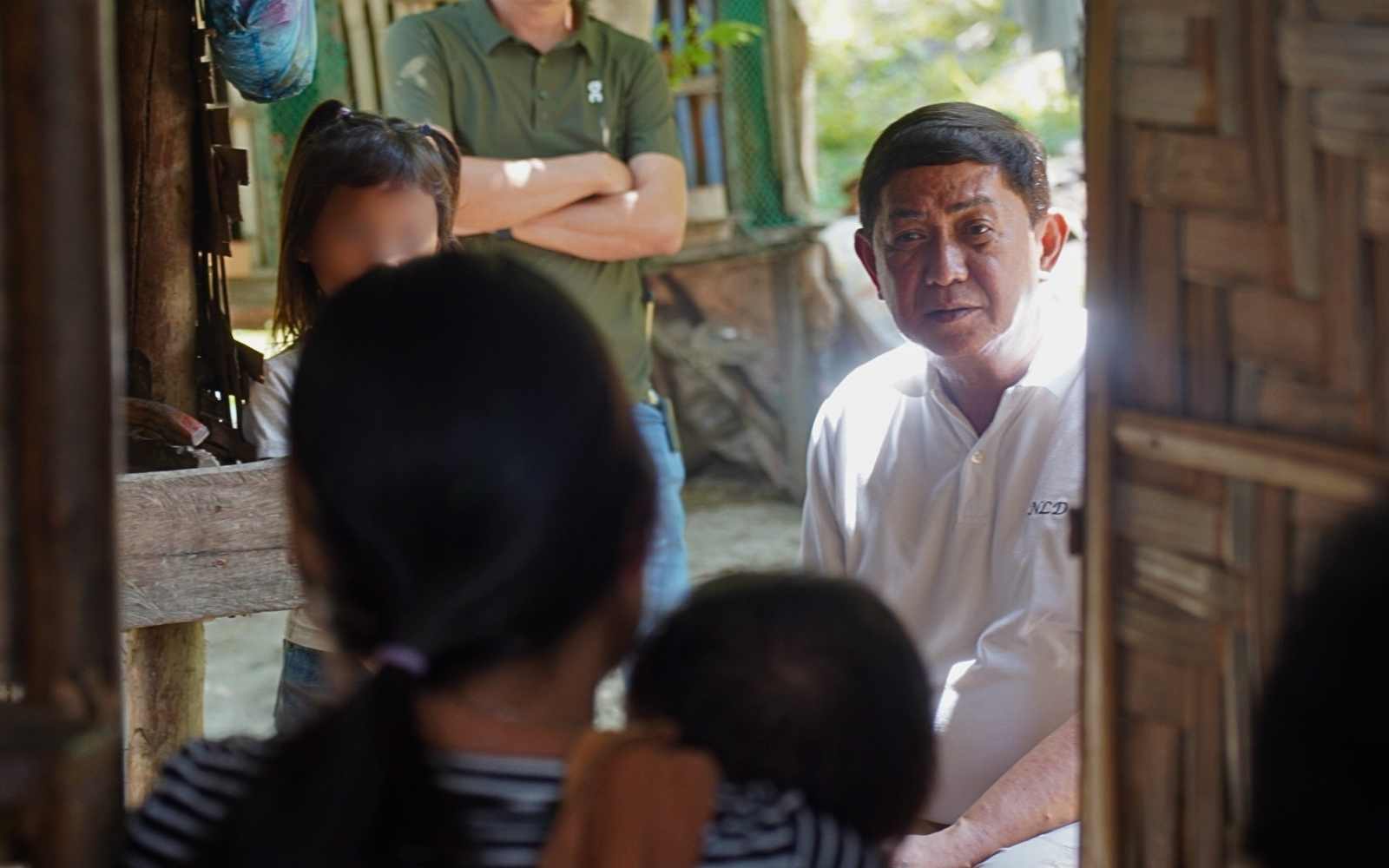
From a Deep Dive experience to a province-wide call for action, Governor Nelson Dayanghirang is bringing Davao Oriental’s mayors together to make nutrition everyone’s business.
There is a moment in every leadership journey when learning has to become action.
For Governor Nelson Dayanghirang of Davao Oriental, that moment came after his Deep Dive, a guided community immersion, under the Zuellig Family Foundation’s (ZFF) Nutrition Leadership and Equity Acceleration Program (NutriLEAP).
From Community Reality to Leadership Reflection
During the Deep Dive in a barangay in Mati City, Governor Dayanghirang met a family living on no more than Php 5,000 a month. Their home had woven bamboo walls, no proper toilet, and inconsistent water access. Their two-year-old daughter had been diagnosed with severe acute malnutrition (SAM).
The family relied on seasonal fishing and coconut harvest labor. Their father’s fishing boat was old and damaged, while coconut harvest work lasted only about three months each year.
For Governor Dayanghirang, the experience was deeply personal. What struck him most was the family’s dignity. He said that they speak with honesty, directness, and genuine goodness.
The experience also reminded the Governor of his early years as a Barangay Captain. He said it felt like going back to one’s roots. “Every time we go out to communities, meet people where they live, and truly understand their situation, we rediscover the passion that brought us here in the first place.”
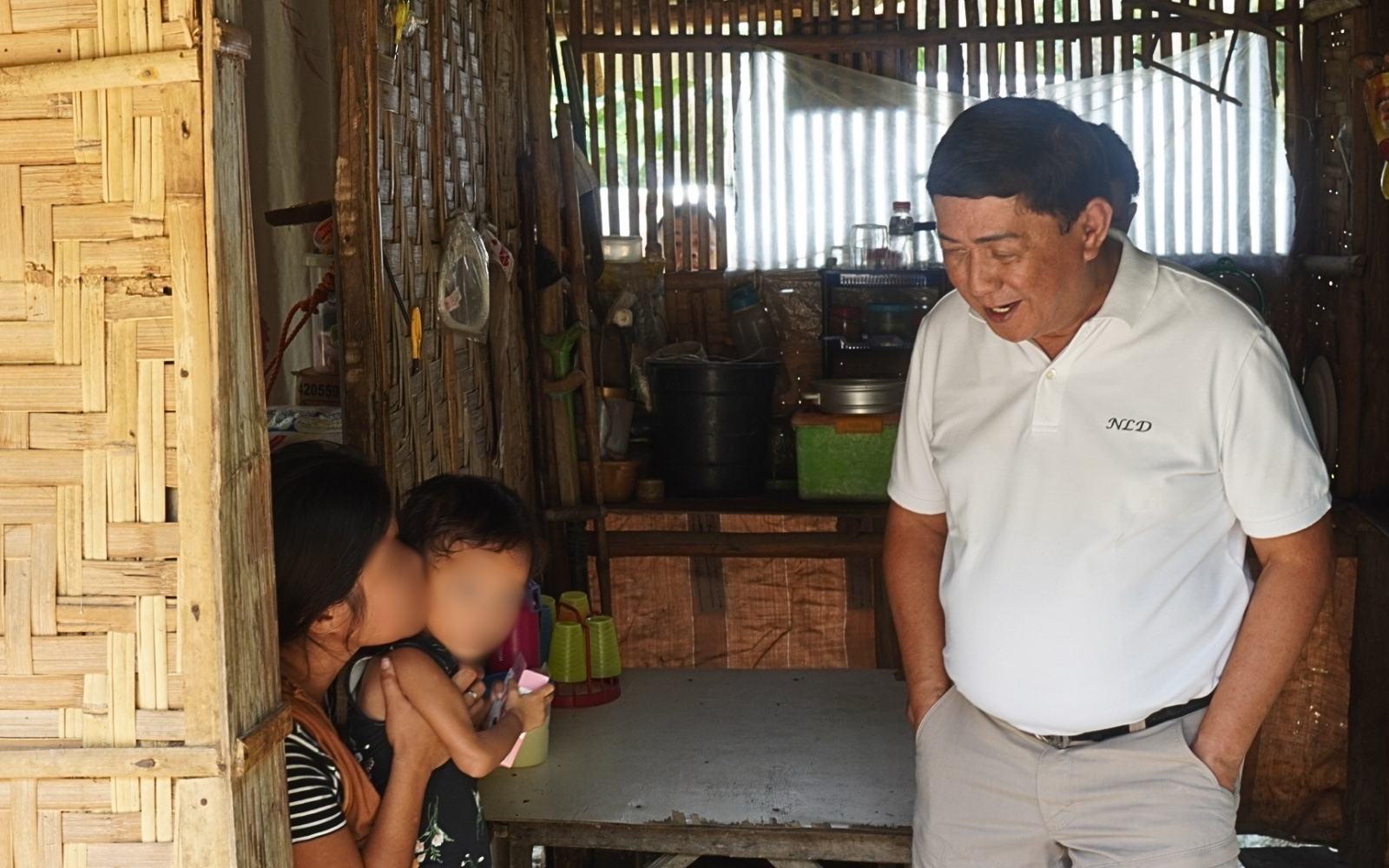 Photo above: Governor Dayanghirang speaks with the mother and her child during the Deep Dive, listening firsthand to the family’s daily realities.
The Deep Dive also showed him that addressing malnutrition means looking beyond nutrition itself. He said, “If we never address the root issue of income and livelihood, then giving someone a chicken or a goat is not enough. We need a strategic plan, and we must help people build stable, reliable sources of income.”
This reflection became the starting point for a wider conversation with Davao Oriental’s local chief executives.
From One Leader to Many
The Governor’s Engagement with Mayors (GEM) gave Governor Dayanghirang an opportunity to bring his Deep Dive learning to the provincial level and ask a bigger question: What can local leaders do together to address malnutrition?
The GEM brought together the NutriLEAP learning process and outcomes, Davao Oriental’s provincial nutrition landscape, and regional and municipal data. The discussion covered maternal and child health, adolescent pregnancy, stunting, and the local conditions behind these outcomes.
The data showed challenges that cannot be addressed by the health sector alone. Maternal deaths were discussed in relation to delays in seeking care and receiving treatment. Infant deaths were linked largely to infections. The province also recorded an adolescent birth rate of 16.8 percent, or 1,258 births, against a target of keeping adolescent births below 10 percent of live births.
Then came the discussion on stunting.
For local leaders, the question was no longer simply how many children are stunted, but why.
Municipal-level data can help leaders identify where technical assistance is needed and where to look for local causes, from water, sanitation and hygiene (WASH) and food systems to agriculture, social protection, and community-based food initiatives.
Dr. Reden Bersaldo, Provincial Health Officer, presented the province’s ambition of zero stunting. He acknowledged that it may seem like a difficult goal to achieve, but it is possible with everyone working together.
The province’s strategy includes collaboration across agencies, clear policies and guidelines, and partnerships with the Department of Health, National Nutrition Council, and development partners such as Vitamin Angels and Compassion International. It also plans to expand the Family Stunting Reduction (FaStR) Program, a family-based initiative supported by ZFF that teaches parents to monitor their children’s growth and health, especially during the critical first 1,000 days of life (F1KD).
For Governor Dayanghirang, data should lead leaders toward action. “As a leader we have the responsibility to respond [and] identify its causes,” he said. And then came his challenge to the province: “Together let us turn all plans into action.”
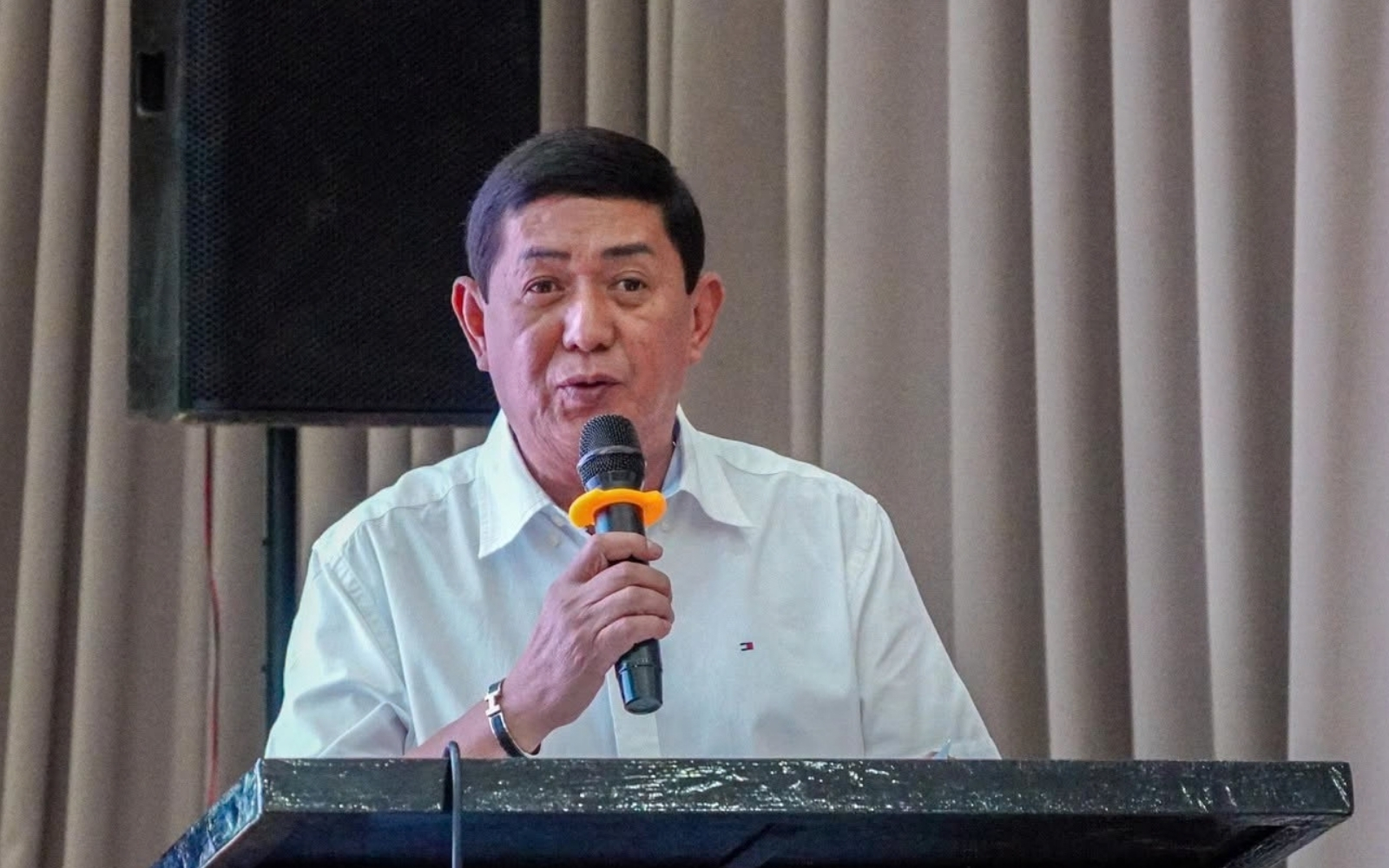 Photo above: Governor Dayanghirang addresses the province’s local chief executives during the Governor’s Engagement with Mayors (GEM), calling for collective action toward Zero Stunting.
“No One Can Solve Malnutrition Alone”
Turning plans into action requires more than a provincial directive. It requires people willing to own the problem together. For Governor Dayanghirang, co-ownership meant acknowledging a reality that can be difficult for leaders to say aloud: “No one can solve malnutrition alone, not even the governor who has a lot of power.”
His next question was even more personal: “Kinsa ako makauban sa akong leadership journey?” Who can accompany me on this leadership journey? In asking that question, the Governor shifted the conversation from authority to partnership. The mayors became co-owners of the province’s nutrition agenda, with each municipality identifying actions suited to its own community.
Different Communities, One Ambition
The provincial commitment was clear: Zero Stunting for Davao Oriental. But reaching that goal will not look exactly the same in every municipality.
In Governor Generoso and Banay-Banay, local priorities centered on addressing stunting through education and stronger coordination across health, agriculture, and social welfare and development. In San Isidro, the call was direct: “Malnutrisyon Labanan.” In Cateel, leaders identified food security as a priority, recognizing that provincial resources are finite and must be directed strategically toward improving access to nutritious food.
In Tarragona, priorities included increasing the nutrition budget, creating a plantilla position for the Municipal Nutrition Action Officer, and increasing the honorarium of Barangay Health Workers and Barangay Nutrition Scholars. The municipality also identified actions for pregnant women and young children, including folic acid and immunization, stronger Operation Timbang Plus coverage, improved access to nutritious food, and promotion of appropriate feeding and healthy lifestyles.
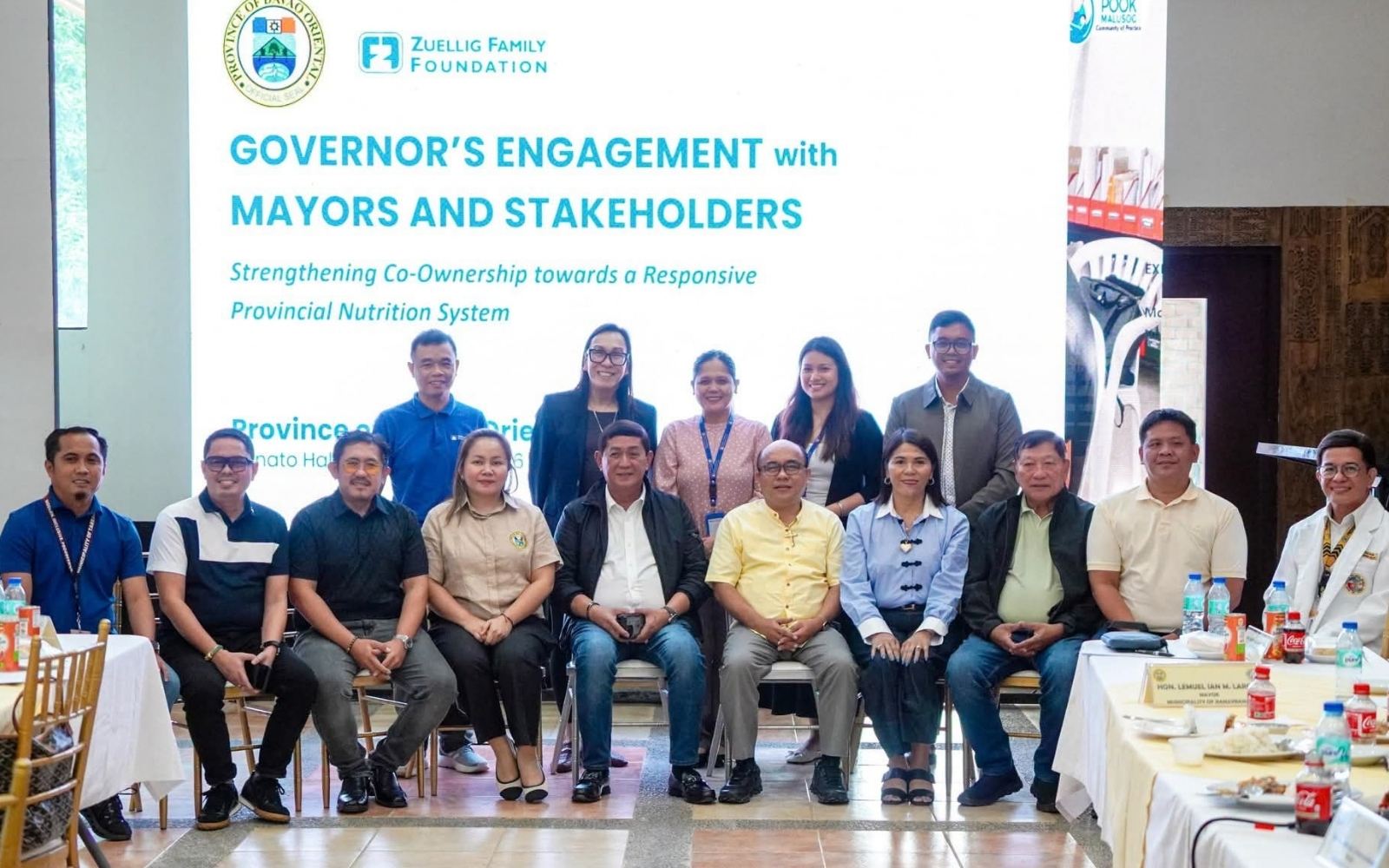 Photo above: Participants from across Davao Oriental gather with the ZFF team, marking a shared commitment to making nutrition everyone’s business.
Across these commitments, one message emerged: Nutrition becomes stronger when it becomes everyone’s work.
The Governor’s Engagement with Mayors became more than another meeting on nutrition. One leader’s learning became a conversation with many leaders. One provincial vision began taking shape through municipal commitments. Data became a basis for asking harder questions about what needs to change on the ground.
The Deep Dive gave Governor Dayanghirang an opportunity to reflect and learn. The GEM gave him an opportunity to bring others into that reflection.
—
The Nutrition Leadership and Equity Acceleration Program (NutriLEAP) is a capacity-building initiative by ZFF, supported by the League of Provinces of the Philippines, to improve nutrition outcomes in provinces nationwide. It strengthens leadership and governance against malnutrition by equipping governors and their teams to assess local nutrition systems, identify gaps, engage stakeholders, and implement sustainable actions. By fostering accountability and collaboration, NutriLEAP helps local leaders turn goals into lasting change.
Photos from: Provincial Government of Davao Oriental