Negros Occidental Builds Stronger Nutrition Leadership
News | by Krizzia Esperanza
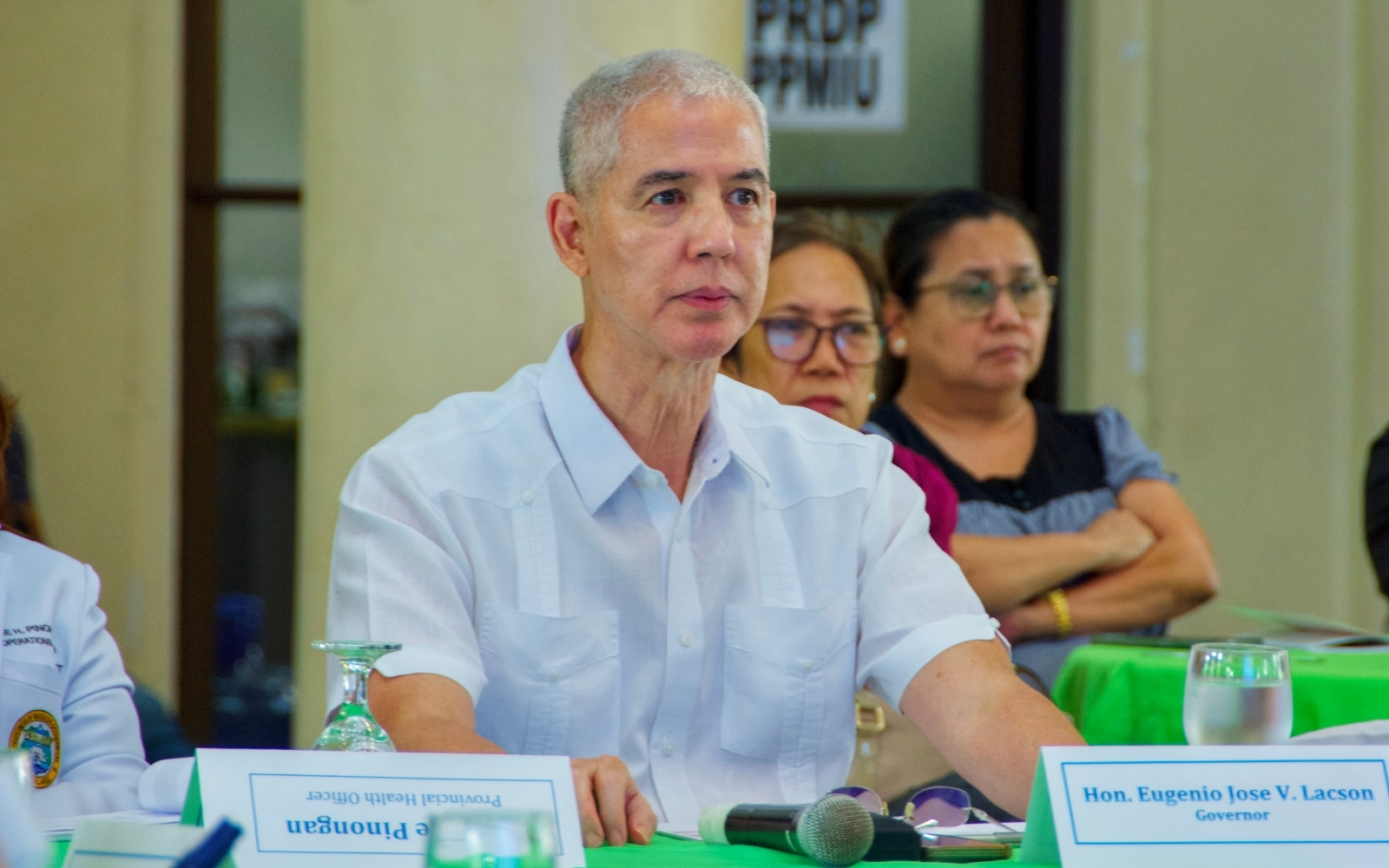
“The strength of our workforce, the potential of our children, and the dignity of every Negrense family are closely intertwined with the quality of life that we are able to provide.”
Negros Occidental is now part of Zuellig Family Foundation (ZFF)’s Nutrition Leadership and Equity Acceleration Program (NutriLEAP). Governor Eugenio Jose “Bong” Lacson, together with mayors and other local leaders and health officers in the province participated in the Executive Session under NutriLEAP, in partnership with Kain Tayo Pilipinas supported by the Philippine Business for Social Progress, last February 3, 2026. The session centered on building a shared understanding of challenges and creating strategies to improve nutrition outcomes in Negros Occidental.
Dr. Joyce Viar, Nutrition Director at ZFF, provided context and framing, guiding the participants through the activity’s objectives: to analyze the provincial nutrition landscape, articulate personal and shared leadership commitments, and co-create strategies for priority nutrition challenges. ZFF’s approach emphasized practical, systems-focused processes rather than abstract discussions, ensuring that every activity was tied to measurable action.
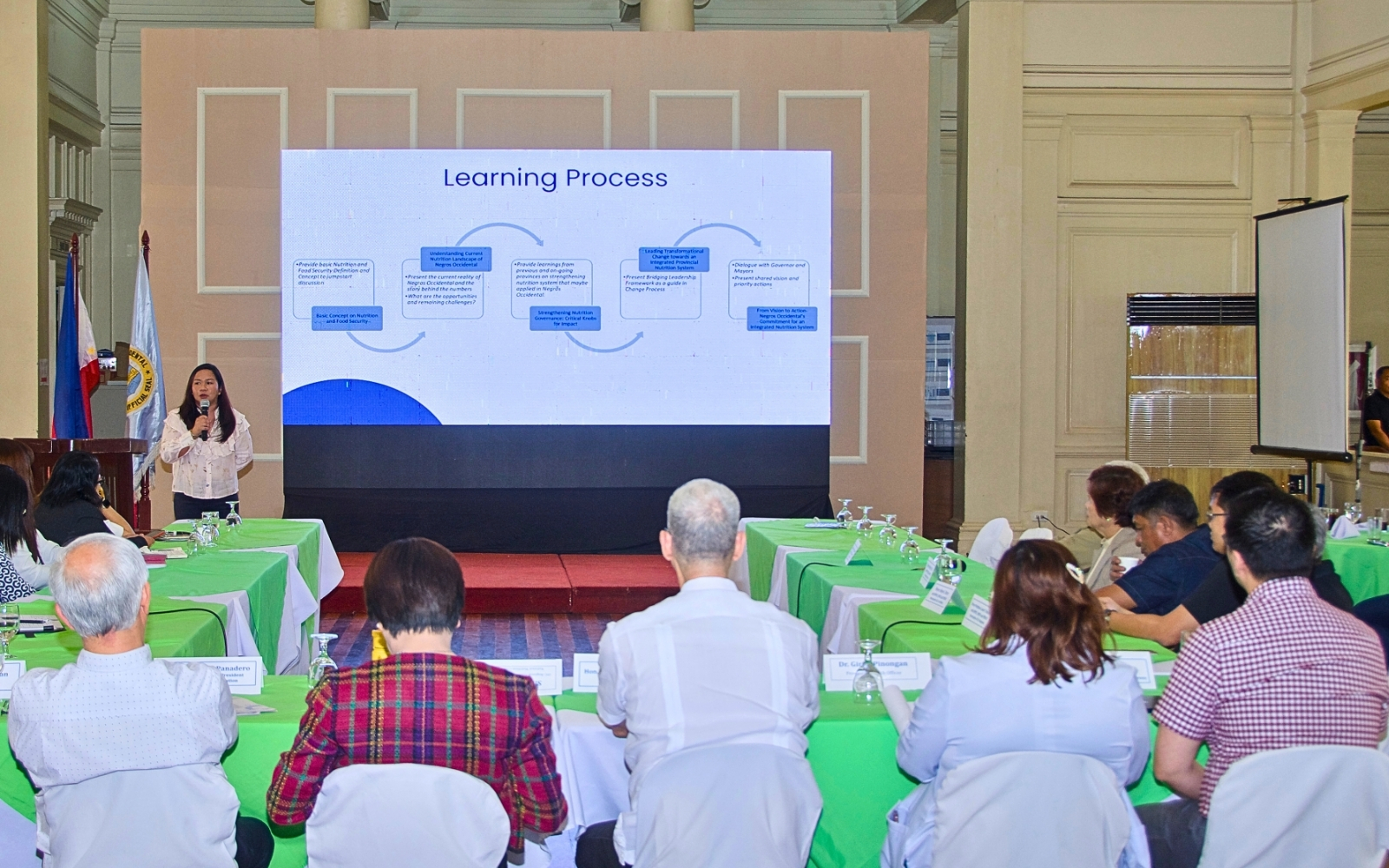
Participants reviewed key data on nutrition in the region. Western Visayas has a malnutrition prevalence rate of 6.4%, affecting 33,832 children aged 0–5. Negros Occidental is included among the 34 priority areas under the Philippine Plan of Action for Nutrition (PPAN). Within the province, stunting among children 0–5 stands at 3.15% (7,134 children), while wasting affects 0.59% (1,327 children) as of 2025. Areas with the highest stunting rates include Salvador Benedicto at 14.18%, the City of La Carlota at 8.74%, and Calatrava at 8.68%.
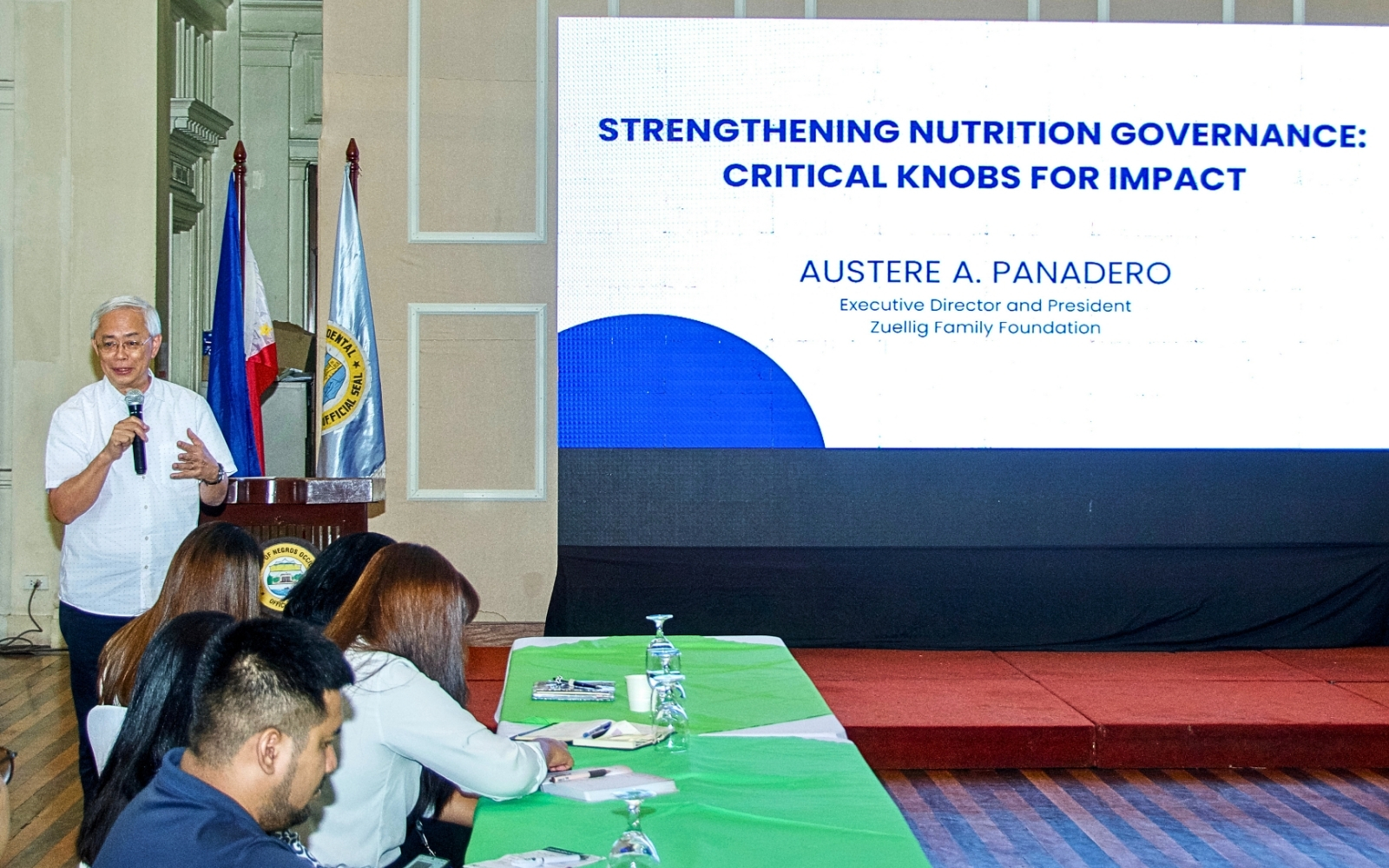
Austere Panadero, ZFF President and Executive Director, noted that undernutrition in the Philippines is decreasing, but the change remains minimal—around 1–2 percentage points annually for stunting. He introduced ZFF’s 8 Critical Knobs for Nutrition Governance, offering a structured approach to strengthen nutrition programs across multiple levels of government.
Using this framework, the session included a workshop facilitated by Hadji Balajadia, faculty at Ateneo de Davao University and ZFF consultant, where participants reflected on their priorities, defined guiding principles, and developed concrete action plans, from institutionalizing provincial nutrition programs and securing dedicated funding to coordinating multi-sector efforts at the city, municipal, and barangay levels.
Governor Lacson reinforced the process by translating these discussions into a rough provincial action plan. He stressed data-driven governance, investment in frontline health workers, sustained financing, and community-centered programs as critical steps toward a responsive, integrated nutrition system.
In closing, Governor Lacson said with encouragement, “Let this session mark not the end of our discussions, but the beginning of a deeper and more deliberate alignment of our efforts.”
