Beyond the Success, What Bangladesh’s Family Planning Journey Teaches Us Next
Insights from the Field | by Dr. Anthony Faraon
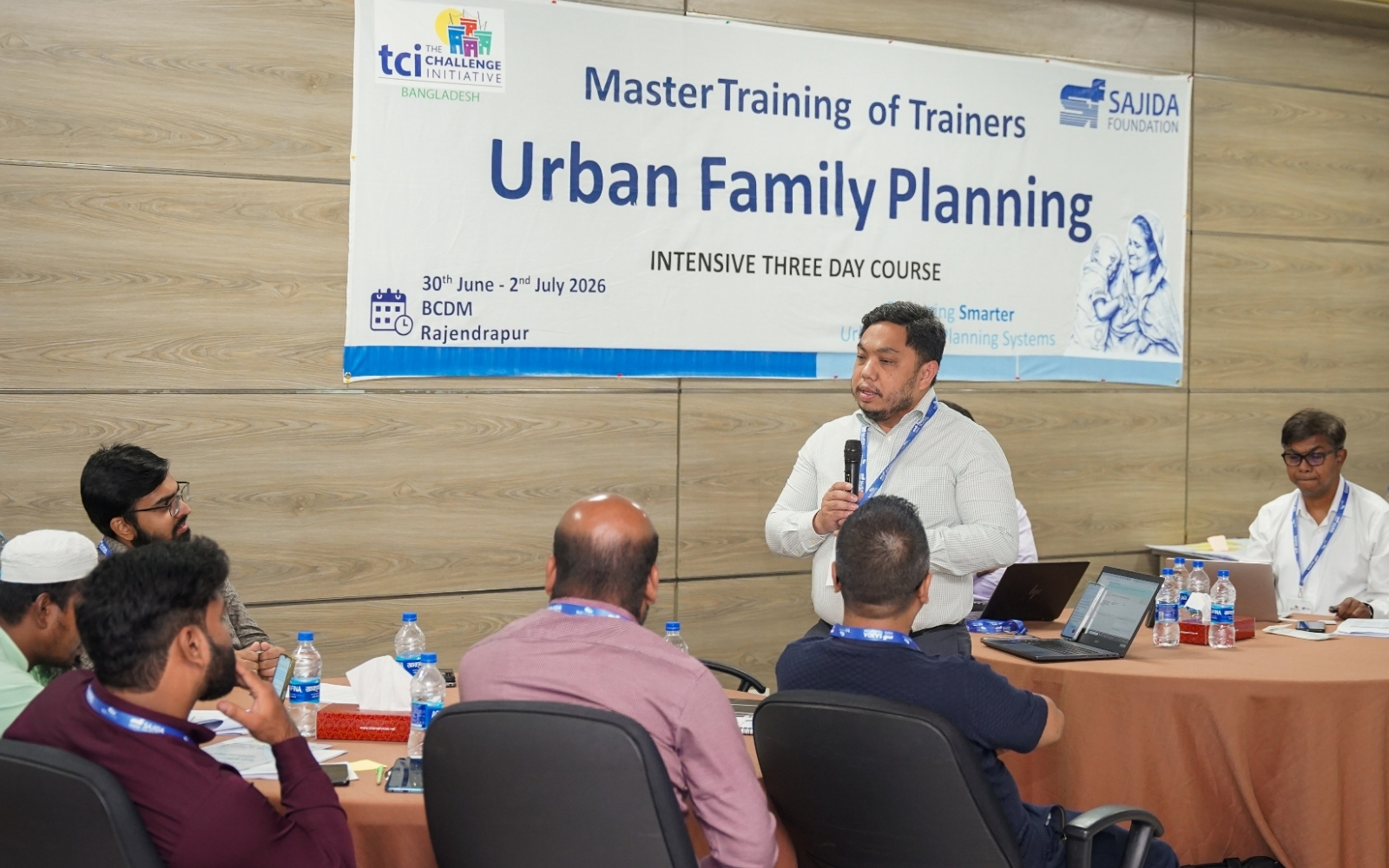
In this field note, Dr. Anthony Faraon, Chief of Party of The Challenge Initiative (TCI)-Philippines at Zuellig Family Foundation (ZFF), reflects on Bangladesh’s family planning success and the need to adapt as progress plateaus. Observing a TCI workshop in Dhaka, he notes that sustaining gains now requires stronger urban governance, local ownership, and coordination—shifts he saw emerging among city leaders, with lessons drawn from the Philippines’ experience.
—
Bangladesh has long been recognized as one of the world’s family planning (FP) success stories. Despite many social and economic challenges, the country achieved impressive gains in contraceptive use and fertility reduction through strong national leadership, an extensive community based workforce, and consistent support from government and development partners.
After spending a week in Dhaka supporting The Challenge Initiative (TCI) Bangladesh’s first Master Training of Trainers (MTOT), I came away with a deeper appreciation of how health systems must continue to evolve. Bangladesh has built a solid foundation in FP, but like many countries, it is now facing a different set of challenges. The question is no longer simply how to increase access to services, but how to sustain progress in rapidly growing cities.
Related articles:
- Why The Challenge Initiative and Evidence-based Strategies for Family Planning Matter More Than Ever
- TCI-Philippines Draws Lessons from Indonesia’s Family Planning Landscape
What struck me most was not the technical discussions on FP, but how the health system is organized.
Compared with the Philippines, Bangladesh has a different way of delivering urban health services. Responsibilities are shared among several national ministries, city corporations, specialized agencies, and a large number of non-government organizations (NGOs). Together they have built a system that has delivered results for many years. At the same time, this arrangement also means that improving services depends not only on good technical interventions but also on strong coordination among many different actors.
In many ways, Bangladesh was once the poster country for FP. Today, however, it appears to be entering a new phase where earlier gains have started to level off. This does not diminish what the country has accomplished. Rather, it suggests that the strategies which worked well in the past may now need to be complemented by approaches that strengthen urban governance, local ownership, and health system performance.
Throughout the workshop, three topics kept coming up during discussions and group work: data, leadership, and financing. These themes reflected many of the issues identified in the baseline assessment. While facilities continue to serve large numbers of clients, most clients still use short acting methods. NGOs continue to provide a significant share of urban FP services. Gaps also remain in counselling, facility infrastructure, and provider capacity. These findings suggest that improving FP is no longer just about increasing service volume. It is about improving quality, expanding method choice, strengthening systems, and helping cities use data to guide decisions.
One observation stayed with me throughout the workshop.
The MTOT brought together the leadership of the Dhaka South City Corporation. During the different workshop exercises, I saw how discussions gradually shifted from identifying problems to recognizing the city’s own role in addressing them. There was a noticeable sense of ownership developing as participants discussed what they themselves could do moving forward.
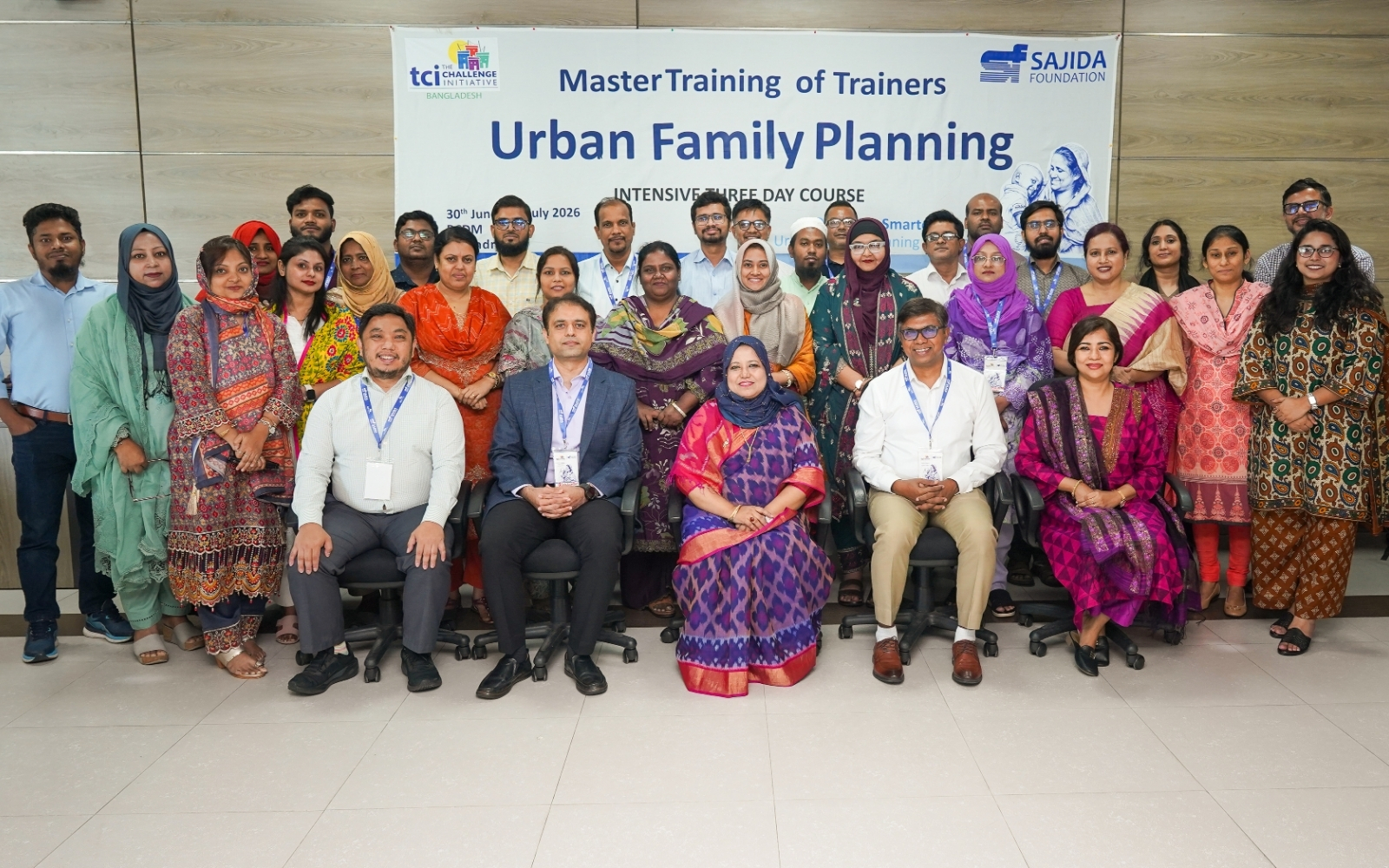 Photo above: City leaders and TCI facilitators gather in Dhaka, representing the collaborative network sustaining Bangladesh’s urban family planning gains.
Another reflection relates to the role of NGOs.
Bangladesh’s FP achievements would not have been possible without them. NGOs have expanded access, introduced new approaches, and reached communities that government services alone may not have been able to serve. Their contribution remains one of the country’s greatest strengths. Looking ahead, however, there may be an opportunity to continue strengthening public institutions so that government and NGOs work side by side as partners, rather than having public services depend heavily on external support. This is not about reducing the role of NGOs. It is about building a system where both sectors continue to complement one another in a sustainable way.
This is where I saw an interesting comparison with the Philippines.
Over the years, the Philippine health system has gradually strengthened local government ownership, planning, financing, and accountability. Bangladesh, on the other hand, has shown how partnerships with NGOs can significantly expand reach and service delivery. Neither approach is better than the other because each reflects its own history and context. Instead, both countries have something to learn from one another. The Philippines can continue improving how it works with NGOs as long term implementation partners. Bangladesh may find opportunities to further strengthen city leadership, local financing, and institutional ownership of urban health services.
Perhaps my biggest takeaway was that sustaining success often requires different solutions from those that created the success in the first place.
Bangladesh’s earlier achievements were built on strategies that responded well to the country’s needs at that time. As cities grow and health systems evolve, the next phase may require renewed attention to governance, financing, coordination, and the use of data. It is less about introducing entirely new programs and more about helping existing institutions work better together and strengthening the capacity of cities to lead improvements themselves.
As I left Dhaka, I was reminded that health systems strengthening is not only about better policies or better technologies. It is also about helping institutions work together, building local ownership, and creating conditions where improvements can continue long after projects have ended.
Bangladesh has already shown the world what is possible through sustained investment in family planning. The next chapter may be about helping cities build on that foundation and take greater ownership of the gains they have worked so hard to achieve.
If the discussions and commitment I witnessed during the MTOT are any indication, that next chapter is already beginning.
