Bayang Malusog Community of Practice Zeroes In on Health Information Systems as Key to Universal Health Care Success
News | by Krizzia Esperanza
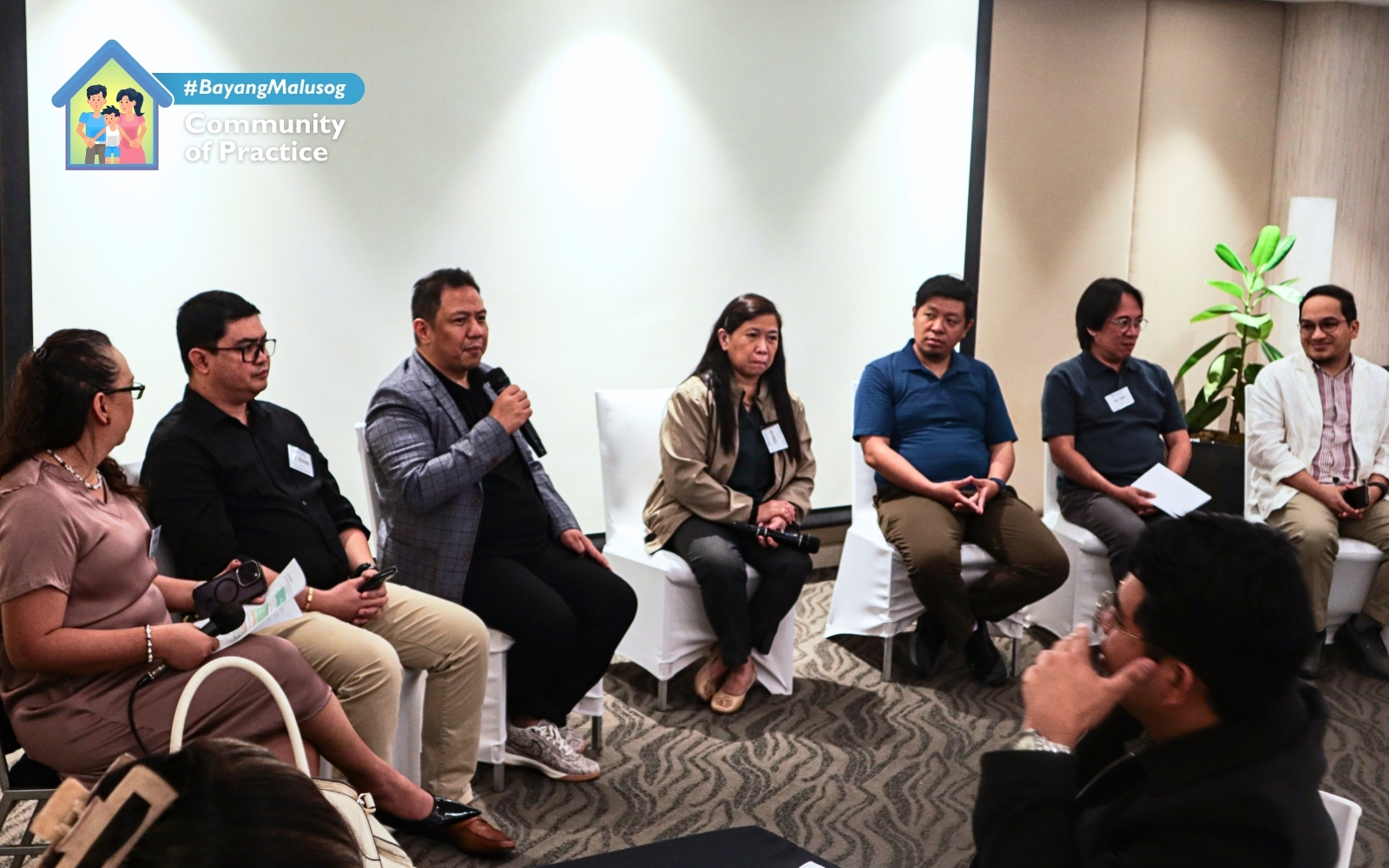
A health information system (HIS) succeeds only when end users adopt it, local governments finance it, and national standards support it. The Bayang Malusog Community of Practice convened on May 6, 2026 to advance exactly this kind of systems-level learning.
This Community of Practice, convened by the Zuellig Family Foundation (ZFF), serves as a dedicated learning platform where health officials exchange implementation experiences, discuss operational challenges, and develop practical solutions for advancing UHC across the Philippines. This session brought particular focus to HIS, which many describe as the backbone of health reform.
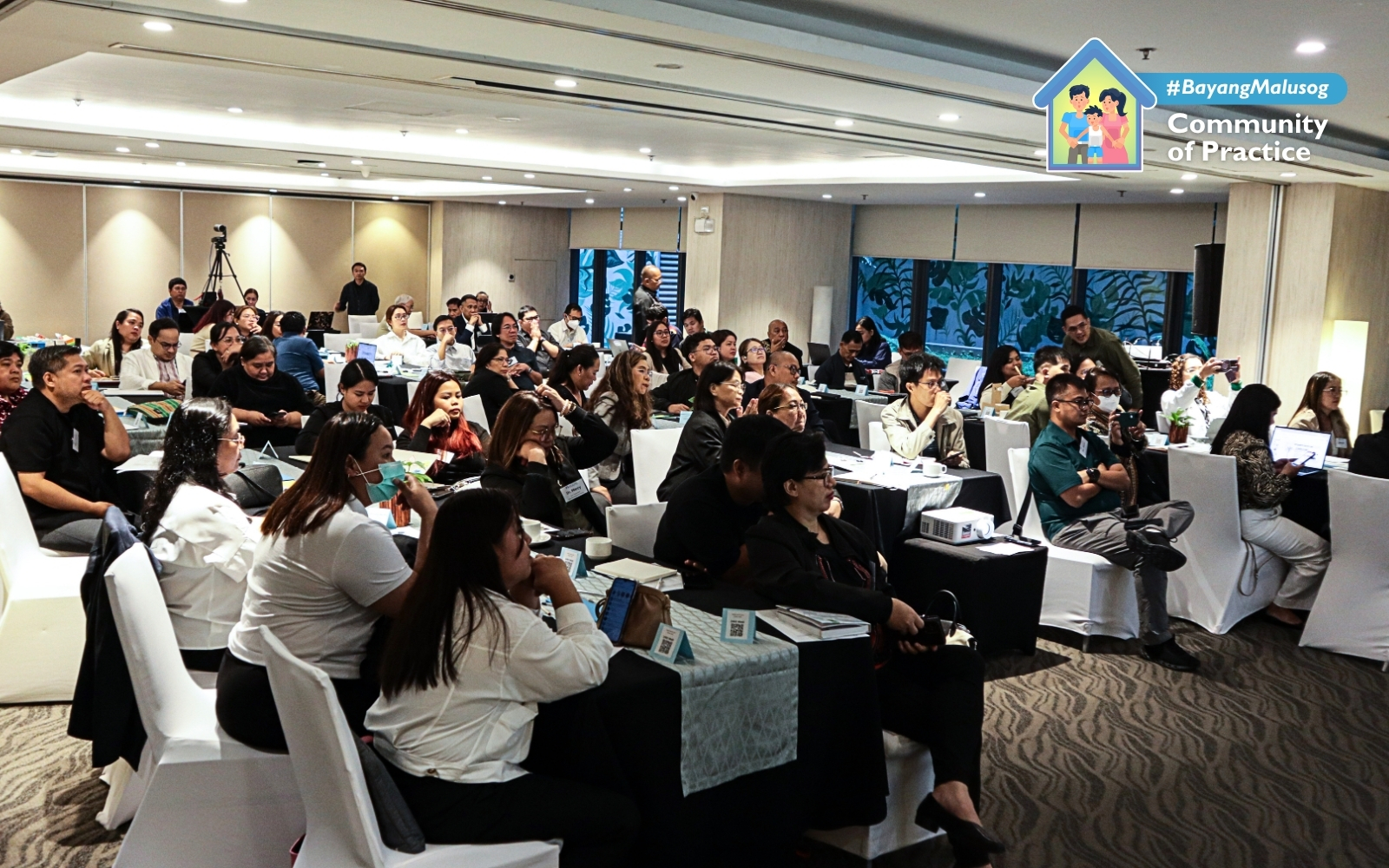
The learning session drew participants from 17 provinces and one city, alongside representatives from five Department of Health (DOH)-Centers for Health Development from Regions 1, 4A, 7, 8, and the Cordillera Administrative Region. The provinces represented include Pangasinan, Apayao, Benguet, Ifugao, Kalinga, Mountain Province, Isabela, Nueva Vizcaya, Quirino, Quezon, Occidental Mindoro, Aklan, Biliran, Eastern Samar, Leyte, Northern Samar, and Southern Leyte. Baguio City also participated as the lone city delegation. Each locality brought distinct operational realities and varying stages of digital health maturity to the learning session.
Related article:
‘No UHC Without Strong HIS Support’
ZFF President and Executive Director Austere Panadero opened the discussions with a pointed reminder: “At the end of the day, the sustainability of entire reforms in local health systems, one of the key pillars is the infosystem.”
He acknowledged the difficult trade-offs local governments face daily. “Marami kasing investment decisions ang dapat gawin ng mga local governments. Saan ninyo ilalagay ang inyong mga limited resources so that you can really support the UHC implementation?”
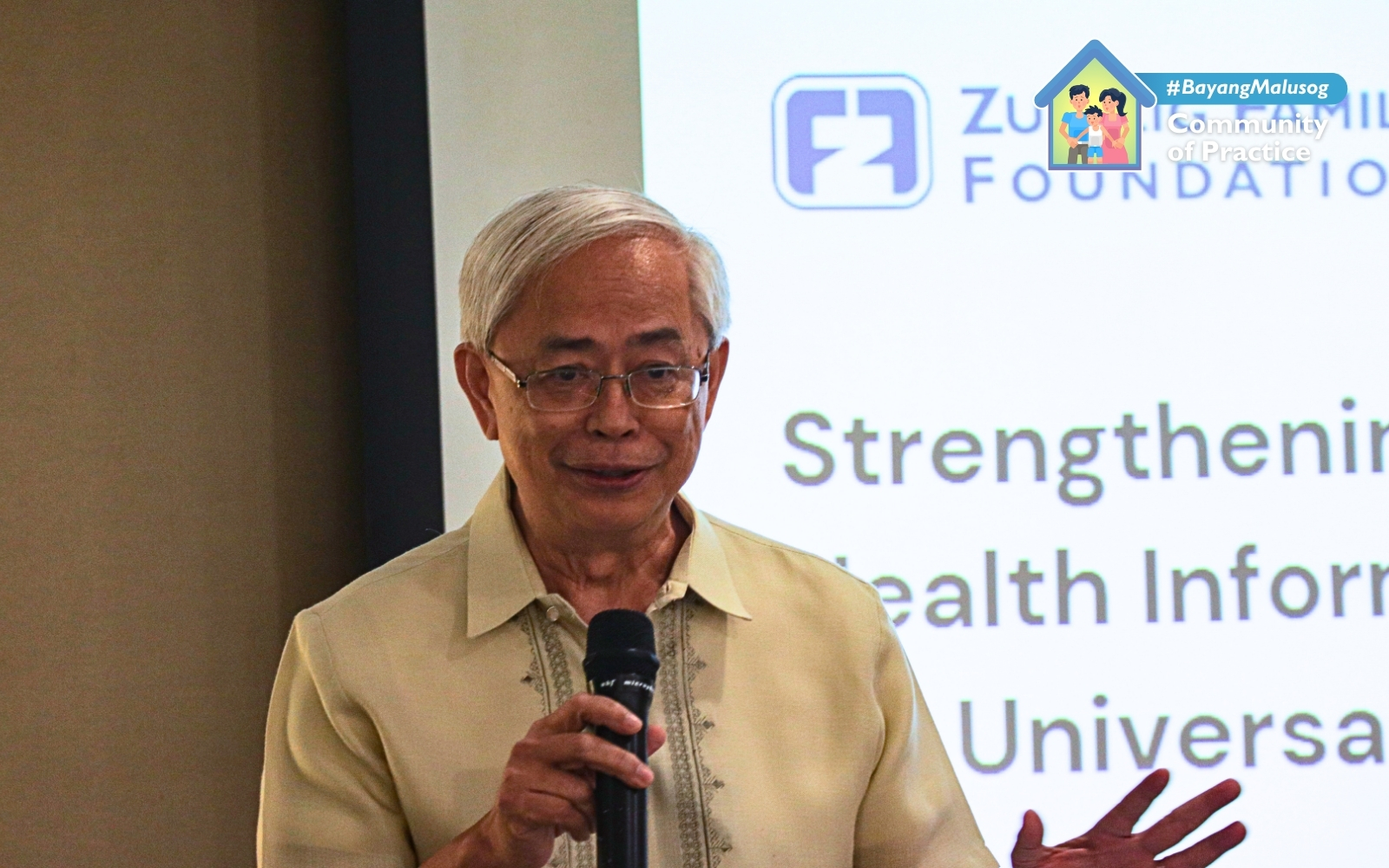
Panadero reaffirmed ZFF’s commitment to hosting these critical conversations. “Kami sa ZFF, we’re happy to host these types of conversations and find out more ano pa ‘yung mga kailangan nating sabay tuklasin at hanapan ng paraan upang mabigyan ng kaukulang atensyon o solusyon ‘yung mga problemang hinaharap natin.”
Dr. Catherine Chung, ZFF Local Health Systems Director, set the context for the learning session with a sobering assessment of UHC’s seventh year. “Functional na dapat lahat itong seventh year, pero marami pa rin tayong struggles and challenges,” Chung said.
Chung warned that without reliable data and sound planning, UHC implementation will continue to fall short. “Kung walang kaperahan, walang maayos na data, walang maayos na pagpaplano, hindi magiging maganda ‘yung implementation natin.”
Peer Learning as the Path Forward
Dr. Carlo Panelo, healthcare economics expert and professor at the University of the Philippines Manila College of Medicine, encouraged participants to embrace peer learning as the most critical strategy at this stage of UHC implementation. “National guidelines can only go so much,” Panelo explained. “They provide you the framework, the general direction but implementing it on the ground is really very nuanced in terms of your unique situation as individual local governments.”
Panelo remained unequivocal about the necessity of robust information systems. “HIS will not solve everything but it can definitely improve things. Similar to UHC, HIS is not your magic bullet or your magic pill for UHC. But I think there is no UHC without strong HIS support.”
He placed the responsibility squarely on local governments. “These systems are existing, and the ball is actually in your court now to adapt what these systems can provide you. National government needs to create an enabling environment for local governments to invest in an HIS, meaning at the end of the day you have to convince your mayors and you have to show them the figures—how much it will cost you and how much you will get in return by investing in this improvement in your systems.”
Health as Foundation of National Progress
Leyte Governor Carlos Jericho Petilla made the case that health cannot remain a side agenda. “You cannot have a progressive country if you don’t actually focus on health,” he declared.
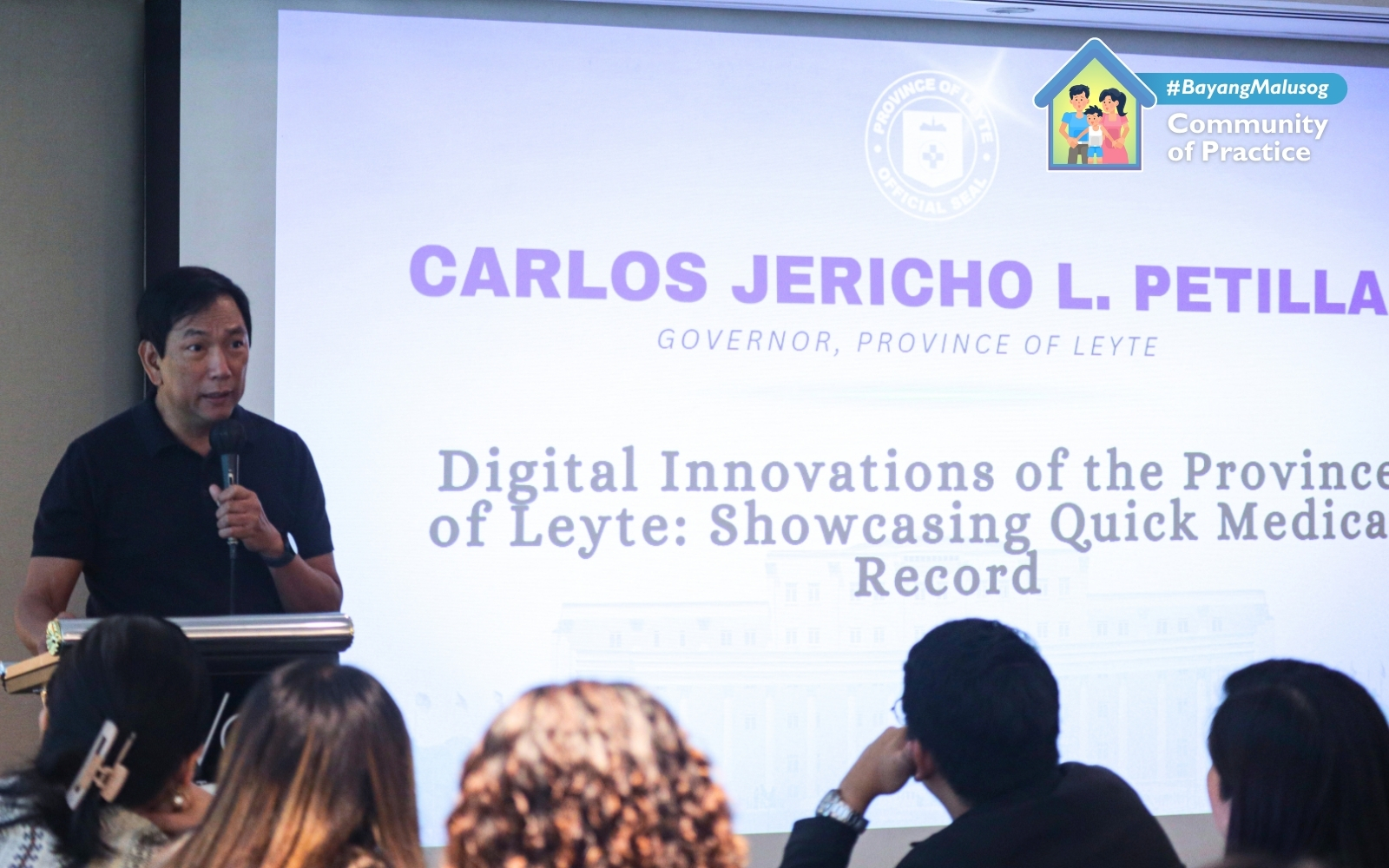
Petilla emphasized that data gathering is the most crucial component of the entire UHC system. “We’re just trying to capture everything. If you capture everything in the easiest possible way, you can do a lot of analysis. It’s the data gathering that’s actually very crucial here.”
Quezon’s Journey: No ‘Best System,’ Only What Works
Dr. Chris Mangunay, Provincial Health Officer I of Quezon Province, shared his province’s ongoing journey in developing a customized and integrated health information system designed around actual healthcare workflows.
“The success of a health information system depends largely on the end users,” Mangunay said. “We need a system that is user-friendly because we want something that follows the workflow of a primary care facility.”
The province transitioned between providers after discovering their previous system no longer progressed according to operational needs. “There is no one best system,” Mangunay acknowledged. “Whatever system you present, there will always be hiccups and resistance from end users.”
He stressed the necessity of continuous development. “We have to continuously explore other features and continuously develop because every facility is still adapting to these systems. We need a mature system to support evidence-based governance. At the end of the day, we want [HIS] to translate into better health outcomes.”
Aligning Local Systems with National Standards
Ms. Cherry Esteban, OIC Director of the DOH Knowledge Management and Information Technology Service (KMITS), discussed the national government’s efforts to strengthen governance and interoperability across local health systems. “Digital health is positioned as a strategic enabler of UHC,” Esteban said.
She highlighted the planning advantages that robust data provides. “Decision makers can already do better planning if the data is available.” Esteban emphasized governance as the foundation of digital transformation. “Good governance must guide digital transformation. Interoperability is not just about systems connecting with each other.”
Lessons from Experts: Start Small, Think Big, Learn Fast
Two senior health experts offered closing reflections that captured the day’s themes.
Dr. Ayedee Domingo, adjunct faculty at the Ateneo School of Medicine and Public Health and former director of the National TeleHealth Center, encouraged experimentation grounded in local reality. “We can only learn by trying. So unless we try, we can never really know what really works in our setting. We can write the best enterprise architecture on paper, but it may still fail.”
Dr. Manuel Dayrit, Chairman of the Zuellig Family Foundation and former Secretary of Health, noted the opportunity for greater alignment between national and local governments. “National government will create policies and standards, but not address the structural bottlenecks to enable those policies and standards to be implemented. We could move faster if there was more coherence in how the central government and local governments work together.”
The way forward requires simultaneous action on multiple fronts: strengthening information systems alongside the people who run them, investing in digital literacy while planning for interoperability, and advancing beyond pilot stages without delay. Stronger systems produce stronger data. Stronger data produces better health for every Filipino.
