From Data to Decisions: How Pook Malusog LGUs are Turning Nutrition Survey Findings into Local Action
Insights from the Field | by Krizzia Esperanza
On August 26, 2026, the Zuellig Family Foundation (ZFF) convened alumni Local Government Units (LGUs) under the Pook Malusog Community of Practice for an online learning session on the 2025 Expanded National Nutrition Survey (ENNS) findings, presented by the Department of Science and Technology-Food and Nutrition Research Institute (DOST-FNRI). The session moved beyond data presentation and focused on a central question: How can LGUs translate national evidence into effective local nutrition governance?
The discussion, enriched by the participation of the Department of Health (DOH), National Nutrition Council (NNC), and the Nutrition Division of the Ministry of Health-BARMM, provided a shared space for LGUs and regional nutrition actors to examine emerging nutrition trends. It reinforced a unified message: while progress in nutrition is achievable, it hinges on strong, resilient nutrition governance built on intentional, collaborative, and sustained action.
The ENNS findings served as a shared scorecard, reminding participants that national nutrition outcomes are shaped by the collective actions and governance decisions made across all LGUs, underscoring a shared responsibility to contribute to faster, more sustained progress.
Participants identified key enabling factors that have helped them improve nutrition outcomes, including strong leadership from local chief executives, a capable nutrition workforce, multisectoral coordination, supportive policies, and active community participation.
To build on these strengths, LGUs committed to specific actions. The LGU of Tarangnan, Samar, for example, prioritized functional Local and Barangay Nutrition Committees; Kiamba, Sarangani planned to localize ZFF’s Municipal Nutrition Governance Program; Lamitan, Basilan sustained ordinances on lactation stations and First 1,000 Days (F1KD) budgeting; and Gamay, Northern Samar reinforced monitoring and evaluation to replicate best practices.
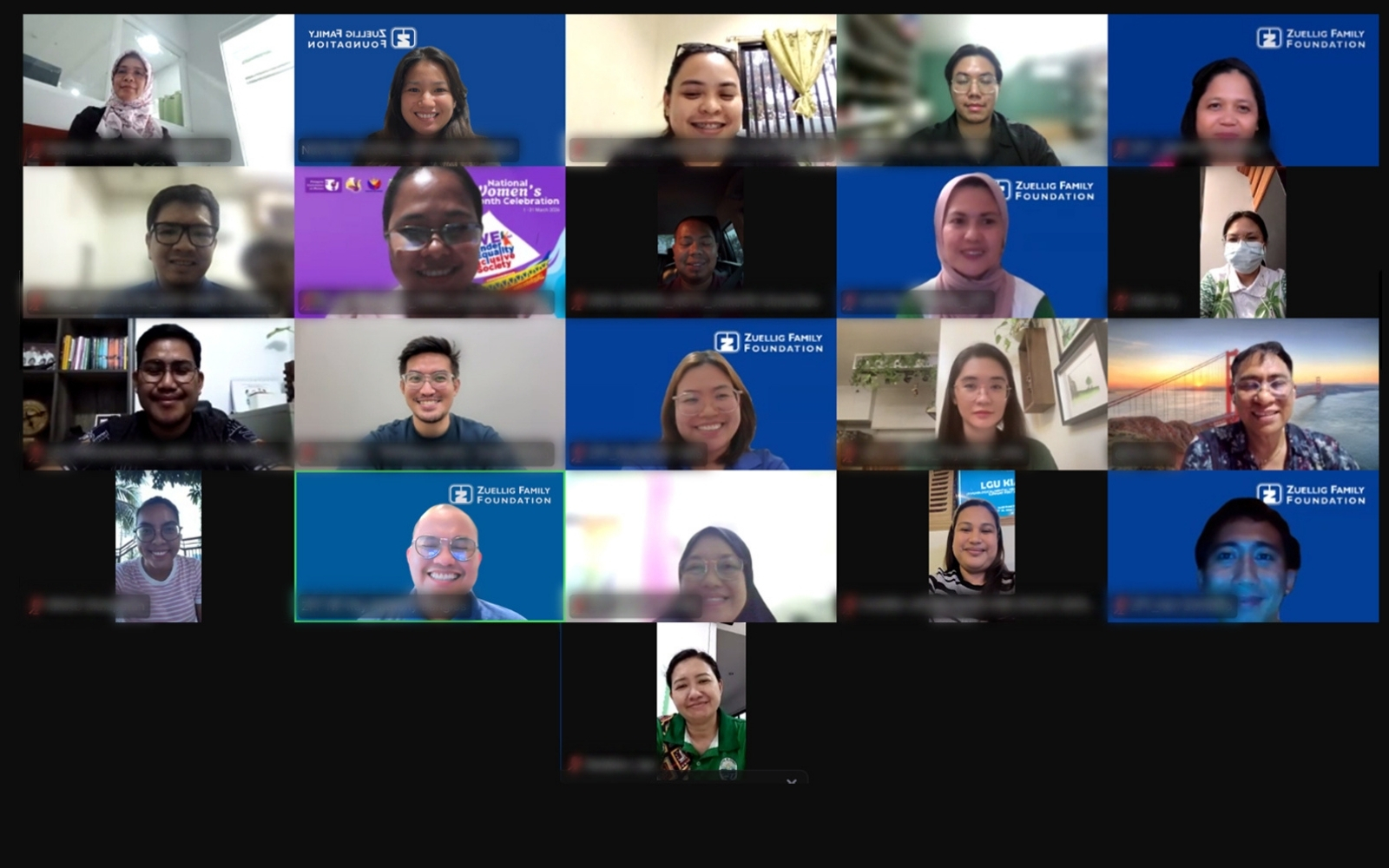 Photo above: Diverse participants of the Pook Malusog Community of Practice online learning session engaged in collaborative discussion on translating ENNS findings into local nutrition governance actions.
Participants also confronted persistent challenges: human resource and leadership instability, funding limitations, procurement delays, and data accessibility gaps. The facilitator emphasized that identifying challenges is only the first step; LGUs must examine why they persist and what practices need to change.
This led to candid reflections on what should be stopped or done differently. Pagsanghan, Samar called for harmonizing fragmented program implementation. Tarangnan pushed for strict enforcement of ordinances for Barangay Nutrition Scholars (BNS) and Barangay Health Workers (BHW) retention. Sumisip, Basilan recommended strict monitoring and making some health worker positions plantilla items.
The facilitator captured the session’s journey in three key messages:
- The national picture is a shared scorecard; we all contribute to it. The ENNS results remind us that every LGU has a role to play in shaping the country’s nutrition story.
- LGUs are already making a difference; strong governance sustains progress. Sustained gains are not the work of a single leader but the result of a collective system with strong leadership, institutional systems, and multisectoral coordination.
- We can influence what happens next; the key is to be intentional. The challenge is not just to improve, but to accelerate progress by deliberately deciding which strategies to sustain, which to change, and which innovations to introduce.
The session concluded with a call to continue conversations through the Community of Practice platform and the upcoming annual face-to-face conference in November. The path forward is clear: translate evidence into action, learn from one another, and strengthen local nutrition governance to build a healthier future for Filipino children, families, and communities.
