From Numbers to Narratives: Turning Family Planning Data into Policies that Last
Insights from the Field
Good data can point to the problem, but it takes policy to make the solution last. In this reflection, Lyka Manglal-lan, Practice and Learning Manager of The Challenge Initiative (TCI)-Philippines at Zuellig Family Foundation (ZFF), looks back on the second TCI Learning Exchange last October 8, 2026, which asked how local governments can move from data to policy.
—
The first Learning Exchange was about making family planning data useful. The second took the next step: once we know what the data says, how does it become a decision that outlasts a meeting, a project, or even an administration? To explore this, Dr. Romulo Nieva Jr., Associate Professor at the University of the Philippines Manila-College of Public Health guided participants through the stages of local policy-making.
Related article:
Data at every policy stage
Dr. Nieva stressed that data has a role at every stage of the policy process, and that each stage is guided by its own key question. Before any of those questions can be answered, however, the locality must know its population. The age-sex structure or the number of males and females in each age group, shows whether a locality is young or aging, how many women are of reproductive age, and how many dependents rely on people of working age. Because it reflects fertility, mortality, and migration, it also links family planning to development: when couples can plan their families, the dependent share falls and the working-age share grows, opening a window for a demographic dividend. And that dividend becomes real only if LGUs invest in health, education, and employment, among others.
With that picture in hand, the cycle can begin. Agenda setting for family planning programs could ask, where is the highest unmet need, and among whom? and draws on the Community-Based Monitoring System (CBMS), Field Health Service Information System (FHSIS), and other databases for women or reproductive age and adolescent pregnancy areas.
Once the problem is clear, formulation asks, which interventions deliver the greatest impact for every investment made? and relies on supply forecasts and Annual Investment Program (AIP) alignment.
With a plan and budget set, implementation asks whether services reach targets without disruption, answered by tracking commodity stock levels, availability of human resources for health, monitoring new acceptors, and drop-outs.
Finally, evaluation asks whether the policy achieved its outcomes, measured by analyzing indicators such as modern contraceptive prevalence rate, demand satisfied, and fertility rates.
Choosing the right instrument
Knowing the stages, however, is only half the puzzle; the other half is choosing the right local instrument to act on the evidence. Dr. Nieva outlined three.
An ordinance is a permanent local law that requires council approval, making it suited to commitments that must outlast changes in leadership, such as an annual budget for contraceptive commodities. A resolution formally expresses the council’s position and is often used to adopt external frameworks, like the DOH’s national guidelines on family planning. An executive order is a directive from the mayor or governor that can move quickly, for example by creating a localized adolescent reproductive health task force.
These differences matter because each instrument has its own permanence and route to approval, so choosing one is a strategic decision. A task force created by executive order can start within weeks, but without an ordinance behind it, its funding may not last. A resolution can bring national standards into local practice, but it does not create a budget line.
Even the right instrument, though, can guarantee nothing. A quote attributed to Otto von Bismarck, shared by Dr. Nieva states that “Policy is 20% evidence and 80% politics, negotiation, and timing.” The point was not that evidence matters less, but that it must be carried through negotiation and well-timed advocacy by local champions.
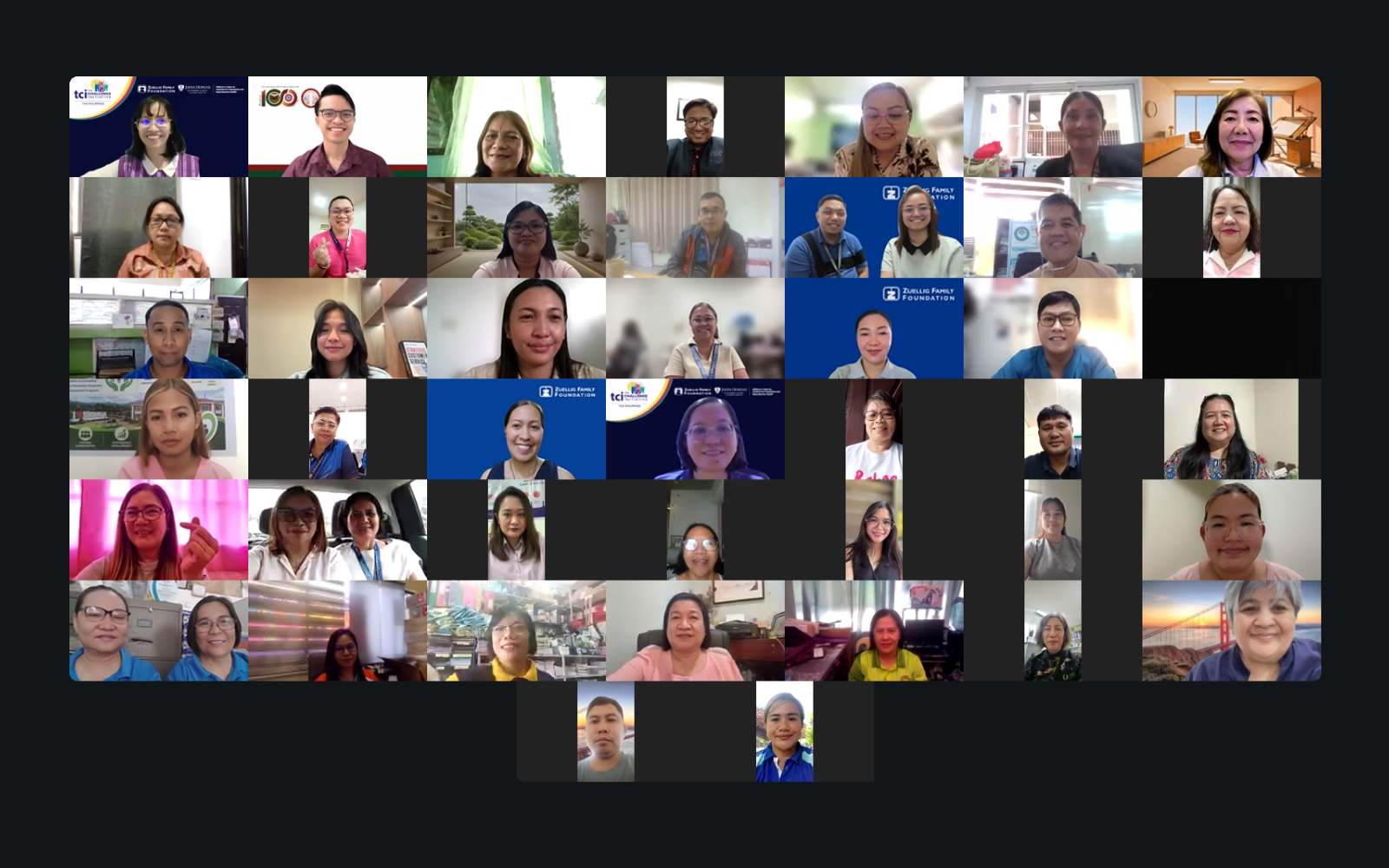 TCI-Philippines’ second Community of Learning exchange last October 8, 2026.
Telling the story behind the numbers
If policy depends on negotiation and timing, how evidence is communicated matters as much as the evidence itself. Dr. Nieva discussed the importance of data visualization and data storytelling. Visualization combines data and visuals, while storytelling adds narrative. Data is the foundation of truth, visuals help audiences see patterns and trends, and narrative provides the context that makes insights meaningful and actionable.
Why does narrative matter so much? Because it helps people remember. Statistics alone are rarely retained, statistics paired with visuals stick better, and statistics combined with visuals and a story stick best of all. Take the population pyramid: on its own, it is just a chart. But pair it with a story, such as a barangay’s growing cohort of the young population about to enter working age with too few jobs to match their numbers and skills, and it becomes a case for action.
Advocating to the Local Health Board
These lessons come together at the Local Health Board (LHB), where the key question is, how do we translate frontline realities into sustained funding? Here, health workers act as data translators, turning daily clinic logs and community feedback into narratives for the board. Backed by population profiles and evaluation data on costs and unmet need reduction, they present returns on investment and justify next year’s budget requests. The goal is policy action: securing LGU commitment through local ordinances or increased AIP allocations based on demonstrated frontline impact.
Looking ahead
Those reflections point to a wider emphasis within TCI: helping local governments lead and sustain their own family planning and adolescent health programs. By linking evidence to the right instruments and the right message, the exchange aims to help cities and municipalities protect gains beyond project cycles and changes in leadership. Indeed, good data can point to the problem; but the right policy, communicated well, helps make the solution last.