From Reports to Results: Making Family Planning Data Work for Local Decisions
Insights from the Field | by Dr. Anthony Faraon
As local governments work to strengthen family planning programs, the ability to turn routine data into timely, actionable insights has become just as important as collecting the data itself. In this thought piece, Dr. Anthony Faraon, Chief of Party of The Challenge Initiative (TCI)-Philippines at Zuellig Family Foundation (ZFF), examines a TCI Community of Learning brown bag session that featured promising practices from Central Luzon.
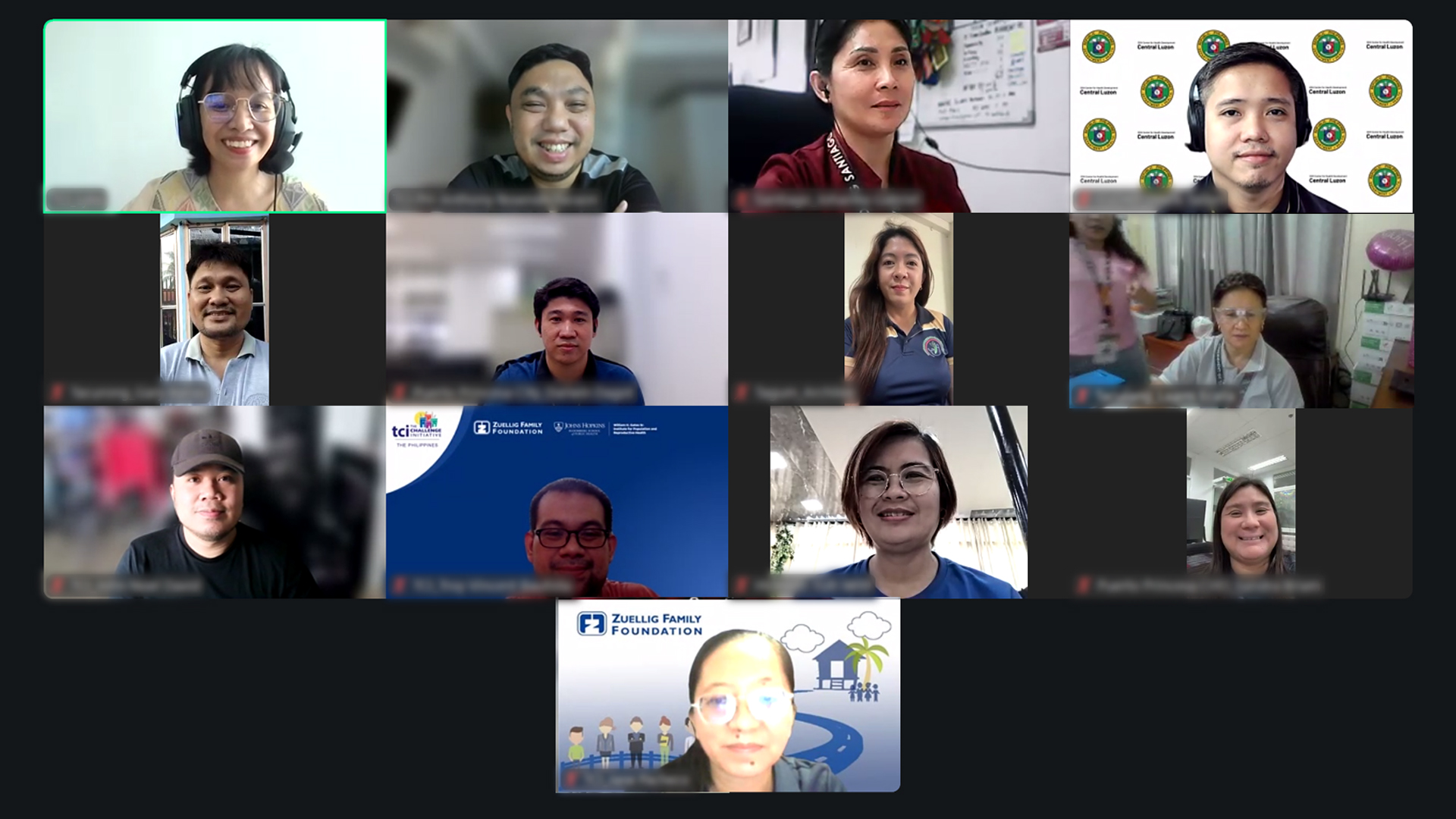
Photo above: TCI-Philippines’ first Community of Learning exchange last July 21, 2026.
—
During our recent Community of Learning brown bag session, Dr. Dhick Talion, Regional Family Planning Program Manager, Department of Health-Center for Health Development Central Luzon, shared how the region transformed the way it manages family planning data. What stayed with me was not the dashboard itself, but the thinking behind it.
Central Luzon manages family planning data across seven provinces, two highly urbanized cities, 13 component cities, 115 municipalities, more than 3,000 barangays, and over 300 rural health units. With almost 13 million people, the region processes thousands of service statistics every quarter. Collecting the data was never the problem. The real challenge was helping health workers and managers make sense of it and use it for better decisions.
Many frontline staff spent too much time preparing reports, checking computations, and reconciling figures. By the time the reports reached managers, there was little time left to ask the more important questions. What do these numbers tell us? Which communities need attention? What should we do differently?
The shift from the modern contraceptive prevalence rate to the demand satisfied indicator made the work even more challenging. Demand satisfied* gives a better picture of whether women who want modern family planning are actually receiving it. But it also requires new computations and a different way of interpreting data. For already overworked health workers, it added another layer of complexity.
Instead of simply building another dashboard, the Central Luzon team stepped back and redesigned the whole reporting process.
They developed an Excel-based M1 reporting tool that requires data to be entered only once and automatically generates monthly, quarterly, and annual reports. Provincial templates then consolidate reports while checking for inconsistencies, such as differences between the previous month’s ending current users and the next month’s beginning count.
Only after the data have been recorded, consolidated, and validated are they presented through the barangay level dashboard. That sequence is worth emphasizing. The dashboard is not the innovation. It is the result of a system that produces reliable information.
Looking at data by barangay also changes the conversation. A municipality may appear to be performing well overall, yet several barangays may still have low demand satisfied, a large number of women with unmet need, or performance that has remained flat for several quarters. Some areas may even report unusually high figures that deserve another look.
This allows managers to focus their attention where it is needed most. One barangay may benefit from stronger demand generation or supportive supervision. Another may need better referral systems, more providers, or simply a review of reporting practices. High performing barangays can also offer lessons that others can adapt.
Equally important, the dashboard was never meant to rank or blame health workers. It starts conversations. It encourages managers to ask why performance differs, what challenges frontline staff are facing, and what support they need. It also reinforces that planning targets are meant to guide resource allocation, not become quotas that compromise informed choice.
Several factors helped make the system work.
Regional leadership recognized that implementers needed help adjusting to a new indicator and invested in practical solutions. Capacity building did not end after introducing the tools. Staff received coaching through program implementation reviews, training activities, and regular coordination meetings until they became comfortable using them. Standardized reporting processes reduced unnecessary variation across provinces and cities. Most importantly, local governments saw the dashboard as a management tool for their own planning rather than another compliance requirement.
The discussion that followed also reminded us that technology alone is never enough. Many local governments still rely on nurses, midwives, designated staff, or job order personnel to manage data while carrying several other responsibilities. Frequent staff turnover makes it difficult to sustain gains. Strengthening monitoring and evaluation capacity, investing in people, and recognizing data management as an essential health system function remain just as important as improving technology.
Perhaps the biggest lesson from Central Luzon is that innovation does not always require expensive software. Excel and Google Sheets were enough because they responded to real operational problems and were supported by leadership, coaching, and local ownership.
At the end of the day, the most important outcome is not a better dashboard. It is a healthier culture of using data. Reports are no longer prepared simply because they are required. They become tools for asking better questions, directing limited resources where they are needed most, supporting frontline workers, and improving services for families.
As Dr. Tallion reminded us, the dashboard was never the destination. It simply helped bridge routine reporting and better decisions. For local governments working to strengthen family planning programs, that may be the lesson worth remembering. Collect less for compliance. Understand more for action. And let data make the work of health workers, and the lives of the families they serve, a little better.
—
* Demand satisfied refers to the percentage of women of reproductive age who want to delay or avoid pregnancy and are actually using a modern contraceptive method.
