Baguio City Raises the Bar for Universal Health Care, Turning Growth into Greater Impact
News | by Krizzia Esperanza
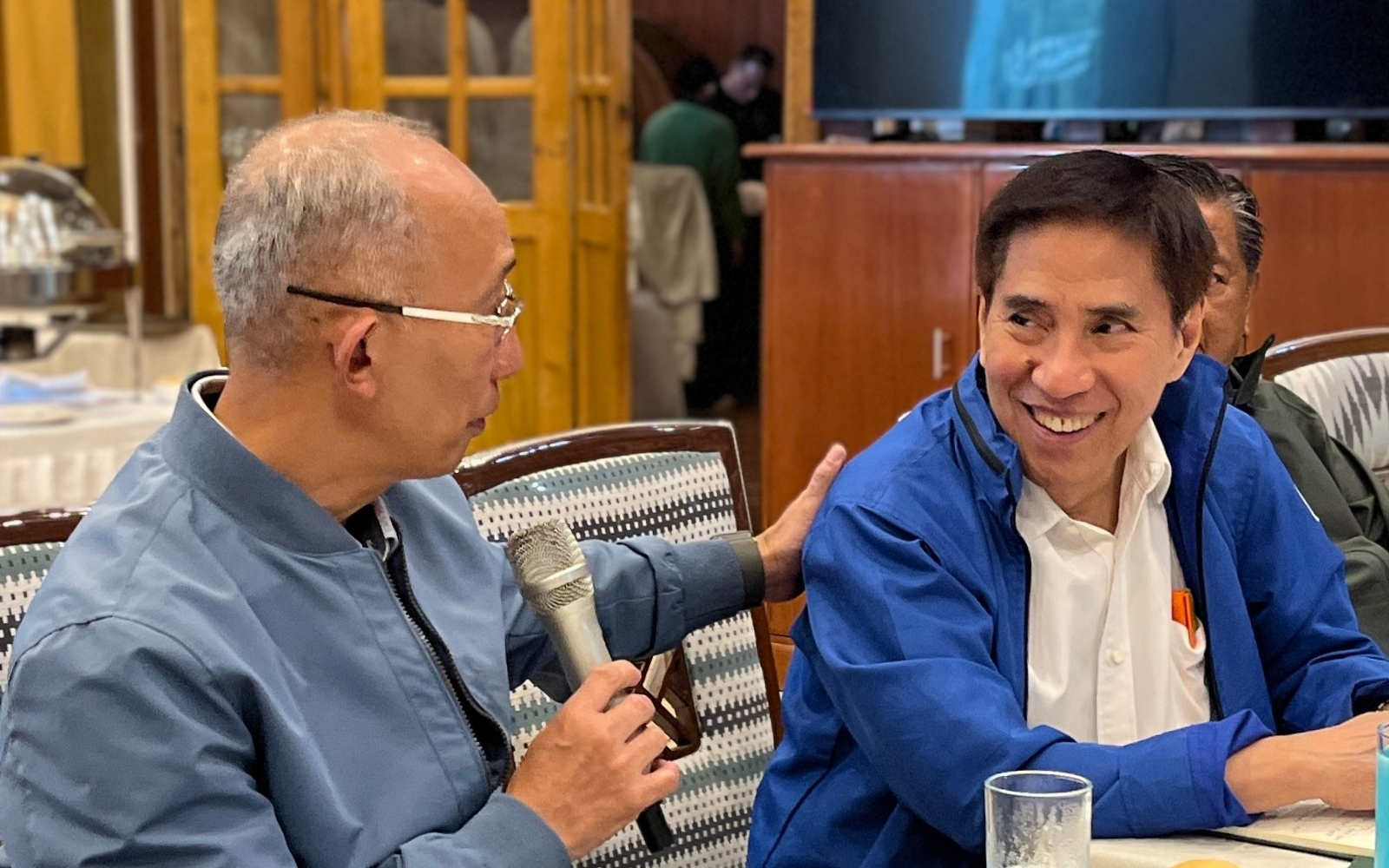
Zuellig Family Foundation (ZFF)’s Executive Dialogue with Baguio City highlights how the city’s health system transformation is creating new opportunities to strengthen primary health care, deepen partnerships, and improve access for every community.
Photo above: Baguio City Mayor Benjamin Magalong personally thanks ZFF Chairman Dr. Manuel Dayrit for his guidance, which helped transform the city’s frustrations into renewed motivation for its UHC journey.
“What we discovered today is that Baguio City has experienced massive organizational growth in just a few years. There has been growth in the budget, growth in human resources for health, and growth in population access to health services and the capacity of District Health Centers to provide care. What this tells me is that while your organization and capacity are growing, you are also uncovering more needs. As the Mayor said, ‘Hindi pa natin naaabot lahat.’ You are growing and increasing your budget, but as you grow, you continue to uncover more needs. Umaangat nang umaangat ang accomplishment ninyo, but the bar keeps getting higher.”
This was the central message of Dr. Manuel Dayrit, ZFF Chairman, during the Executive Dialogue with Baguio City officials as they reflected on the city’s continuing journey toward Universal Health Care (UHC).
Despite these remarkable gains, city officials acknowledged that many families living in pockets of poverty continue to face barriers in accessing quality health care. The discussion reflected both the accomplishments and the persistent challenges of local leaders committed to making UHC a reality.
Related articles:
- The Universal Health Care Journey in Benguet and Baguio: Celebrating Gains, Navigating Hurdles
- Mayor Magalong Completes ‘Deep Dive’ to Assess Baguio Health System
The Challenge of Translating Policy into Impact
Baguio City Mayor Benjamin Magalong observed that while national health reforms have expanded policy guarantees and strengthened people’s entitlement to health services, these commitments have also raised public expectations. Local governments, however, often face the challenge of translating national policies into tangible improvements on the ground, where implementation requires time, resources, and sustained collaboration. As a result, communities may become frustrated when the benefits envisioned by policy are not immediately realized.
Echoing the Mayor’s observations, City Councilor Hon. Elmer Datuin shared his experience in facilitating guarantee letters for indigent patients seeking access to health services. While the city has continuously worked to bridge health inequities through local legislation and financial assistance, he acknowledged that reaching every marginalized family remains a challenge.
He also noted Baguio City’s legislative gains in advancing public health, including ordinances supporting non-communicable disease (NCD) prevention through alcohol and liquor regulation, anti-smoking and anti-vaping measures, and the city’s ongoing efforts to strengthen healthy procurement systems.
PhilHealth’s Perspective: Financial Protection and Its Limits
Offering the perspective of the Philippine Health Insurance Corporation (PhilHealth), Dr. Glenn Lamsis acknowledged the frustration expressed by Baguio City leaders over the continuing challenge of reaching the city’s most marginalized communities. He recognized that despite the collective efforts of national agencies and the local government, some families continue to face barriers in accessing the health services they need.
Dr. Lamsis explained that PhilHealth’s primary role in UHC is to provide financial risk protection by reducing the financial burden of seeking health care. While financial risk protection is essential, he noted that it cannot, by itself, address the broader challenge of poverty.
He said, however, that PhilHealth continues to strengthen its benefit packages to narrow existing gaps. From initially covering 21 medicines, PhilHealth has expanded its formulary to 75 medicines, enabling more patients to receive medicines for many common illnesses at no cost. While not every medicine is included, medicines covered under the approved benefit package are provided free to eligible members.
Recognizing that UHC is a shared responsibility, Dr. Lamsis reaffirmed PhilHealth’s commitment to supporting Baguio City through technical assistance and by reimbursing eligible services within existing policy guidelines as the city continues to strengthen its local health system.
Rethinking Progress: From Frustration to Motivation
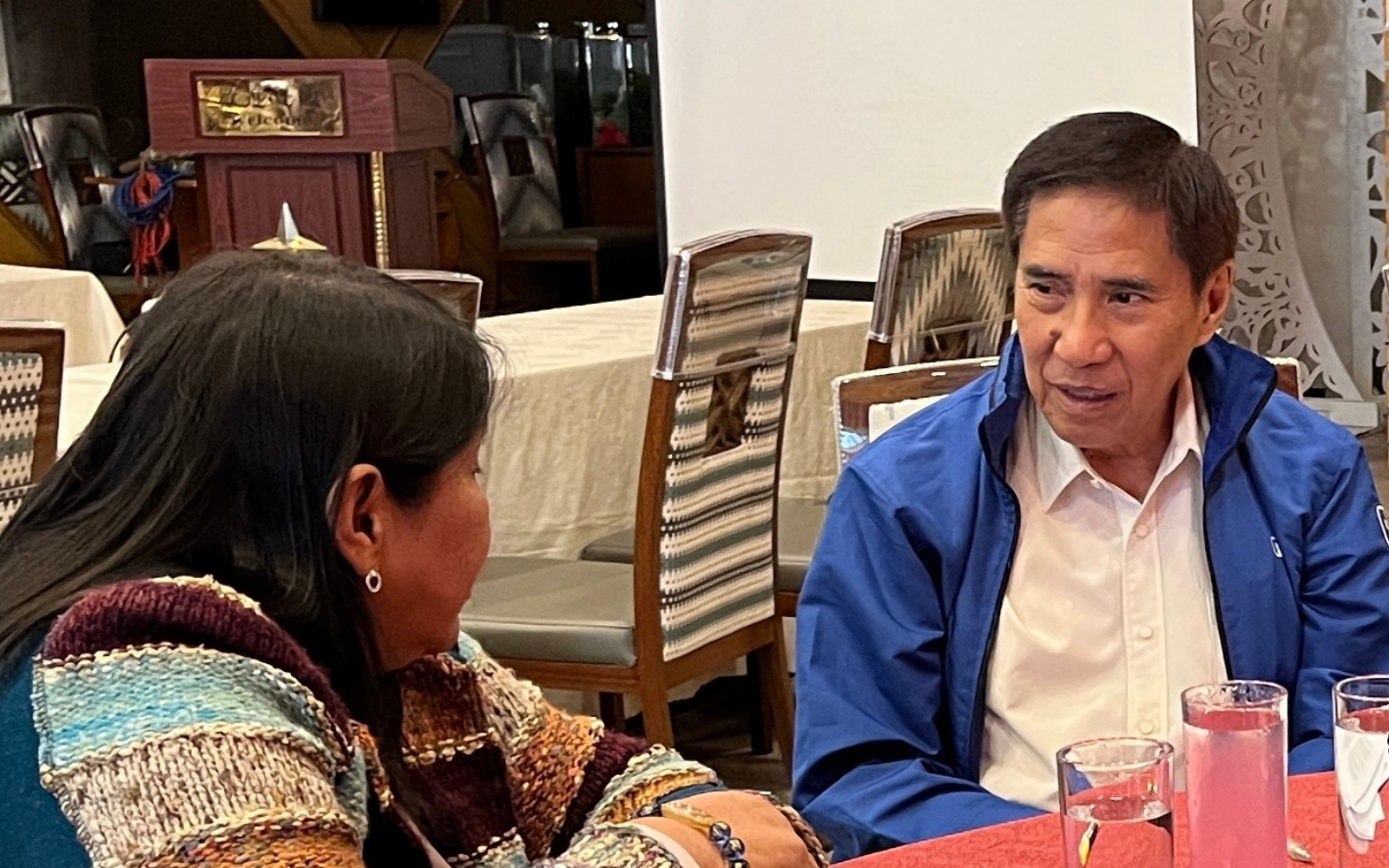 Photo above: Dr. Dayrit huddles with Baguio City Health Officer Dr. Celia Flor Brillantes to map out actionable next steps for strengthening primary care and expanding partnerships across Baguio’s health system.
Building on these perspectives, Dr. Dayrit explained that the relationship between national policies and local implementation often produces both intended and unintended effects.
While UHC reforms are designed to expand access to individual health services, one unintended effect is that local governments devote considerable time and resources to meeting implementation requirements, leaving less capacity for community-based health promotion and disease prevention.
Rather than waiting for policies to evolve, he encouraged Baguio City to continue innovating, thinking beyond conventional approaches, and co-creating solutions with partners who share the same vision for healthier communities.
“The best way forward is to think outside the box. Work with others who share the same goal of improving people’s health.”
While the dialogue covered operational updates and implementation challenges, its defining moment came when Dr. Dayrit reframed the city’s frustrations as evidence of progress.
Dr. Dayrit emphasized that Baguio’s frustrations should not be viewed as signs of failure, but as evidence that its health system is maturing. As services expand, expectations naturally rise, hidden gaps become more visible, and the standard for success continues to move higher.
The familiar Filipino expression, “Malayo na, pero malayo pa,” is often heard in conversations about UHC. While it reminds us that much work remains, it can also overshadow the remarkable progress that has already been achieved. Dr. Dayrit challenged the city to embrace both realities—to celebrate its gains while remaining committed to continuous improvement.
Mayor Magalong welcomed this perspective, sharing that the discussion transformed his frustration into renewed motivation. “When we create solutions to one problem, new problems emerge. It is a continuous process that requires us to keep innovating. It is our responsibility to continue finding solutions. And, of course, our greatest virtue here is always patience.”
A Collaborative Platform for Reflection and Action
The Executive Dialogue was held on July 3, 2026, in Baguio City as part of ZFF’s Bayang Malusog Leadership and Governance Program (BMLGP). It brought together members of the Local Health Board headed by Mayor Magalong and co-chaired by City Health Officer Dr. Celia Flor Brillantes, alongside representatives from the Department of Health-Center for Health Development Cordillera Administrative Region (DOH-CHD CAR) led by Regional Director Dr. Amelita Pangilinan, PhilHealth represented by Dr. Glenn Lamsis, and ZFF headed by Dr. Dayrit.
Rather than simply reporting accomplishments, the Executive Dialogue created a space for national and local leaders to reflect on Baguio City’s UHC journey, openly discuss implementation challenges, and identify collaborative strategies for further strengthening the city’s health system.
In his closing message, Mayor Magalong appealed to DOH and PhilHealth to continue listening to the experiences and insights of local government implementers, emphasizing that the realities on the ground provide valuable lessons for strengthening national policies.
Dr. Dayrit likewise encouraged Baguio City to identify more “force multipliers” through strategic partnerships that can strengthen health promotion efforts. As the city continues its transition toward a primary health care-oriented system, initiatives such as YAKAP have understandably required significant organizational focus. Expanding partnerships, he noted, will help ensure that health promotion remains a strong pillar of the city’s health agenda.
Echoing this recommendation, Regional Director Dr. Amelita Pangilinan encouraged the city to further strengthen partnerships with private health facilities, intensify its health promotion and information campaign, and continue transforming District Health Centers into fully functional one-stop shops by maximizing reimbursements from the YAKAP package.
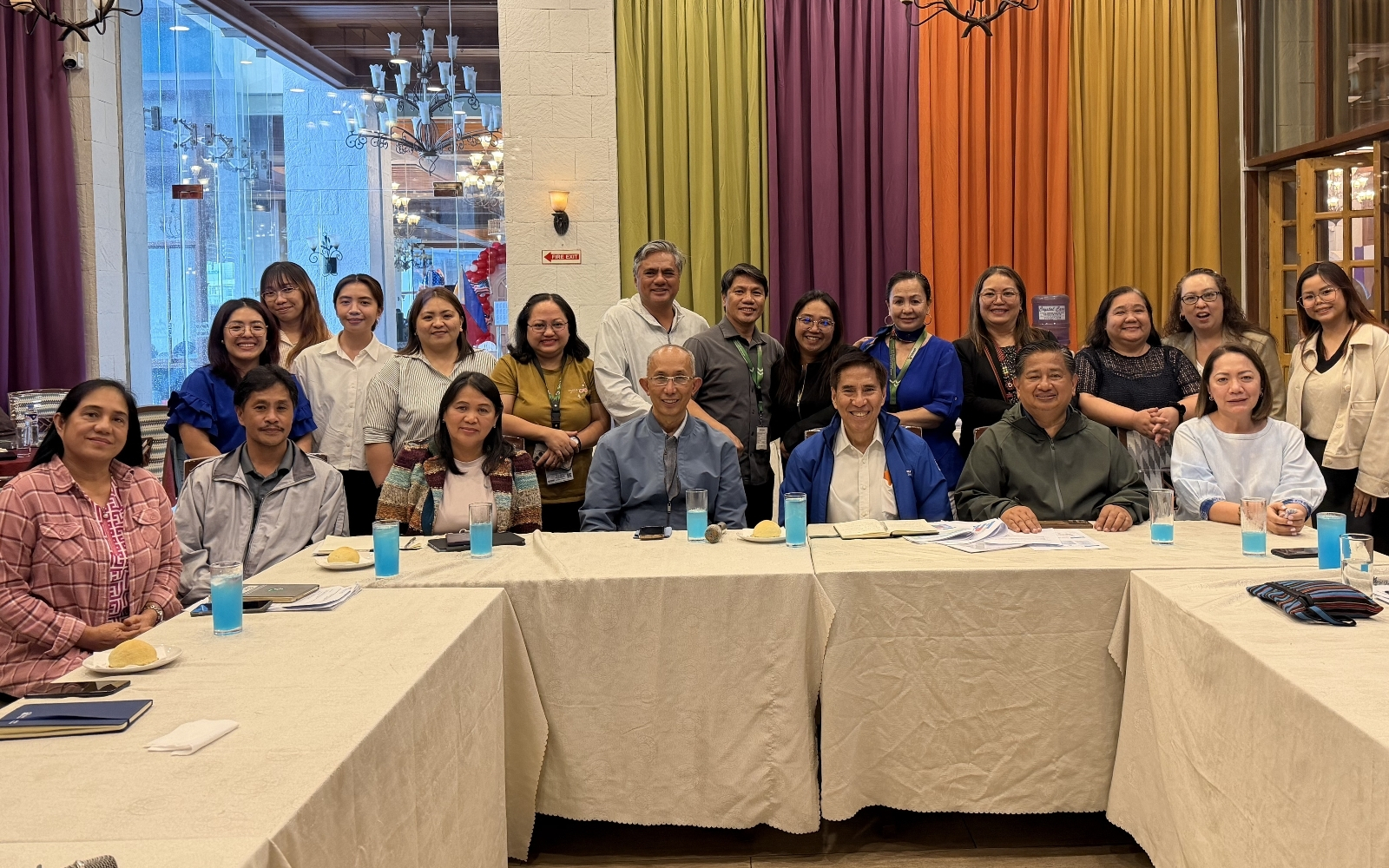 Photo above: Participants stand together after the Executive Dialogue, reaffirming their collective resolve to turn Baguio’s growing capacity into tangible health gains.
Baguio’s UHC Milestones: A Model for Transformation
Baguio City’s experience demonstrates that implementing UHC is not simply about complying with national policies. It is about continuously strengthening institutions, investing in people, learning from implementation, and responding to the changing needs of communities.
As one of the country’s pilot sites for UHC, Baguio has become a model for local health system transformation:
- In 2025, the city achieved 100% of the DOH’s Local Health System Maturity Level, reflecting full compliance with the preparatory, organizational, and functional requirements for UHC implementation.
- For its primary care facilities, the city secured a DOH License to Operate and obtained PhilHealth accreditation as a YAKAP provider, along with other PhilHealth benefit packages.
- It expanded its human resources for health and upgraded plantilla positions.
- It fully implemented the Magna Carta for Public Health Workers.
- It developed one of the country’s pioneering locally developed health information systems through the Baguio Medical Record System (BMRS).
These milestones demonstrate that Baguio is not merely keeping pace with health reform. It is helping shape its future. The Executive Dialogue affirmed that progress is not measured by the absence of challenges, but by the willingness to confront increasingly complex ones.
As Dr. Dayrit reminded the city, growth inevitably uncovers more needs and raises the bar even higher. For Baguio, this is not a setback, but a sign that its health system is moving in the right direction.
