Preparing Local Health Systems for a Very Strong El Niño
News | by Krizzia Esperanza
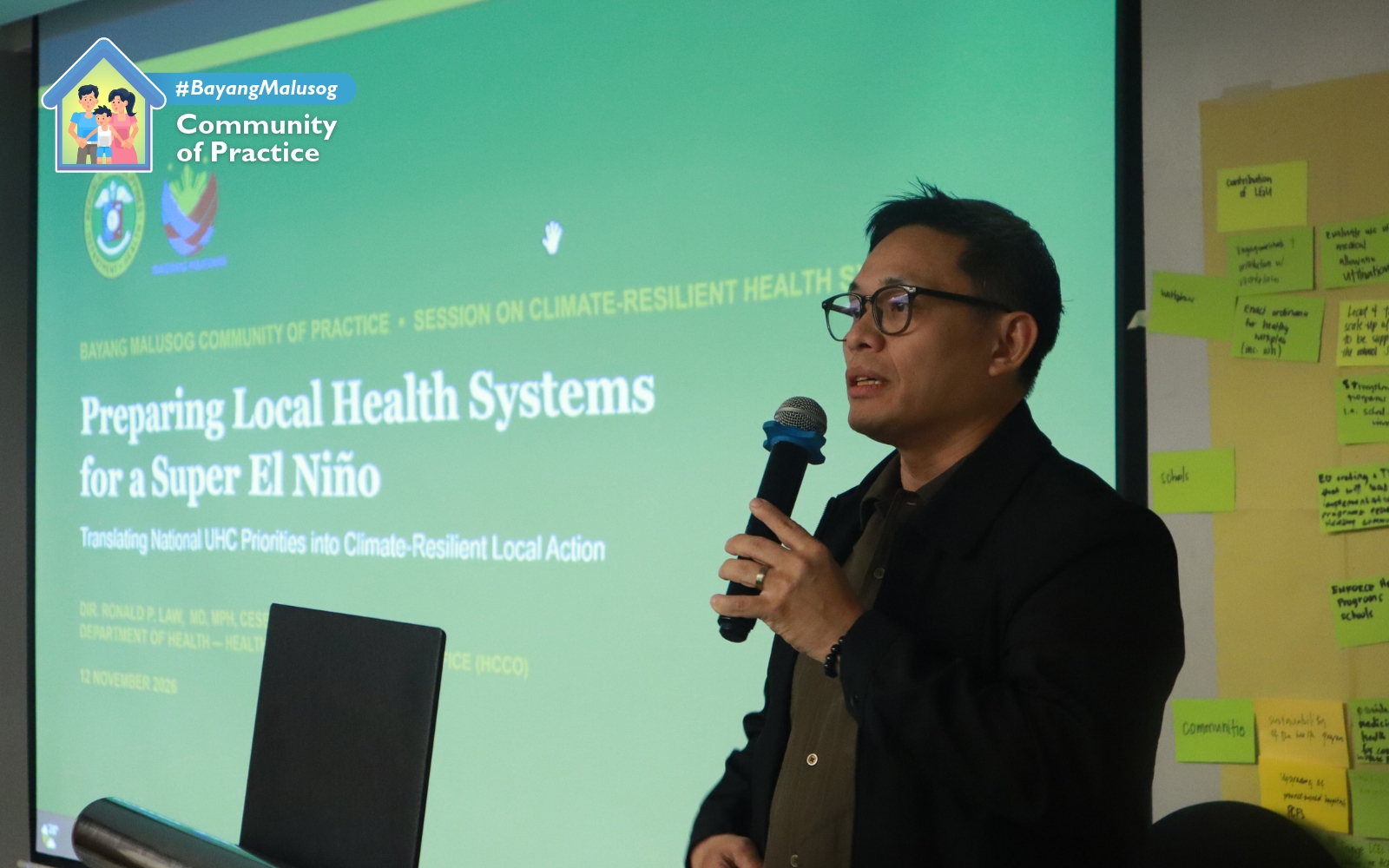
A Very Strong El Niño poses a threat beyond prolonged heat and drought. Its effects can cascade across communities, affecting water and food security, increasing disease risks, and disrupting essential health services.
Photo above: Dr. Ronald Law, Director III of the Department of Health Climate Change Office, outlines how health systems can prepare for a Very Strong El Niño.
As part of its Bayang Malusog Community of Practice (CoP) workshop last November 11–12, 2026, the Zuellig Family Foundation (ZFF) facilitated discussions on how local health systems can anticipate and respond to these interconnected risks.
Related article:
The workshop gathered 45 healthcare leaders from 17 provinces and 12 representatives from Department of Health (DOH) Centers for Health Development. Discussions focused on integrating climate preparedness into local health planning and ensuring continuity of health services during environmental disruptions.
Understanding the public health risks
A Very Strong El Niño can place multiple and simultaneous pressures on public health systems. These include extreme heat, water scarcity, increased cases of waterborne diseases, expansion of vector-borne diseases, air pollution, and stress on health facility operations.
These risks can compound existing vulnerabilities, particularly in areas with high population density, poverty, and limited access to essential services. The Philippines is especially exposed, with around 60% of its cities and municipalities located along coastal areas.
For local health systems, the challenge extends beyond treating climate-related illnesses. Prolonged heat can strain the health of vulnerable populations and healthcare workers, while water shortages can compromise sanitation, food security, and the safe operation of health facilities. Disruptions to electricity and other utilities can further affect the delivery of essential services.
The workshop framed a Very Strong El Niño as a cascading, multi-system shock that requires coordinated action across health, disaster risk reduction, water, sanitation, and other local government sectors.
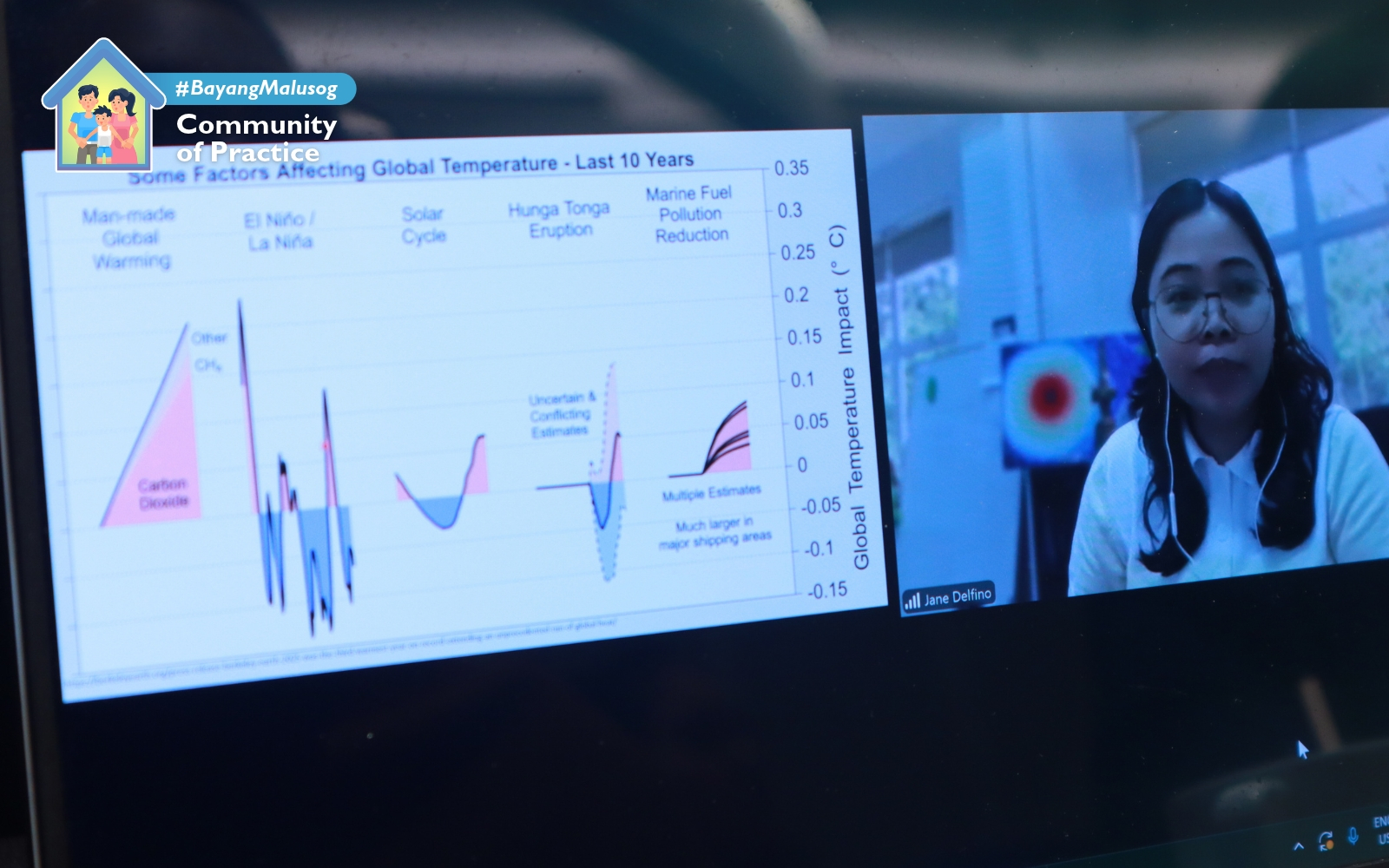 Dr. Rafaela Jane Delfino of the University of the Philippines Diliman Institute of Environmental Science and Meteorology discusses the implications of a Very Strong El Niño.
From early warnings to local action
To guide preparedness, the workshop discussed DOH’s five-pillar operational model for heat health and a Very Strong El Niño response:
- Detect: Disseminate timely alerts and monitor emerging risks.
- Decide: Prepare and activate appropriate operational plans.
- Deliver: Implement preventive health interventions.
- Deploy: Pre-position essential supplies and logistics.
- Defend: Ensure continuity of health facility operations.
Primary care facilities also have an important role in protecting communities during extreme heat and other climate-related emergencies. Beyond providing clinical services, they can serve as community cooling havens and access points for public health information and preventive interventions.
Making preparedness part of local health governance
Preparing for a Very Strong El Niño requires local governments to move beyond emergency response and make climate risk preparedness part of routine health planning. This means identifying vulnerable populations, securing essential resources, establishing clear response mechanisms, and ensuring that health facilities can continue delivering services during disruptions.
Local health leaders must take an anticipatory approach by using available forecasts, preparedness tools, and early warning systems to guide decisions before risks escalate. Provincial Health Boards can help drive this work by integrating climate preparedness into local health priorities, plans, and budgets.
As climate-related threats become more complex, the ability of local health systems to anticipate risks and act early will be critical to protecting communities. Resilience must be built before a crisis, through deliberate planning, coordinated leadership, and sustained action at the local level.
