Head, Heart, and Hand in Action: Municipal Health Leaders Drive Universal Health Care in Negros Oriental and Siquijor
On August 5–6, 2026, municipal health teams from seven localities—comprising mayors, municipal health officers, and key local officials (such as the Sangguniang Bayan member for health, administrative officer, budget officer, etc.)—convened for Module 1 of the Municipal Leadership Development Program (MLDP). The two-day workshop, titled “Leading Change to Accelerate Universal Health Care (UHC),” was organized by the Department of Health-Center for Health Development (DOH-CHD) Negros Island Region (NIR), in partnership with the Zuellig Family Foundation (ZFF) and Silliman University as the academic partner.
The workshop challenged health leaders to critically reflect on their accountability to their communities in expanding health access and improving health outcomes through UHC. This shared commitment was captured in the taglines of the participating municipalities:
- Larena: “Larena making a difference”
- San Juan: “Sa San Juan, ikaw ampingan” (In San Juan, we care for you)
- Ayungon: “Abante Ayungon” (Forward Ayungon)
- Zamboanguita: “Sa Bayang Malusog, Patsada Zamboanguita” (For a healthy town, move forward Zamboanguita)
- San Jose: “San Jose, First”
- Bindoy: “Sa UHC, sulbo Bindoy” (For UHC, rise Bindoy)
- Bayawan: “Ikaw, Ako, Kita ang Bayawan. Ibayaw Bayawan” (You, Me, We are Bayawan. Lift Bayawan)
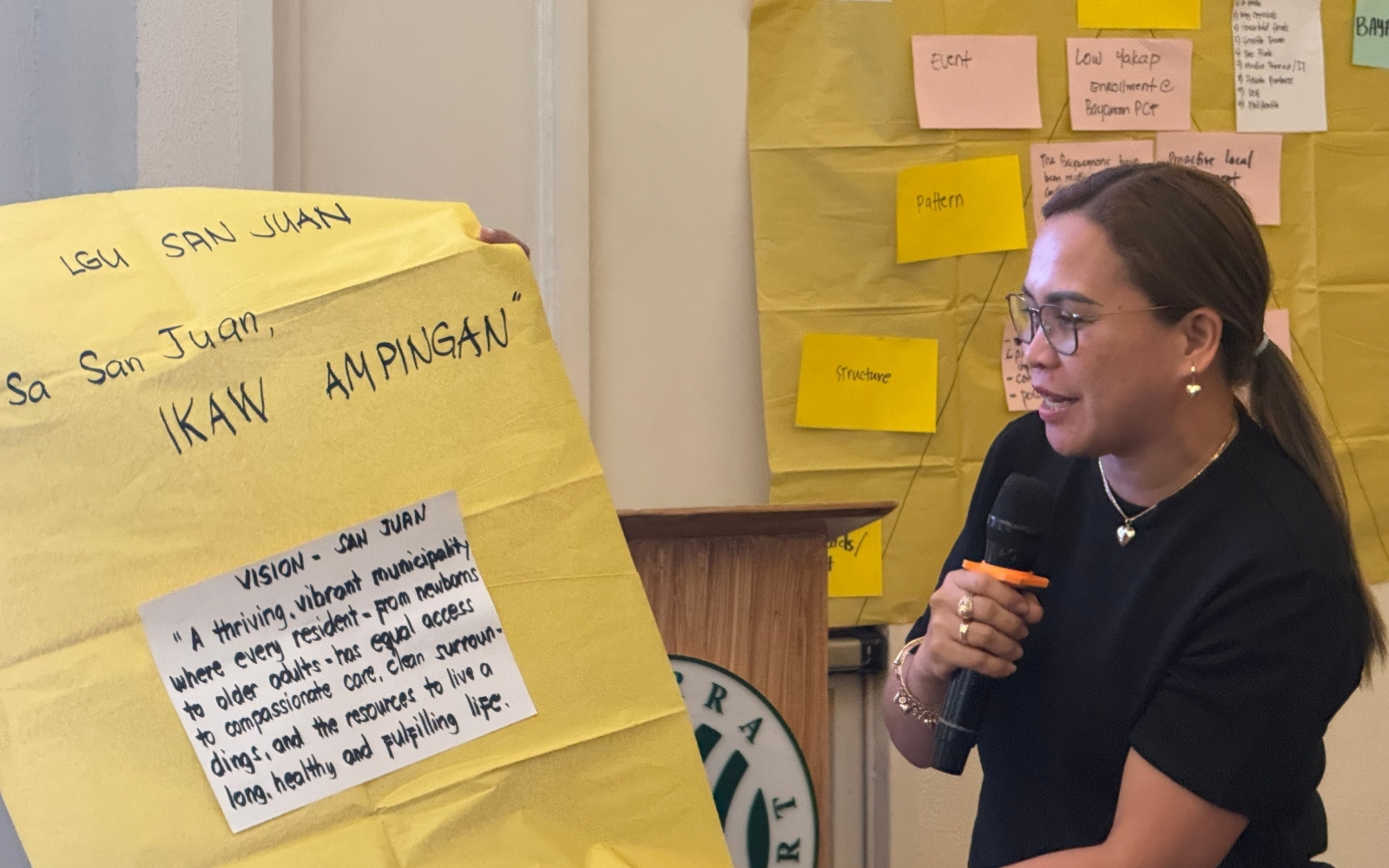 Photo above: A participant shares their team’s articulated change vision for advancing UHC.
“UHC is the glue of our health system,” emphasized Jennifer Remollo, Head of the DOH-CHD NIR Health System Integration Cluster, setting the tone for the entire activity. To put this vision into practice, participants grounded themselves in the Bridging Leadership Framework, which calls on leaders to practice Ownership, Co-Ownership, and Co-creation. They then worked through the first five steps of Kotter’s Change Framework to guide their health system transformation:
- Establishing Urgency – Using a Head and Heart approach, leaders applied systems thinking to understand their municipality’s health challenges and took accountability for the barriers their constituents face in accessing deserved health services.
- Creating a Guiding Coalition – They identified key stakeholders and leaders who could help navigate these challenges.
- Creating a Change Vision – Teams articulated a clear vision for advancing UHC implementation.
- Communicating the Change Vision – They learned effective principles for conveying their vision to diverse audiences.
- Empowering Broad-Based Actions – They identified barriers to change and mapped out strategies to overcome them.
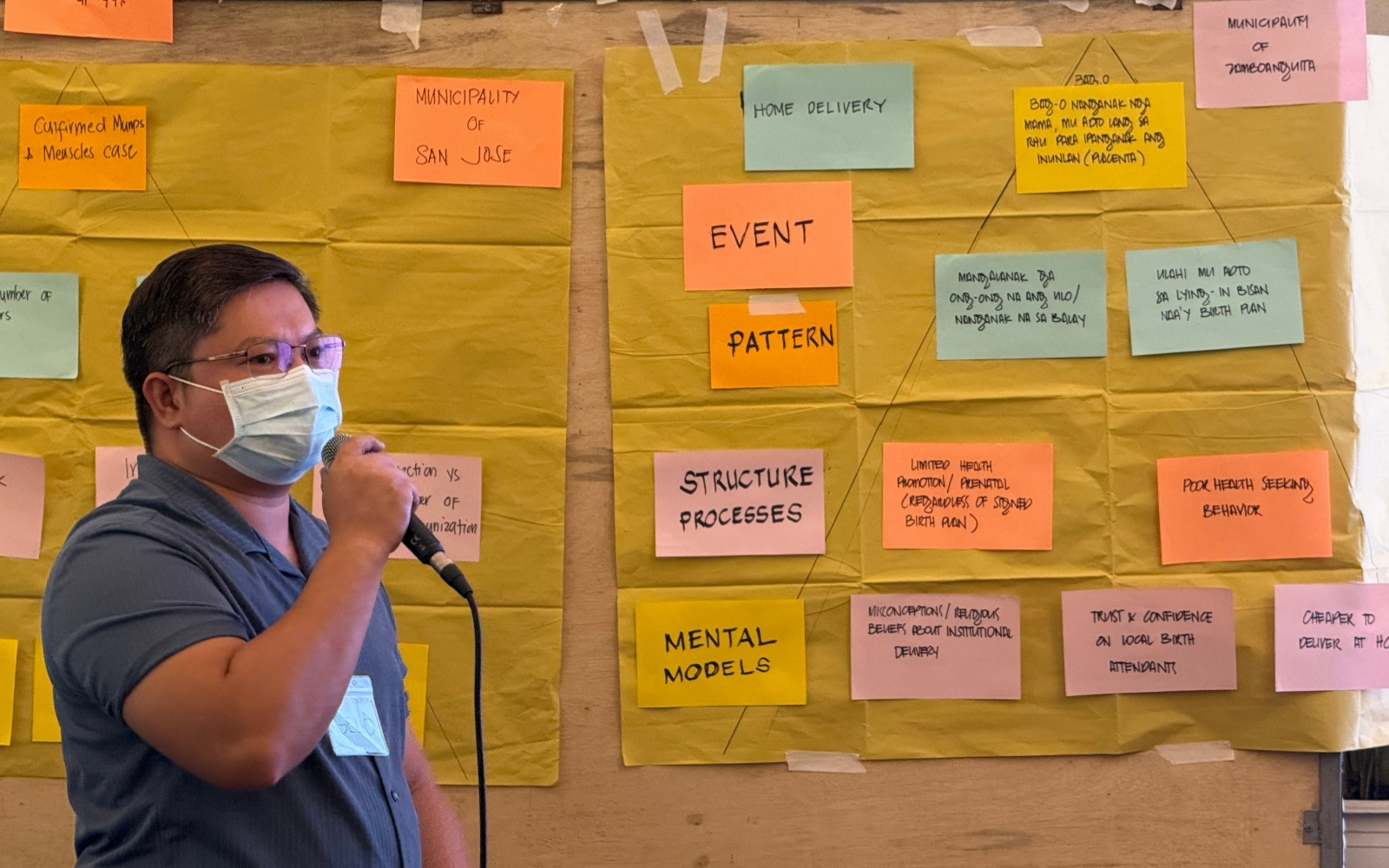 Photo above: A participant walks through their group’s systems thinking model, illustrating the interconnected health challenges and systemic bottlenecks their municipality must navigate to expand health access.
The workshop was structured around three core dimensions: Head, Heart, and Hand.
- Head (Realization): Leaders gained a deeper awareness of systemic bottlenecks. As one participant noted, “What is easy is clear—but the “how” is difficult.” They recognized that achieving health equity requires moving beyond individual efforts to co-owning problems with their guiding coalition.
- Heart (Commitment): Empathy emerged as a central theme. Participants acknowledged that creativity, selflessness, and genuine love for service make the heavy work of bridging care gaps manageable. One leader summed it up: “Forget oneself, serve genuinely, and be accountable to the people we serve.”
- Hand (Action): Guided by the MLDP roadmap, teams co-created priority actions to dismantle health system barriers and accelerate UHC implementation in their respective municipalities.
Armed with renewed clarity, shared empathy, and concrete action plans, the seven municipal health teams returned to their communities ready to turn local leadership into lasting health transformation.
Zuellig Family Foundation Showcases Philippine Health Leadership Innovation at TUFH 2026
The Zuellig Family Foundation (ZFF) proudly presented its research at the 2026 Towards Unity for Health (TUFH) Conference highlighting the Foundation’s commitment to strengthening local health systems and advancing Universal Health Coverage (UHC) in the Philippines.
Dr. Catherine A. Chung, ZFF Local Health Systems Director, delivered an oral presentation on the study, “Provincial Leadership and Governance Program: A Public-Private Collaboration Model for Local Health Systems Strengthening towards Universal Health Coverage in the Philippines.” The research showcased how strategic collaboration among local government units, the private sector, and national partners has strengthened leadership and governance, contributing to more resilient and responsive local health systems.
Related articles:
- Zuellig Family Foundation’s Provincial Leadership and Governance Program Featured in 2025 Voluntary National Review
- PRESENTATION: Provincial Leadership and Governance Program: A Public-Private Collaboration Model for Local Health Systems Strengthening Towards Universal Health Coverage in the Philippines
The presentation shared key lessons from the Provincial Leadership and Governance Program, emphasizing the importance of investing in local leadership, fostering multisectoral partnerships, and providing sustained coaching and technical assistance to enable meaningful health system transformation.
Participation in TUFH 2026 provided an opportunity for ZFF to exchange knowledge with global health leaders, researchers, and practitioners from 37 countries committed to improving health equity and strengthening health systems worldwide. The conference also served as a platform to share the Philippines’ experiences in advancing UHC through leadership and governance innovations.
ZFF extends its gratitude to its partners from the Department of Health, PhilHealth, local government units, academic institutions, and development partners whose collaboration continues to drive meaningful and sustainable improvements in health outcomes for Filipino communities.
Together, we continue to strengthen local leadership, build resilient health systems, and accelerate the journey toward UHC.
View the poster below:
Amagen Tako: Benguet Health Leaders Strengthen Collaboration for Sustainable Universal Health Care
Okak (mine or my responsibility), oka tako (ours or our shared responsibility), amagen tako (let’s do it together).
These local expressions, shared by Dr. Hydre Nga-ew, Municipal Health Officer of Kibungan, Benguet, captured the essence of Bridging Leadership: moving from individual ownership to shared ownership and collective action. The reflections echoed the central message of the Bayang Malusog Leadership and Governance Program (BMLGP) Module 2: achieving Universal Health Care (UHC) requires leaders who can unite teams, communities, and stakeholders around a common vision.
Photo above: Kapangan municipal health team, together with Mayor Harris Dizon (third from the right), reviews the municipality’s health system performance.
Related articles:
- The Universal Health Care Journey in Benguet and Baguio: Celebrating Gains, Navigating Hurdles
- From an Empathy-Driven Learning Visit to a Stronger Commitment to Health
- From Data to Dignity: How a Bedside Visit in Kibungan, Benguet Changed a Mayor’s Approach to Universal Health Care
The Zuellig Family Foundation facilitated the module last July 23–24, 2026 in Baguio City for the municipal health teams of Kapangan and Kibungan, Benguet. Representatives from the Benguet Provincial Department of Health (DOH) Office, as well as Kapangan Mayor Harris Dizon participated in the activity, demonstrating strong local and provincial support for advancing health leadership and governance.
Building on the Bridging Leadership framework introduced in Module 1, participants reflected on their leadership practicum experiences, celebrated early wins, and examined persistent challenges in delivering primary health care. Through interactive sessions, they explored strategies for engaging communities, strengthening team dynamics, navigating conflict, and institutionalizing multisectoral partnerships that support responsive, people-centered health systems.
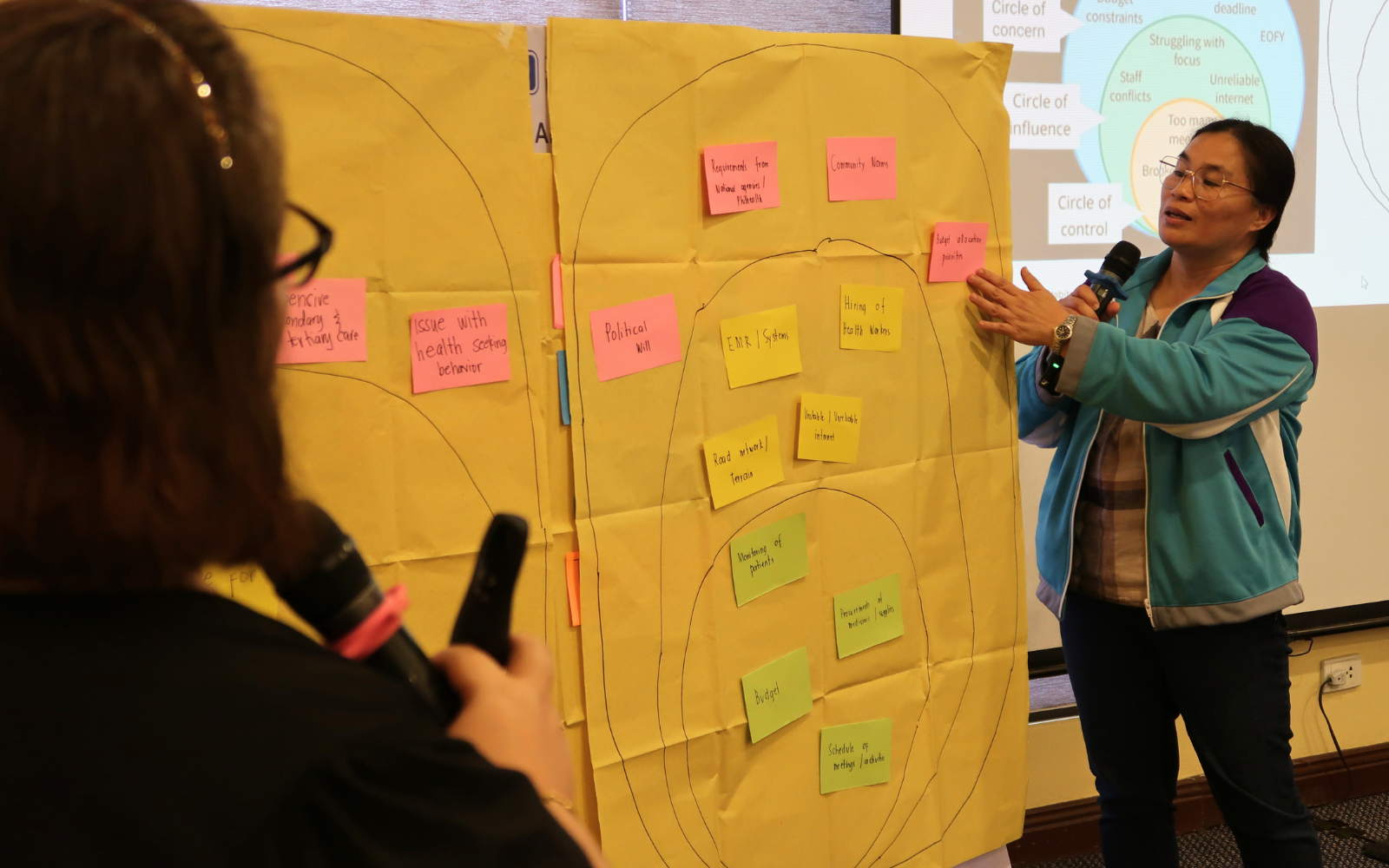 Photo above: Participants present their Circles of Concern, Influence, and Control group output, reflecting on areas where they can lead change to strengthen local health systems.
During the reportback sessions, the municipalities shared their local health realities. Kapangan identified noncommunicable diseases (NCD), particularly hypertension, as its leading health concern. Community participation, integrated service delivery, and medicine availability have enabled better NCD services, while limited human resources, insufficient funding, the absence of dedicated NCD policies, and patient compliance remain key challenges.
Meanwhile, Kibungan reported pneumonia as its leading cause of morbidity, while cancer, cardiovascular disease, and undetermined natural causes accounted for the highest mortality. The municipality cited DOH support for health workforce augmentation, increased health financing through PhilHealth, and committed health workers as important enablers. However, limited medicine coverage and the high cost of maintaining electronic medical records continue to affect service delivery.
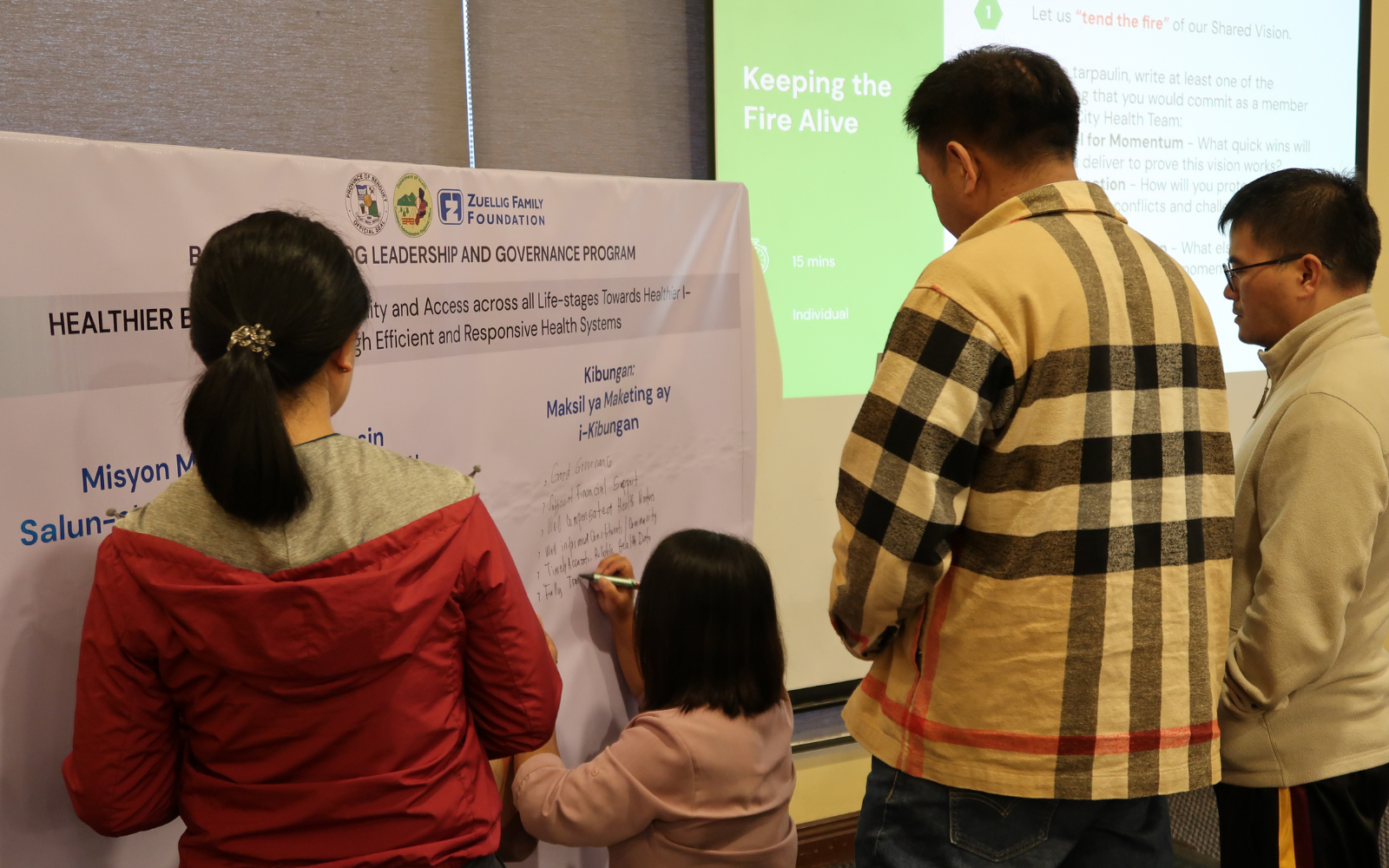 Photo above: Kibungan municipal health team shares strategies for keeping the “fire” of their shared vision alive.
Throughout the two-day learning session, participants noted that effective leadership goes beyond fulfilling individual roles. They recognized the importance of understanding community concerns, collaborating across sectors, and encouraging others to take ownership of a shared vision. They also reflected on conflict as an opportunity for learning and stronger collaboration rather than an obstacle to progress.
Dr. Mary Joy Fermin, former Municipal Health Officer of Kapangan, underscored that achieving better health outcomes requires strong leadership, collaboration, continuous learning, people-centered approaches, and sustained delivery of services. Participants likewise committed to becoming more accommodating leaders, stronger team players, and catalysts for change in their respective municipalities.
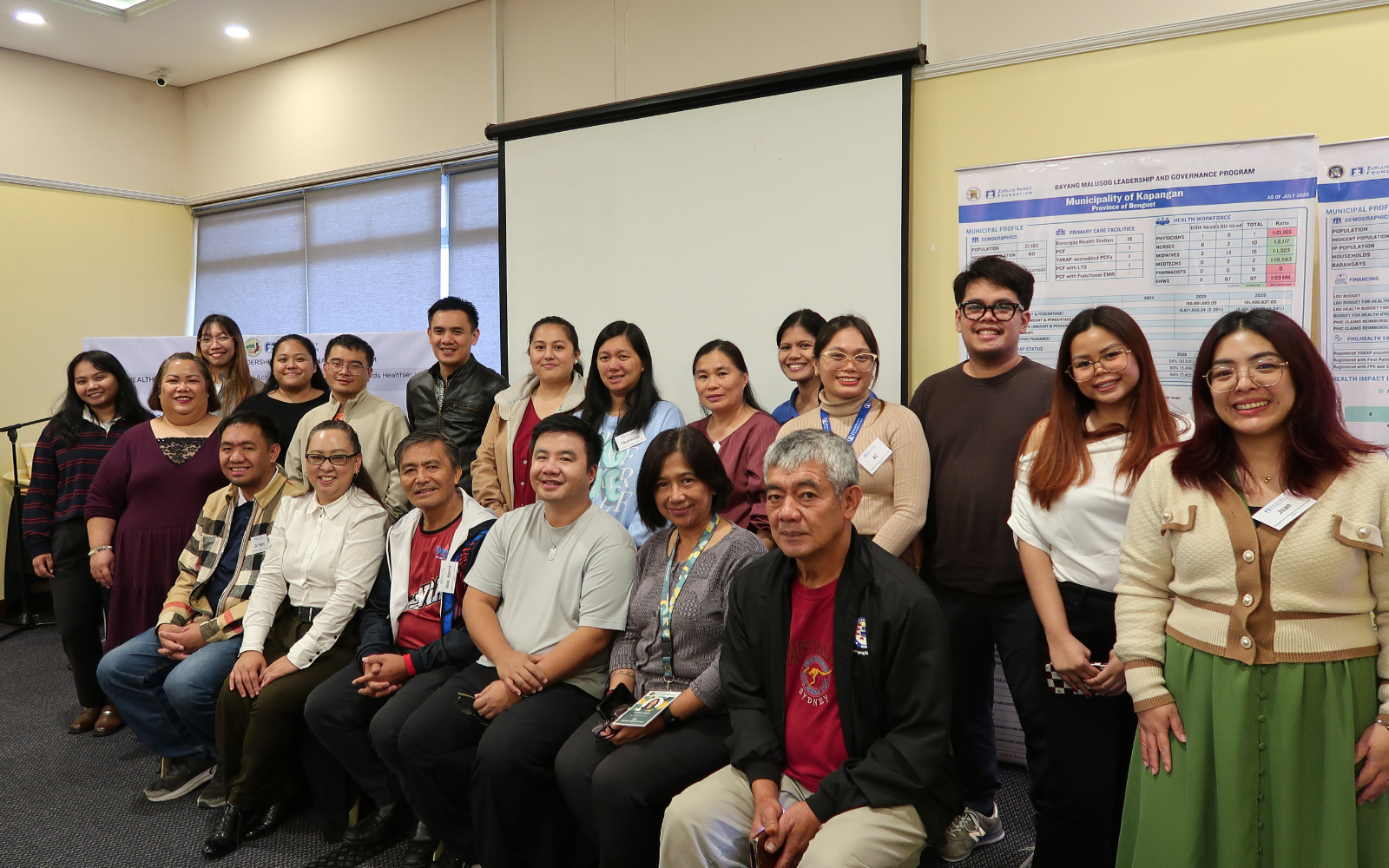
Towards the end of the activity, Dr. Andrew Chamson Bacuso of the Benguet Provincial DOH Office, encouraged participants to strengthen collaboration, innovate with purpose, and embrace servant leadership as they continue advancing UHC in their communities. As reflected in the words okak, oka tako, and amagen tako, sustainable health systems are built through shared ownership, collective action, and co-creation with the communities they serve.
A Leader’s Promise to Address Teenage Pregnancy in Oquendo, Calbayog City
Stories of transformation, collaboration, and courageous leadership took center stage during the Barangay Expanded Youth Leadership and Governance Program (BEYLGP) Colloquium in Calbayog City, Samar, where barangay officials, health workers, city government representatives, and development partners gathered to celebrate the progress of communities committed to addressing adolescent pregnancy through local governance.
Among these leaders was Punong Barangay Michael Loberiano of Barangay Oquendo, whose personal journey would later become one of the colloquium’s most compelling narratives.
Related articles:
- Strengthening Families through Playful Parenting: Masayang Pamilya Graduation held in Calbayog City
- Youth and Local Leaders Join Forces to Prevent Teen Pregnancies in Samar
Hosted with the support of the United Nations Population Fund (UNFPA), the Zuellig Family Foundation (ZFF), and the City Government of Calbayog, the colloquium served as a culminating platform for partner barangays to showcase their journey in implementing evidence-based interventions that empower adolescents and strengthen community support systems. The event opened with a welcome message from City Health Officer Dr. Sylvia De Guzman, followed by a message of support from Dr. Dorie Lyn Balanoba, ZFF-UNFPA Partnerships Program Director. Both emphasized that creating healthier communities requires sustained collaboration among local governments, health systems, schools, families, and young people themselves.
A highlight of the colloquium was the Public Narrative Session, where community leaders shared personal stories reflecting how the BEYLGP has transformed not only their programs but also their perspectives on adolescent health. Among the presentations was that of Punong Barangay Loberiano, whose heartfelt narrative captured the essence of ZFF’s Bridging Leadership approach.
Speaking before fellow barangay officials, city officials, health professionals, and development partners, he reflected on his experiences growing up in a simple community where hardship was common. Yet, nothing affected him more deeply, he admitted, than witnessing adolescents become parents before they had the opportunity to pursue their dreams.
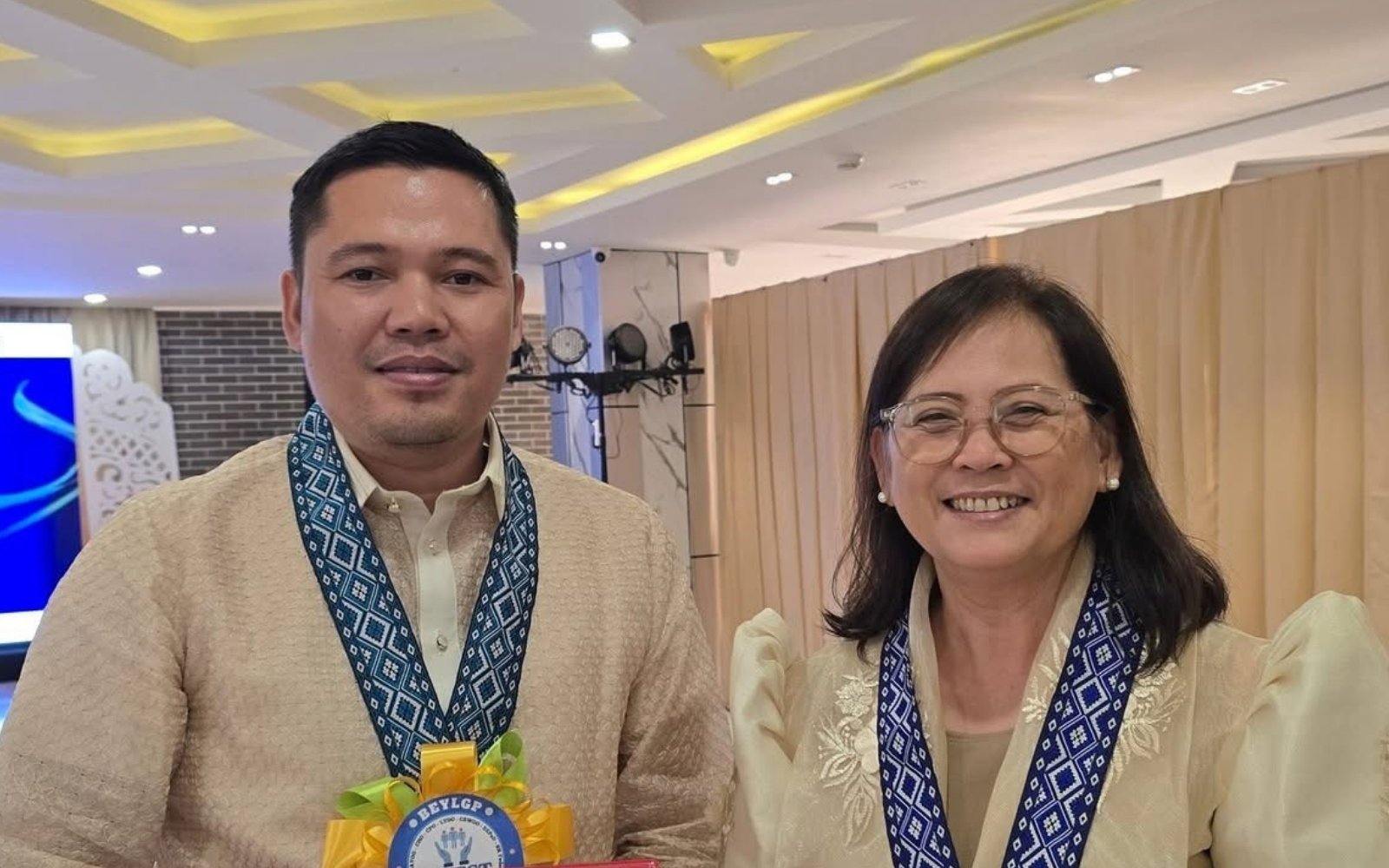 Photo above: Punong Barangay Loberiano of Oquendo, Calbayog City shares a moment with Dr. Dorie Lyn Balanoba, ZFF-UNFPA Partnerships Program Director, whose support through BEYLGP helped strengthen the barangay’s response to adolescent pregnancy.
He recalled seeing young girls leave school to assume the responsibilities of motherhood and young boys abandon their education to provide for families they were not yet prepared to raise. These realities, he shared, opened his eyes to the far-reaching consequences of adolescent pregnancy—not only for individual families but for the future of the entire community.
“Sa bawat batang nawalan ng pangarap, sa bawat pamilyang nadagdagan ang pasanin, at sa bawat kabataang naputulan ng direksyon, unti-unti kong naramdaman ang bigat ng problemang ito—hindi lamang bilang lider, kundi bilang tao.”
Loberiano acknowledged that there was a time when teenage pregnancy seemed like an accepted reality in many communities. However, witnessing increasing school dropouts, worsening poverty, and interrupted opportunities among young people compelled him to rethink that perspective. Through his participation in BEYLGP, he realized that preventing adolescent pregnancy is not the responsibility of the barangay alone but of the entire community.
Guided by this realization, Barangay Oquendo strengthened its local response by implementing a Barangay Action Plan, enhancing youth-friendly services, and forging stronger partnerships with schools, parents, health workers, faith-based organizations, and other community stakeholders. Schools became venues for reproductive health education, life skills sessions, and referral mechanisms that allowed adolescents to access appropriate services without fear or stigma. Parents participated in empowerment sessions that encouraged open communication with their children, while young people themselves became active champions through peer education initiatives, leadership camps, and advocacy activities.
For Loberiano, these collective efforts demonstrated that sustainable change is only possible when every sector shares ownership of the solution. He concluded his narrative by reaffirming his commitment to continue championing programs that protect young people and provide them with opportunities to thrive.
“Naniniwala ako na kung sama-sama tayong kikilos, kaya nating bawasan—at kalaunan, tuluyang mapigil—ang teenage pregnancy sa ating barangay. Bilang Punong Barangay, mananatili akong tapat sa aking paninindigan na protektahan ang ating kabataan at lumikha ng mga programang may direksyon at malasakit.”
The colloquium also featured an EYLGP video presentation, a panel discussion with Sangguniang Kabataan leaders from participating barangays, and a keynote message from Calbayog City Mayor Raymund Uy.
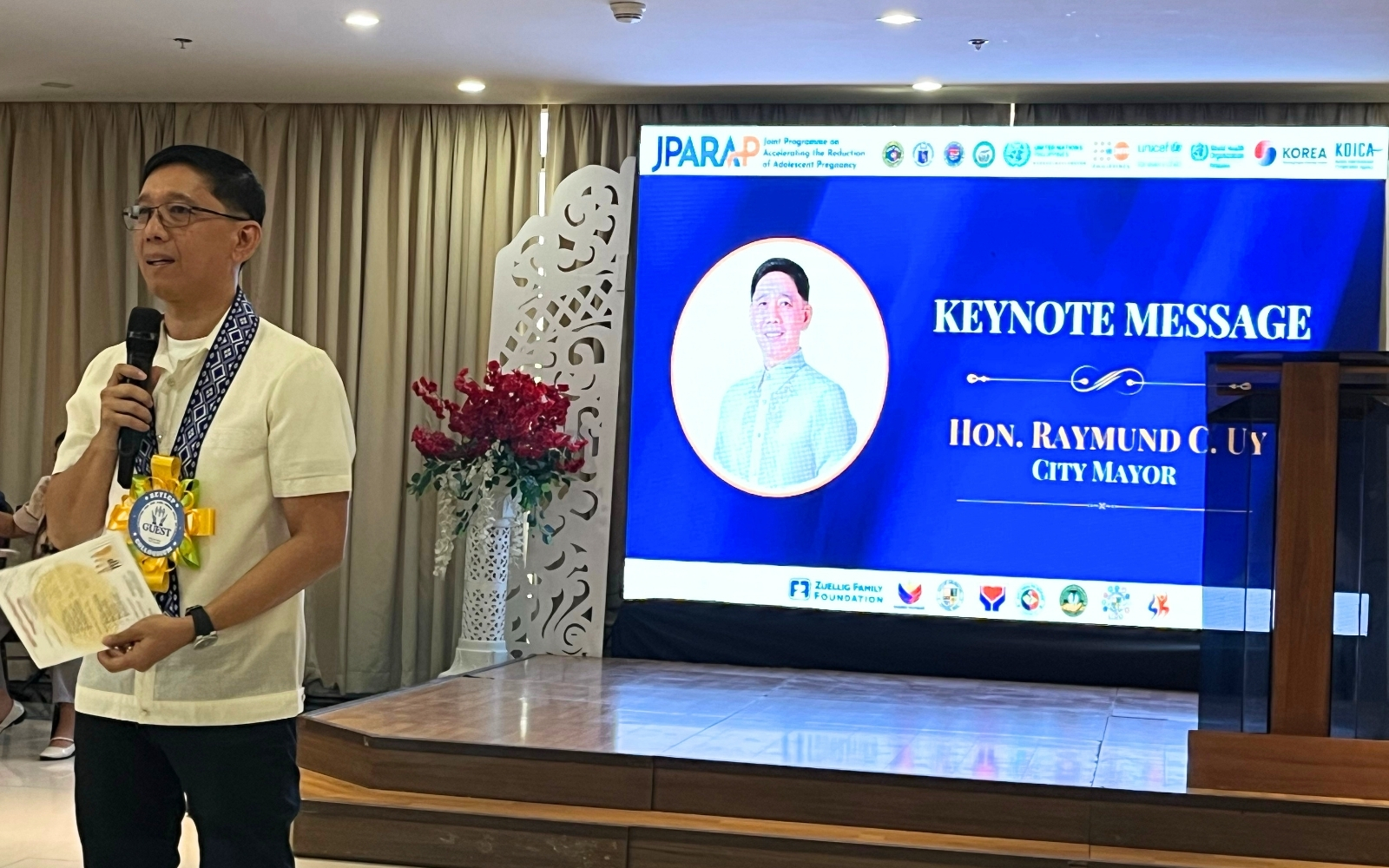 Photo above: Calbayog City Mayor Raymund Uy addresses barangay leaders and development partners during the colloquium, highlighting the city’s continued support for programs that protect young people and secure their futures.
More than a venue for presenting accomplishments, the BEYLGP Colloquium became a celebration of communities that have chosen to confront difficult realities with compassion, innovation, and shared accountability. Indeed, the future of every barangay lies in the dreams of its young people. Through the continued partnership of local governments, health workers, educators, parents, and the youth themselves, the BEYLGP continues to demonstrate that protecting those dreams is not only possible, but a responsibility shared by all.
Authors: Mikee Ebias, ZFF Expanded Youth Leadership and Governance Program Provincial Associate Officer for Samar and Camarines Sur; Krizzia Esperanza, ZFF Corporate Communications Associate
It Takes a Village: Lessons from Valenzuela City’s Whole-of-System Approach to Protecting Children and Adolescents
Preventing adolescent pregnancy among younger adolescents requires more than health services. It calls for communities where children are protected, families are supported, and institutions work together to respond before risks become crises.
Valenzuela City’s experience offers valuable insights into what this collective effort can look like.
Photo above: The Zuellig Family Foundation (ZFF) Adolescent and Youth Sexual and Reproductive Health (AYSRH) team tours the Valenzuela Sentro Health Hub, witnessing how the city integrates adolescent-friendly health services into its broader child protection system.
Local Civil Registry data reflect encouraging progress. Live births among girls aged 10 to 14 remained low, with five cases in 2023, none in 2024, and six in 2025. Births among adolescents aged 15 to 19 also declined substantially from 218 in 2023 to 136 in 2025. Yet city leaders emphasize that every pregnancy among younger adolescents represents a child in need of protection, making even a single case one too many.
This perspective has shaped how Valenzuela City designs its response placing child protection, rather than adolescent pregnancy alone, at the center of its interventions.
Related articles:
- Listening Earlier, Protecting Earlier: Lessons from Quezon City’s Efforts to Support Adolescents
- Ground-Level Insights on Adolescent and Youth Sexual and Reproductive Health from Paranas, Samar
One important learning from the Valenzuela City Child Protection Center (CPC) is that even the language used in adolescent pregnancy prevention can shape how children are viewed and supported. Dr. Soidemer Claire Grecia, Pediatrician and Child Protection Specialist of Valenzuela City CPC, explained, “For 10 to 14-year-olds, we should not use the term family planning because they are not expected to be planning a family—they should be studying.”
This seemingly small shift in language reflects a larger shift in perspective. Children aged 10 to 14 should first be recognized as children—with rights to protection, education, and healthy development. Framing interventions through a child protection lens helps ensure that programs, messages, and services remain developmentally appropriate and responsive to their realities.
The experience underscores an important lesson for local governments: preventing pregnancy among younger adolescents is not solely a health concern but a child protection and governance issue. Effective strategies require coordinated leadership across sectors, with health, education, social welfare, justice and communities working to prevent risk before they escalate into harm.
Across the city, this perspective is reflected in a network of coordinated initiatives involving multiple sectors.
Health services are supported by 49 adolescent-friendly facilities, adolescent health focal persons, and more than a hundred dedicated staff known as barangay population managers who are trained to help bring information and services on adolescent health closer to communities. At the same time, youth listening sessions and youth organizations provide opportunities for adolescents to express their concerns and contribute to programs designed for them.
Child protection is likewise strengthened through close collaboration among schools, health facilities, social welfare offices, barangays, law enforcement agencies, civil society organizations, and the justice sector. Schools serve as important referral points for children needing protection, while partnerships with organizations and offices such as LAMP-SINAG (Libreng Abogado Para sa Maralitang Panlungsod-Sumbungan ng Inaaping Nanay, Anak, at Ginang) help ensure legal assistance for child victims throughout court proceedings.
Prevention efforts also begin early, recognizing that safe and nurturing homes are essential to children’s healthy development. Personal Safety Lessons are introduced in daycare centers and schools to teach children about body safety, protective behaviors, and help-seeking skills. Parents and caregivers are engaged through parenting modules which the local government customized based on inputs from partner non-government organizations and the Department of Social Welfare and Development (DSWD).
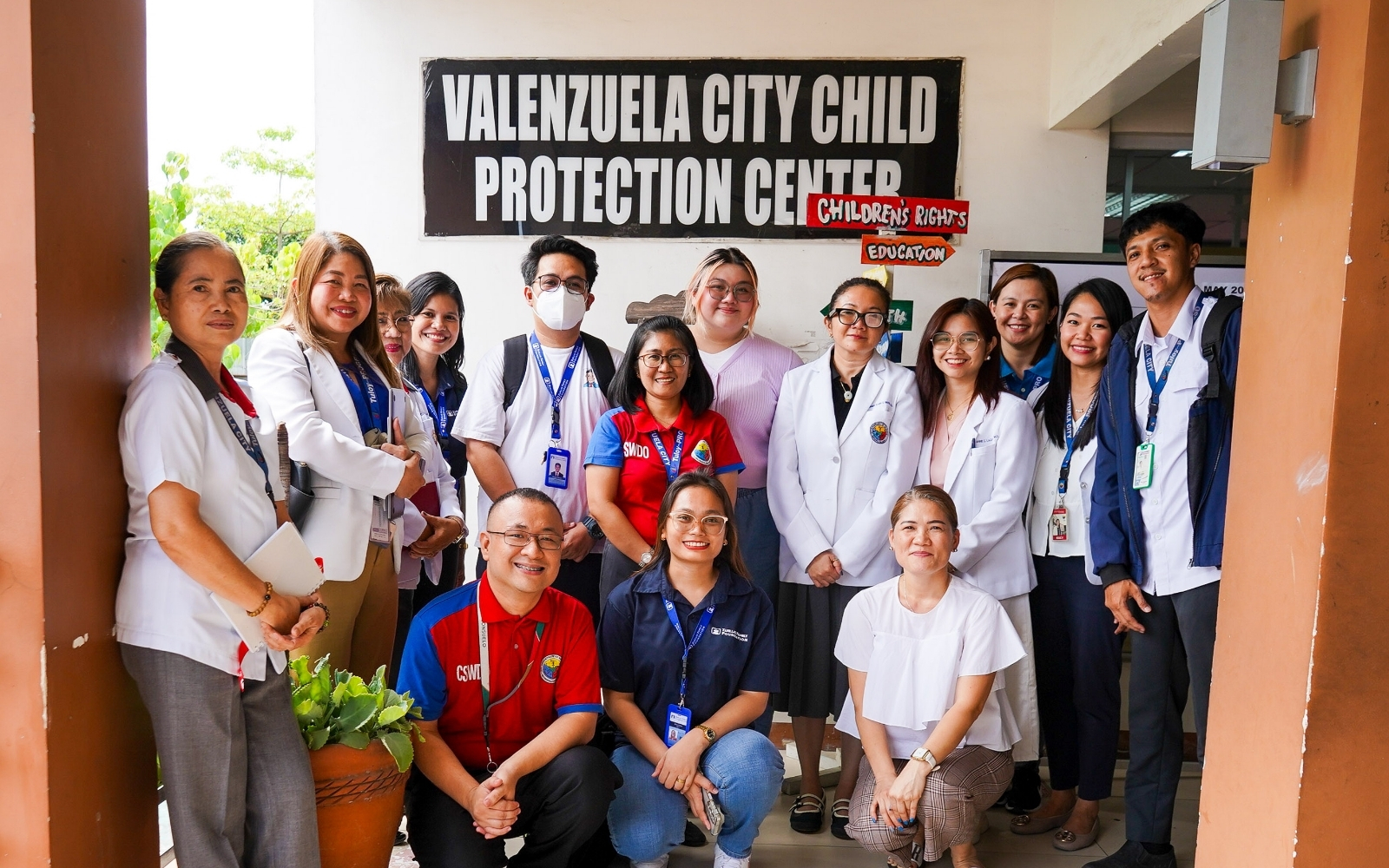 Photo above: At the Valenzuela Child Protection Center, the ZFF AYSRH team meets the people who turn the city’s whole-of-system vision into action for every child.
According to Kristina Ramos, head of the Valenzuela City CPC, “‘Pag nakalubog ka talaga dito, malalaman mo ang needs ng parents.” (Once you are fully immersed here, you will know the needs of the parents.) Parenting initiatives are taught through the Nanay-Teachers Camp in collaboration with the day care center teachers. These initiatives reflect an understanding that preventing adolescent pregnancy cannot rest on one office or one program alone. It requires a coordinated system where different sectors contribute according to their roles while keeping the best interests of the child at the center.
Valenzuela City’s experience also highlights that strong systems continue to face evolving challenges. Local leaders pointed to issues such as the influence of social media, peer pressure, migration, and the emotional demands placed on frontline workers. High attrition in learning sessions and rapid turnover among social workers require continuous innovation—from providing transportation support for participants to ensuring that critical positions are filled quickly so that services remain uninterrupted.
Rather than slowing progress, these challenges have reinforced the city’s commitment to continuous learning and adaptation. Local stakeholders continue to refine programs, strengthen partnerships, and explore new ways of responding to the changing realities faced by children, adolescents, and families.
One lesson stands out from Valenzuela City’s experience: protecting younger adolescents is not the responsibility of a single institution. It is a shared commitment among families, schools, communities, service providers, civil society, and local government.
When every sector plays its part, children are better protected, families become stronger sources of support, and communities are better equipped to ensure that every young person can grow, learn, and thrive in a safe and nurturing environment. The city’s experience reminds us that protecting children is never the work of one institution, it truly takes a village.
Author: KC Lyn Razon, ZFF AYSRH Learning and Development Associate
Del Carmen, Siargao Integrates Nutrition Care into eKonsulta Platform
The Municipality of Del Carmen in Siargao Island, Surigao del Norte is improving nutrition service delivery by integrating care into the government eKonsulta platform. This move enables more timely, coordinated, and data-driven support for nutritionally at-risk pregnant women and young children.
As part of the Zuellig Family Foundation’s (ZFF) roadmap for strengthening local nutrition systems, representatives from ZFF’s Nutrition team visited Del Carmen last June 17, 2026 to engage local health leaders and frontline workers. The sessions focused on role-specific technical modules that demonstrate how digital tools can improve nutrition governance and primary health care delivery.
Related article:
A key area of discussion was integrating the Pook Malusog Dashboard, a ZFF-developed digital health and nutrition information system, with the eKonsulta platform. This integration allows health workers to systematically identify, monitor, and manage at-risk mothers and children. By strengthening digital tracking and embedding nutrition data into routine primary care, providers can deliver timely interventions, track client progress, and ensure continuity of care throughout the maternal and child health continuum.
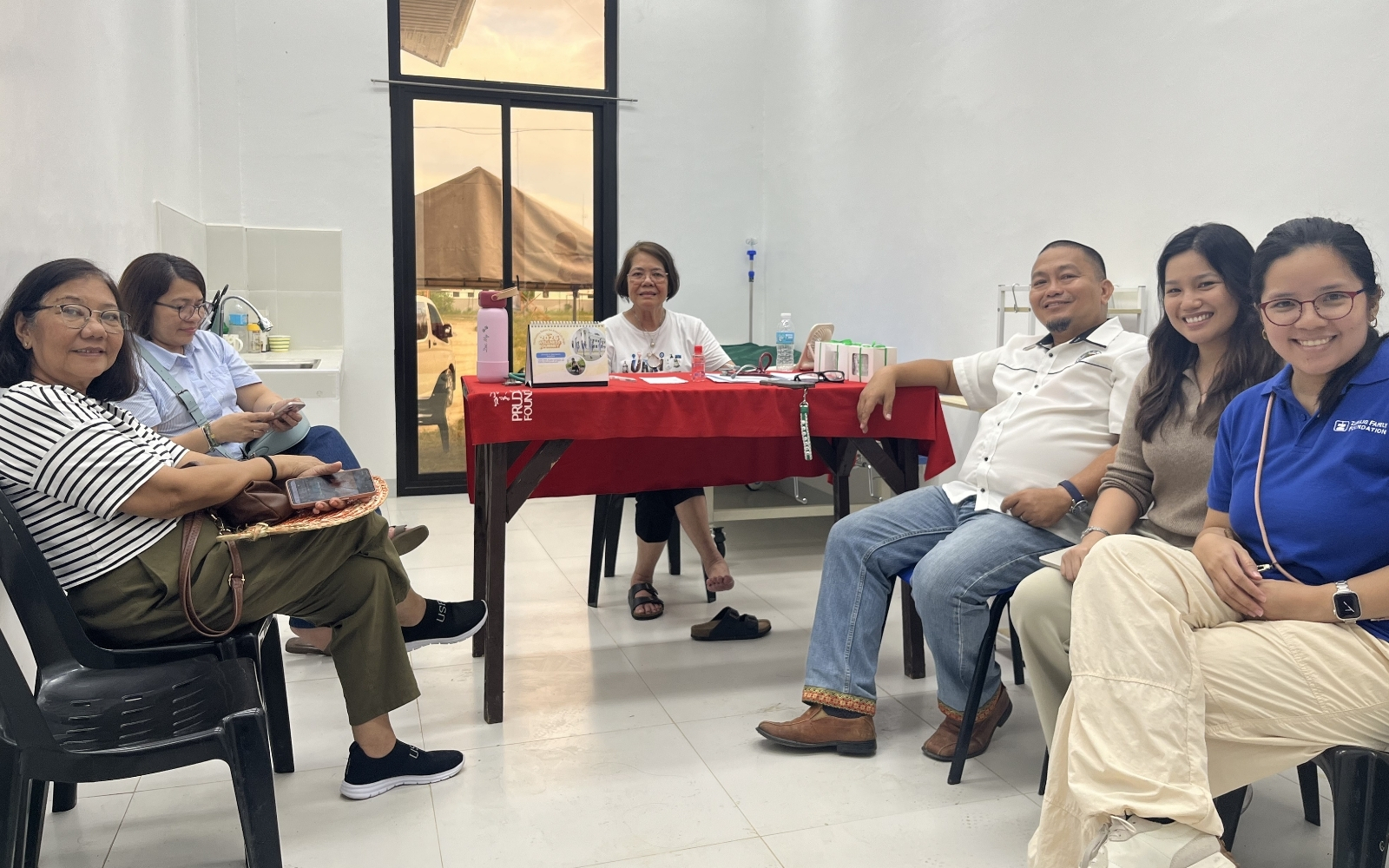 Photo above: ZFF Nutrition team meets with Mayor Alfredo Coro II (third from right) and frontline health workers at the Del Carmen Super Health Center.
The initiative supports a broader vision of building a responsive digital ecosystem where nutrition data guides decision-making at both municipal and provincial levels. With better data capture and interoperability, health workers can more easily identify service gaps, prioritize high-risk clients, and coordinate referrals and follow-up care.
Del Carmen is one of the country’s municipalities with a Super Health Center, providing a strong foundation for integrating digital health innovations into comprehensive primary care. By leveraging existing government platforms like eKonsulta, the municipality is demonstrating how digital transformation can strengthen local nutrition governance while expanding access to quality services.
For ZFF, Del Carmen serves as a key learning site for developing a scalable model of digital nutrition governance. Insights gathered here will help shape future strategies that enable local governments to identify at-risk individuals earlier, manage cases more responsively, and improve health outcomes for mothers and children.
Author: Samantha Morales, ZFF Nutrition Knowledge Management and Communications Associate
Cebu Partners with ZFF and DOH to Combat Child Stunting through Stronger Nutrition Governance
Cebu Province is making progress in tackling child stunting, one of its most urgent public health challenges, collaborating with the Zuellig Family Foundation (ZFF) and the Department of Health-Center for Health Development (DOH-CHD) Central Visayas.
Following meetings with the Provincial Health Office (PHO) and Governor Pamela Baricuatro, Provincial Health Consultants Dr. Nikki Catalan, and Dr. Tristan Rebalde convened with the ZFF Nutrition team to explore strategic partnerships aimed at improving nutrition outcomes across the province.
The discussions focused on Cebu’s current nutrition situation and the critical need to strengthen local nutrition governance. Although the province is classified as having a medium level of public health significance based on stunting prevalence, it records one of the highest absolute numbers of stunted children in the country due to its large population. Poverty, food insecurity, and other social determinants continue to impede child nutrition improvements, making coordinated, systems-oriented interventions as urgent matters.
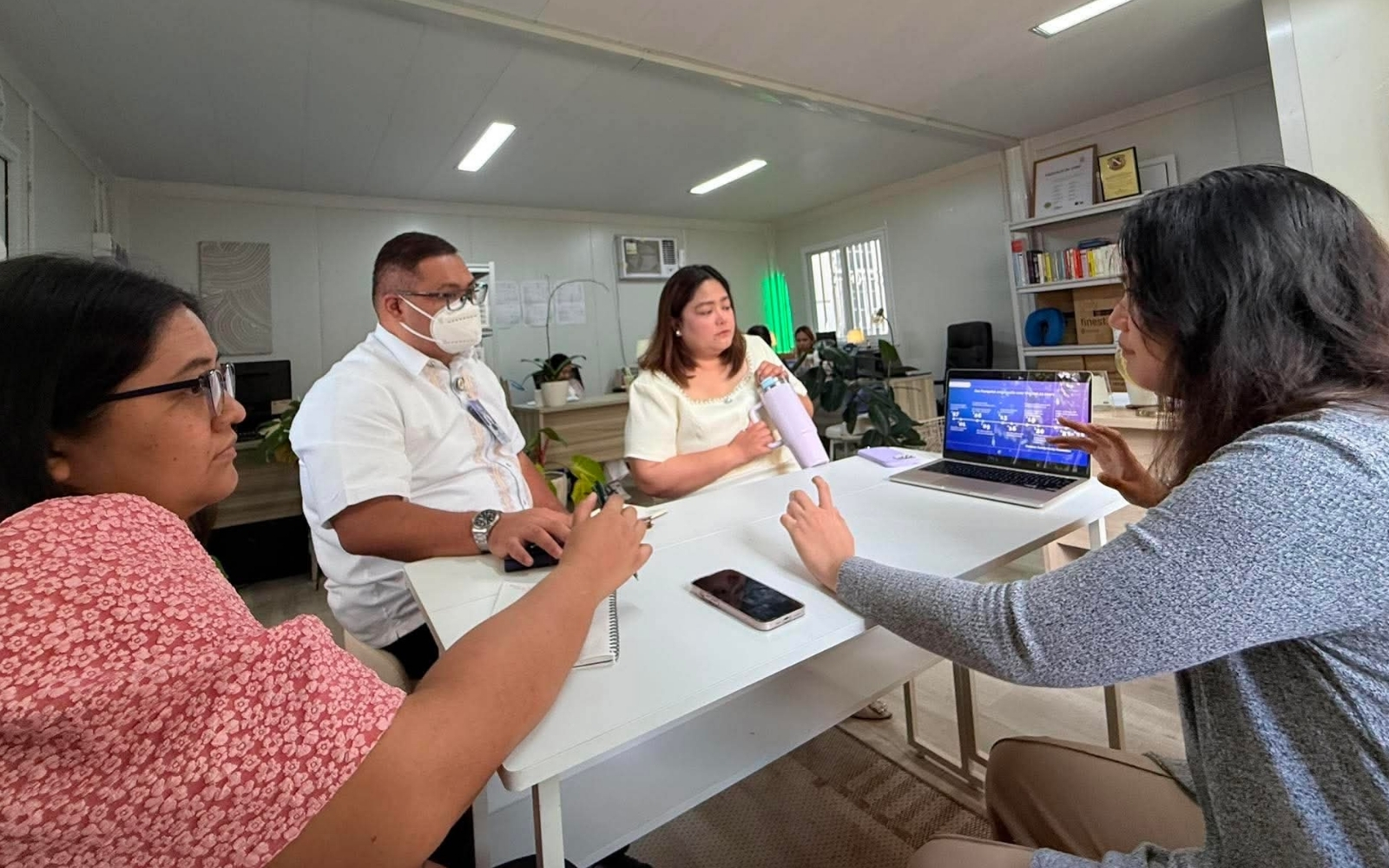 Photo above: PHO-ZFF partnership meeting last June 15, 2026 lays the groundwork for resilient local nutrition systems to combat child stunting in Cebu.
In response, both parties identified concrete opportunities to reinforce local nutrition committees and enhance multisectoral collaboration across provincial and municipal governments. Through its Bridging Leadership approach and proven governance frameworks, ZFF aims to help Cebu build more resilient local nutrition systems capable of delivering responsive and sustainable services for children and families.
Dr. Catalan underscored the importance of strengthening existing local nutrition structures, emphasizing that effective governance, leadership, and cross-sector cooperation are essential to addressing malnutrition’s complex root causes. She noted that ZFF’s technical expertise and leadership development programs can empower local government units to better coordinate nutrition planning, implementation, and accountability.
Complementing these efforts, the DOH-CHD Central Visayas has initiated a Memorandum of Agreement with several provinces, including Cebu, in partnership with ZFF. This collaboration seeks to advance Universal Health Care by embedding stronger nutrition governance into local health systems and promoting healthier, well-nourished families throughout the region.
As Cebu Province deepens its commitment to nutrition, this partnership marks a pivotal step toward creating resilient local systems that place children and families at the center of development.
Author: Samantha Morales, ZFF Nutrition Knowledge Management and Communications Associate
Turning Data into Action for a HEALTHIER Benguet
Harnessing better health data to improve planning, strengthen investments, and deliver better health outcomes took center stage during the second Bayang Malusog Leadership and Governance Program (BMLGP) Executive Session for Benguet on July 2, 2026.
Guided by Governor Melchor Diclas’ HEALTHIER Benguet agenda (Health Equity and Access across all Life-stages Towards Healthier I-Benguet through Efficient and Responsive Health Systems), the Province of Benguet reaffirmed its commitment to building a more responsive and data-informed health system that advances Universal Health Care (UHC).
Related articles:
- The Universal Health Care Journey in Benguet and Baguio: Celebrating Gains, Navigating Hurdles
- Moving Forward with Health Reforms in Benguet
Collaborative Leadership for Health Transformation
The Executive Session brought together the Provincial Government of Benguet, national government partners, and the Zuellig Family Foundation (ZFF) to revisit commitments from the first Executive Session in 2025 and align on priority actions for the next phase of health systems transformation.
The Province of Benguet was led by Governor Melchor Diclas, together with the Provincial Health Office headed by Dr. Meliarazon Dulay. Also joining the discussions were Dr. Maria Imelda Ulep, Chief of Hospital of Benguet General Hospital; Dr. Mercedes Calpito, Provincial Health Team Leader of the Baguio-Benguet Department of Health (DOH) Office; and Ms. Marilyn Dizon, representing PhilHealth Local Health Insurance Office Benguet. The ZFF delegation was led by Chairman Dr. Manuel Dayrit.
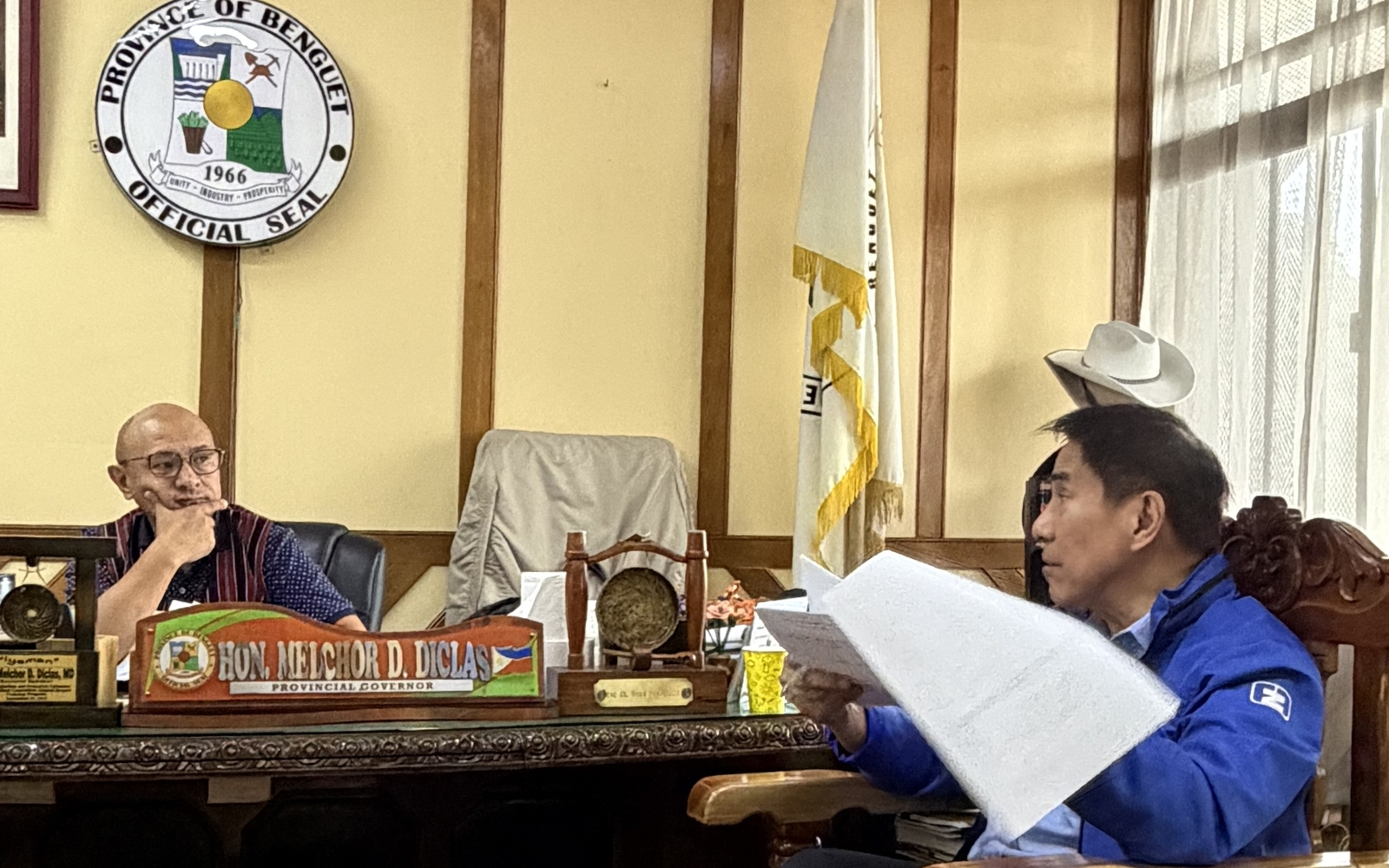 Photo above: ZFF Chairman Dr. Manuel Dayrit and Benguet Governor Melchor Diclas tackle how to turn health data into better services for the province.
Building on Progress
The Provincial Health Office highlighted key milestones achieved since the first Executive Session, including:
- The enactment of the Provincial-wide Health System (PWHS) Ordinance.
- The development of the Special Health Fund (SHF) Manual of Operations.
- Ongoing efforts to strengthen electronic medical records (EMR), telemedicine, and community-based health services through the HEALTHIER Benguet Caravans.
The province also shared continuing challenges, including fragmented health information systems, delayed fund releases, medicine availability, and the realities of delivering services to geographically isolated and disadvantaged communities.
Strengthening Data for Better Health Governance
Recognizing that better health data leads to better decisions, Governor Diclas highlighted the importance of strengthening the province’s EMR system to improve care coordination, monitor service utilization, and support more strategic resource allocation across the province.
He also noted the need to clearly demonstrate how public investments translate into better health services and outcomes—strengthening the province’s ability to advocate for continued investments in health.
Alongside these efforts, Governor Diclas identified completing hospital and dialysis infrastructure, as well as sustaining investments in nutrition and noncommunicable disease prevention, as key priorities under the HEALTHIER Benguet agenda.
From Investments to Measurable Outcomes
Supporting this direction, Dr. Manuel Dayrit encouraged the province to move beyond tracking expenditures and focus on measuring how health investments improve access, service delivery, and population health. He underscored the importance of documenting progress, strengthening health information systems, and using disaggregated data to identify gaps and guide future investments across municipalities.
“You are more clear with what you want to do. You are aware of your bottlenecks,” Dr. Manuel Dayrit said, emphasizing that a clear understanding of both the province’s progress and remaining challenges provides a strong foundation for more focused and measurable health systems transformation.
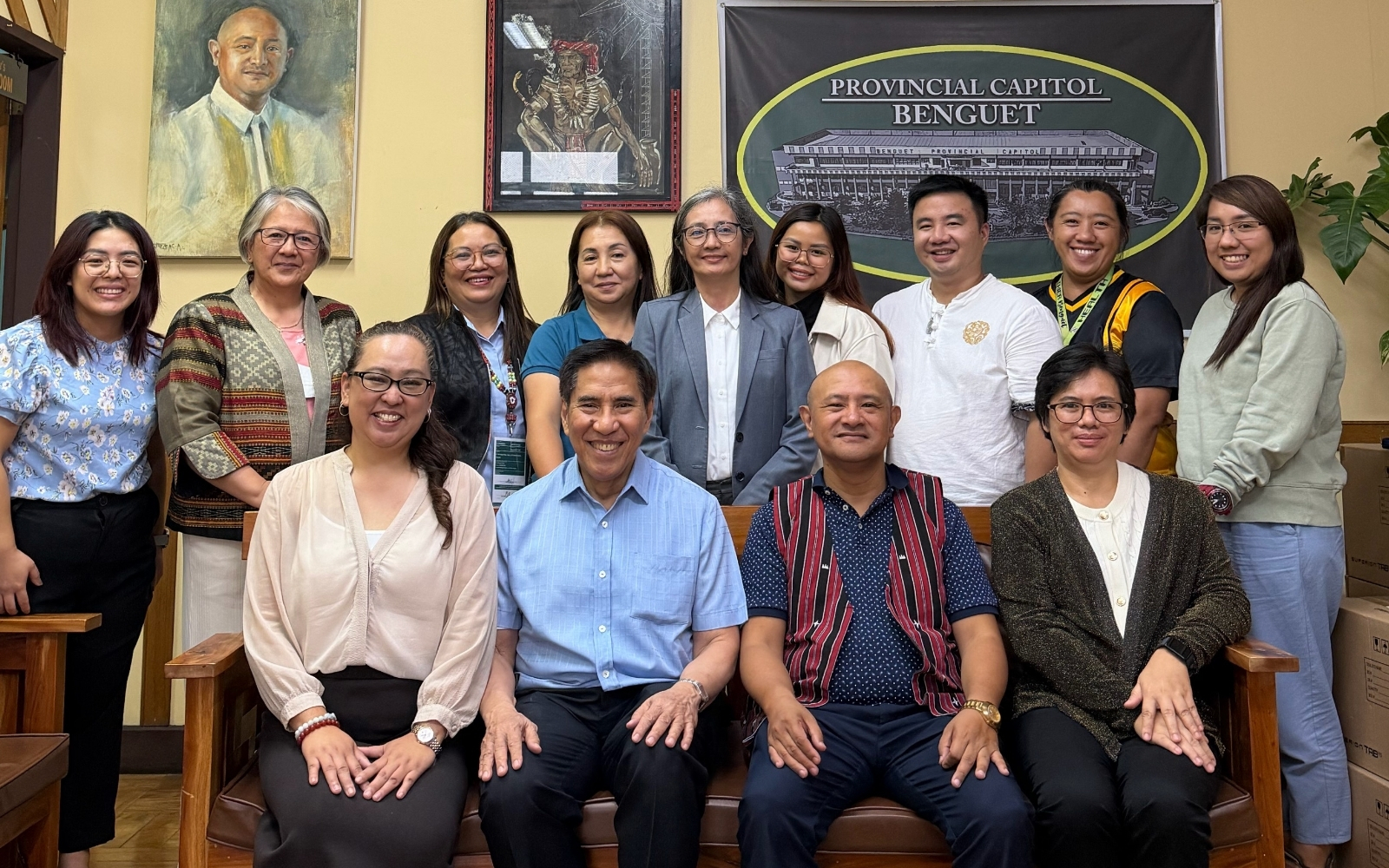 Photo above: Participants unite during the Executive Session to reaffirm their shared commitment to a data-informed and collaborative health system for a healthier Benguet.
Sustaining the Momentum
The Executive Session concluded with renewed commitments from the Provincial Government of Benguet, the Provincial Health Office, DOH, PhilHealth, and ZFF to strengthen health governance through better data, collaborative leadership, and sustained partnerships.
By advancing stronger health information systems, operationalizing the Special Health Fund, and improving equitable access to quality healthcare, Benguet continues to lay the groundwork for a healthier future for every I-Benguet.
Author: Ayeza De Mesa, ZFF BMLGP Associate
Baguio City Raises the Bar for Universal Health Care, Turning Growth into Greater Impact
Zuellig Family Foundation (ZFF)’s Executive Dialogue with Baguio City highlights how the city’s health system transformation is creating new opportunities to strengthen primary health care, deepen partnerships, and improve access for every community.
Photo above: Baguio City Mayor Benjamin Magalong personally thanks ZFF Chairman Dr. Manuel Dayrit for his guidance, which helped transform the city’s frustrations into renewed motivation for its UHC journey.
“What we discovered today is that Baguio City has experienced massive organizational growth in just a few years. There has been growth in the budget, growth in human resources for health, and growth in population access to health services and the capacity of District Health Centers to provide care. What this tells me is that while your organization and capacity are growing, you are also uncovering more needs. As the Mayor said, ‘Hindi pa natin naaabot lahat.’ You are growing and increasing your budget, but as you grow, you continue to uncover more needs. Umaangat nang umaangat ang accomplishment ninyo, but the bar keeps getting higher.”
This was the central message of Dr. Manuel Dayrit, ZFF Chairman, during the Executive Dialogue with Baguio City officials as they reflected on the city’s continuing journey toward Universal Health Care (UHC).
Despite these remarkable gains, city officials acknowledged that many families living in pockets of poverty continue to face barriers in accessing quality health care. The discussion reflected both the accomplishments and the persistent challenges of local leaders committed to making UHC a reality.
Related articles:
- The Universal Health Care Journey in Benguet and Baguio: Celebrating Gains, Navigating Hurdles
- Mayor Magalong Completes ‘Deep Dive’ to Assess Baguio Health System
The Challenge of Translating Policy into Impact
Baguio City Mayor Benjamin Magalong observed that while national health reforms have expanded policy guarantees and strengthened people’s entitlement to health services, these commitments have also raised public expectations. Local governments, however, often face the challenge of translating national policies into tangible improvements on the ground, where implementation requires time, resources, and sustained collaboration. As a result, communities may become frustrated when the benefits envisioned by policy are not immediately realized.
Echoing the Mayor’s observations, City Councilor Hon. Elmer Datuin shared his experience in facilitating guarantee letters for indigent patients seeking access to health services. While the city has continuously worked to bridge health inequities through local legislation and financial assistance, he acknowledged that reaching every marginalized family remains a challenge.
He also noted Baguio City’s legislative gains in advancing public health, including ordinances supporting non-communicable disease (NCD) prevention through alcohol and liquor regulation, anti-smoking and anti-vaping measures, and the city’s ongoing efforts to strengthen healthy procurement systems.
PhilHealth’s Perspective: Financial Protection and Its Limits
Offering the perspective of the Philippine Health Insurance Corporation (PhilHealth), Dr. Glenn Lamsis acknowledged the frustration expressed by Baguio City leaders over the continuing challenge of reaching the city’s most marginalized communities. He recognized that despite the collective efforts of national agencies and the local government, some families continue to face barriers in accessing the health services they need.
Dr. Lamsis explained that PhilHealth’s primary role in UHC is to provide financial risk protection by reducing the financial burden of seeking health care. While financial risk protection is essential, he noted that it cannot, by itself, address the broader challenge of poverty.
He said, however, that PhilHealth continues to strengthen its benefit packages to narrow existing gaps. From initially covering 21 medicines, PhilHealth has expanded its formulary to 75 medicines, enabling more patients to receive medicines for many common illnesses at no cost. While not every medicine is included, medicines covered under the approved benefit package are provided free to eligible members.
Recognizing that UHC is a shared responsibility, Dr. Lamsis reaffirmed PhilHealth’s commitment to supporting Baguio City through technical assistance and by reimbursing eligible services within existing policy guidelines as the city continues to strengthen its local health system.
Rethinking Progress: From Frustration to Motivation
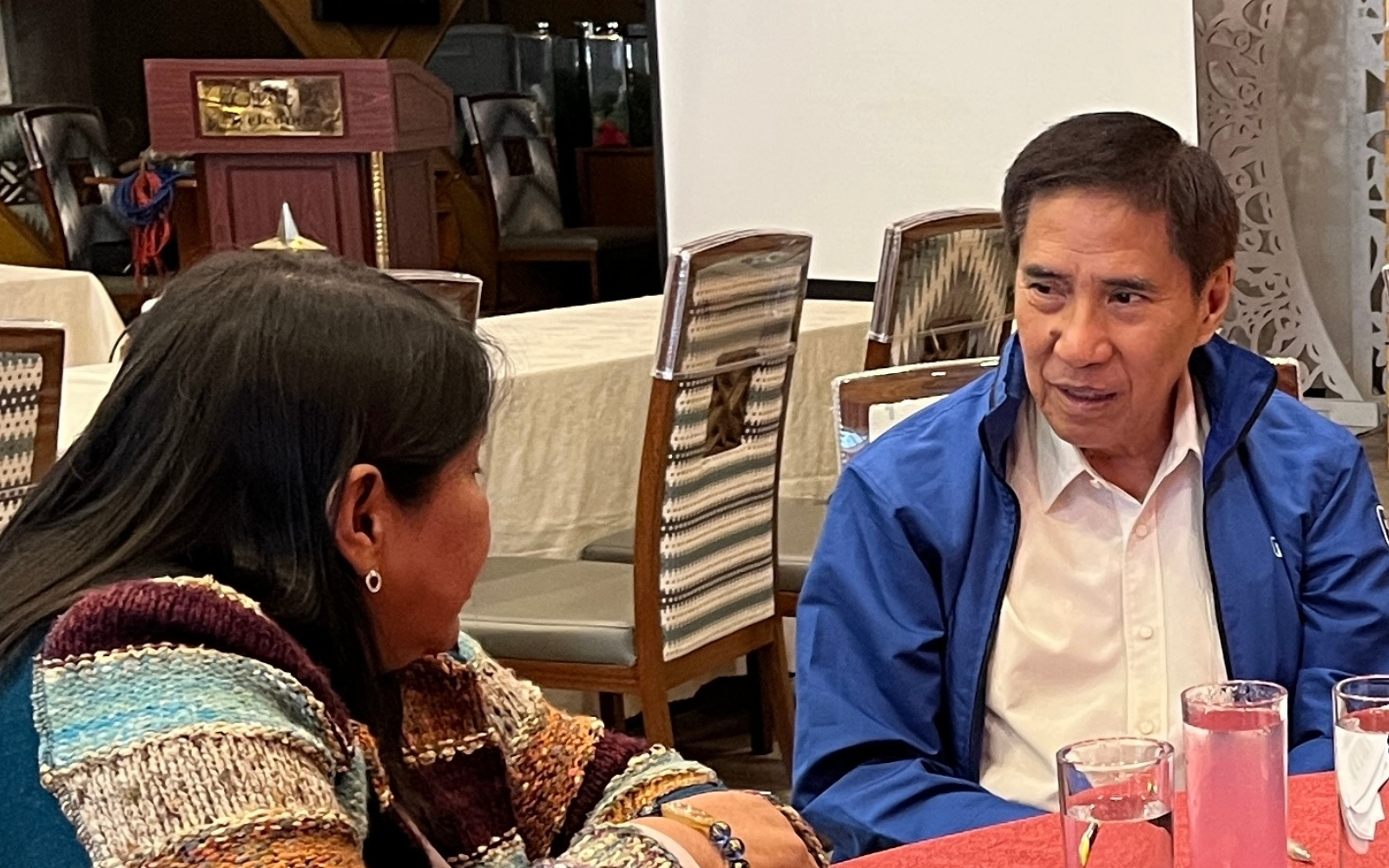 Photo above: Dr. Dayrit huddles with Baguio City Health Officer Dr. Celia Flor Brillantes to map out actionable next steps for strengthening primary care and expanding partnerships across Baguio’s health system.
Building on these perspectives, Dr. Dayrit explained that the relationship between national policies and local implementation often produces both intended and unintended effects.
While UHC reforms are designed to expand access to individual health services, one unintended effect is that local governments devote considerable time and resources to meeting implementation requirements, leaving less capacity for community-based health promotion and disease prevention.
Rather than waiting for policies to evolve, he encouraged Baguio City to continue innovating, thinking beyond conventional approaches, and co-creating solutions with partners who share the same vision for healthier communities.
“The best way forward is to think outside the box. Work with others who share the same goal of improving people’s health.”
While the dialogue covered operational updates and implementation challenges, its defining moment came when Dr. Dayrit reframed the city’s frustrations as evidence of progress.
Dr. Dayrit emphasized that Baguio’s frustrations should not be viewed as signs of failure, but as evidence that its health system is maturing. As services expand, expectations naturally rise, hidden gaps become more visible, and the standard for success continues to move higher.
The familiar Filipino expression, “Malayo na, pero malayo pa,” is often heard in conversations about UHC. While it reminds us that much work remains, it can also overshadow the remarkable progress that has already been achieved. Dr. Dayrit challenged the city to embrace both realities—to celebrate its gains while remaining committed to continuous improvement.
Mayor Magalong welcomed this perspective, sharing that the discussion transformed his frustration into renewed motivation. “When we create solutions to one problem, new problems emerge. It is a continuous process that requires us to keep innovating. It is our responsibility to continue finding solutions. And, of course, our greatest virtue here is always patience.”
A Collaborative Platform for Reflection and Action
The Executive Dialogue was held on July 3, 2026, in Baguio City as part of ZFF’s Bayang Malusog Leadership and Governance Program (BMLGP). It brought together members of the Local Health Board headed by Mayor Magalong and co-chaired by City Health Officer Dr. Celia Flor Brillantes, alongside representatives from the Department of Health-Center for Health Development Cordillera Administrative Region (DOH-CHD CAR) led by Regional Director Dr. Amelita Pangilinan, PhilHealth represented by Dr. Glenn Lamsis, and ZFF headed by Dr. Dayrit.
Rather than simply reporting accomplishments, the Executive Dialogue created a space for national and local leaders to reflect on Baguio City’s UHC journey, openly discuss implementation challenges, and identify collaborative strategies for further strengthening the city’s health system.
In his closing message, Mayor Magalong appealed to DOH and PhilHealth to continue listening to the experiences and insights of local government implementers, emphasizing that the realities on the ground provide valuable lessons for strengthening national policies.
Dr. Dayrit likewise encouraged Baguio City to identify more “force multipliers” through strategic partnerships that can strengthen health promotion efforts. As the city continues its transition toward a primary health care-oriented system, initiatives such as YAKAP have understandably required significant organizational focus. Expanding partnerships, he noted, will help ensure that health promotion remains a strong pillar of the city’s health agenda.
Echoing this recommendation, Regional Director Dr. Amelita Pangilinan encouraged the city to further strengthen partnerships with private health facilities, intensify its health promotion and information campaign, and continue transforming District Health Centers into fully functional one-stop shops by maximizing reimbursements from the YAKAP package.
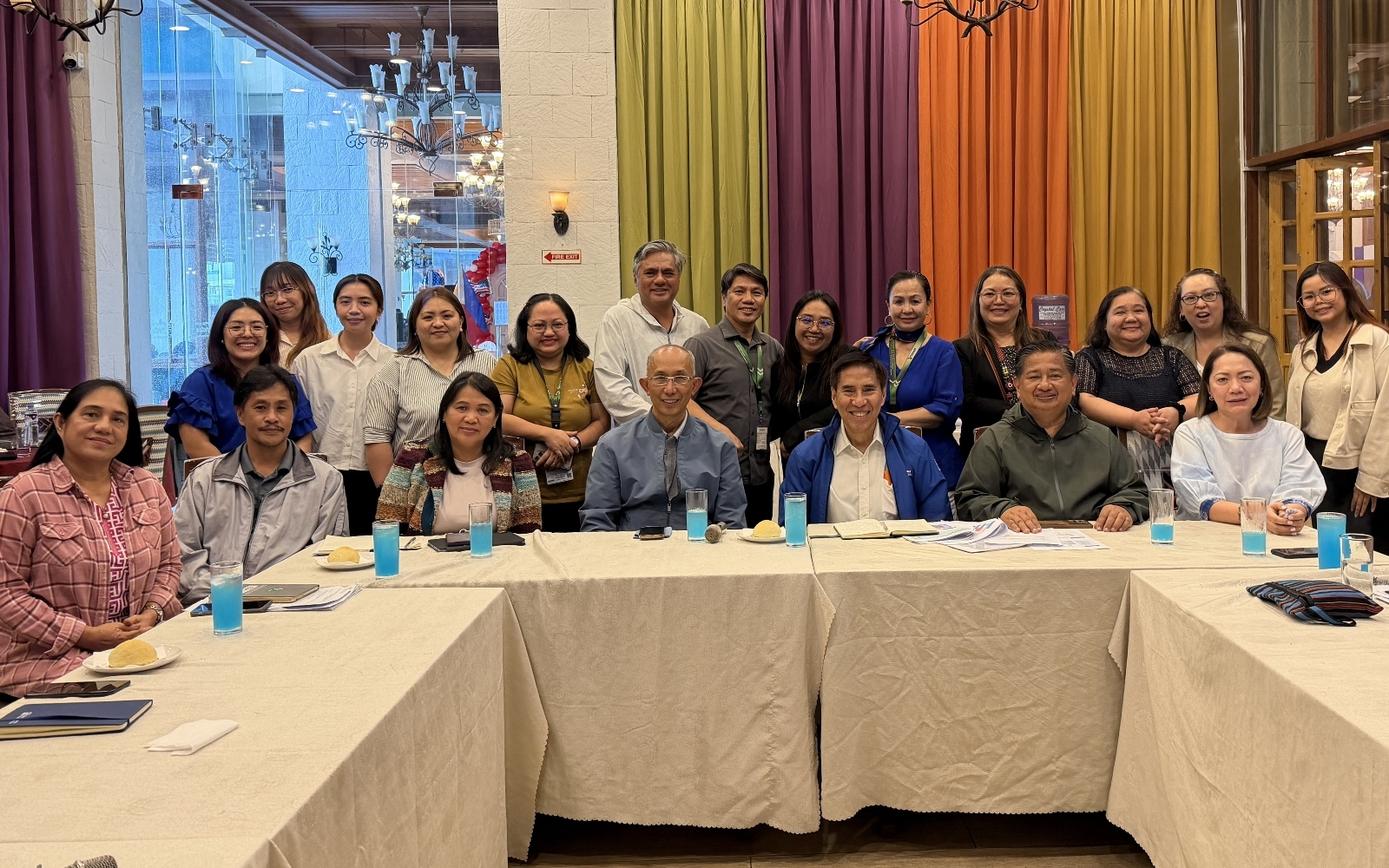 Photo above: Participants stand together after the Executive Dialogue, reaffirming their collective resolve to turn Baguio’s growing capacity into tangible health gains.
Baguio’s UHC Milestones: A Model for Transformation
Baguio City’s experience demonstrates that implementing UHC is not simply about complying with national policies. It is about continuously strengthening institutions, investing in people, learning from implementation, and responding to the changing needs of communities.
As one of the country’s pilot sites for UHC, Baguio has become a model for local health system transformation:
- In 2025, the city achieved 100% of the DOH’s Local Health System Maturity Level, reflecting full compliance with the preparatory, organizational, and functional requirements for UHC implementation.
- For its primary care facilities, the city secured a DOH License to Operate and obtained PhilHealth accreditation as a YAKAP provider, along with other PhilHealth benefit packages.
- It expanded its human resources for health and upgraded plantilla positions.
- It fully implemented the Magna Carta for Public Health Workers.
- It developed one of the country’s pioneering locally developed health information systems through the Baguio Medical Record System (BMRS).
These milestones demonstrate that Baguio is not merely keeping pace with health reform. It is helping shape its future. The Executive Dialogue affirmed that progress is not measured by the absence of challenges, but by the willingness to confront increasingly complex ones.
As Dr. Dayrit reminded the city, growth inevitably uncovers more needs and raises the bar even higher. For Baguio, this is not a setback, but a sign that its health system is moving in the right direction.